Pradhan Hails DRDO's LRLACM Flight-Test as Defence Milestone
Synopsis
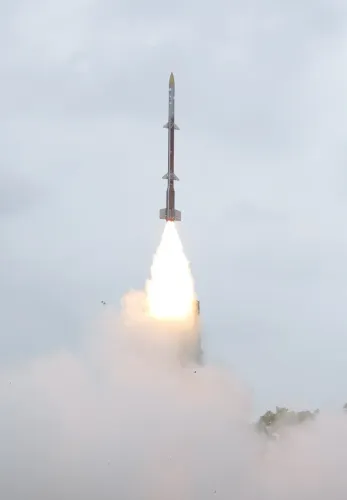
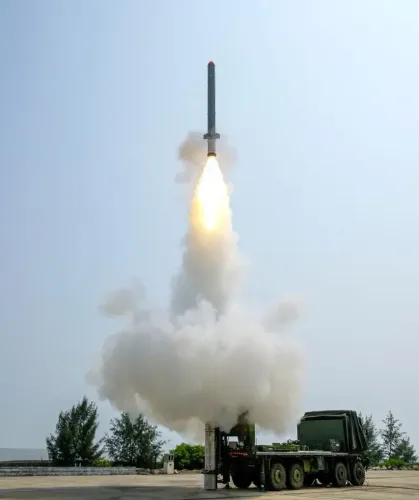
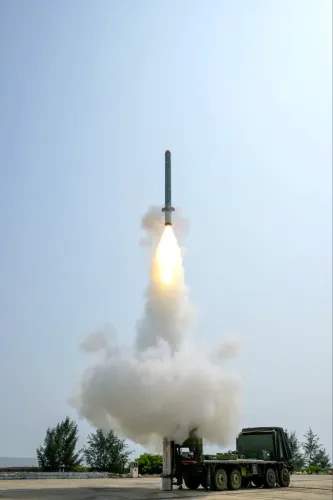
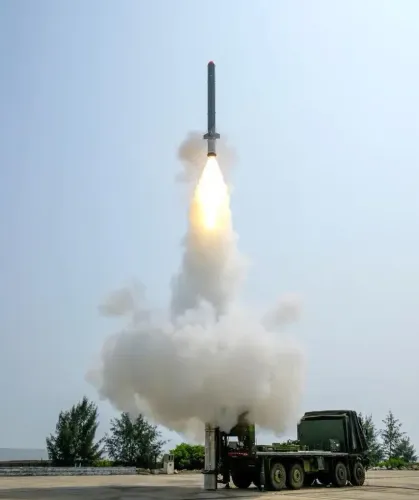
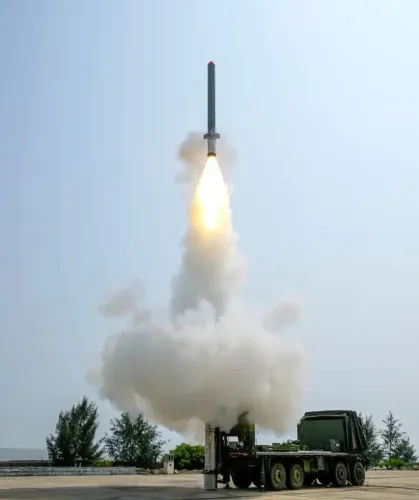
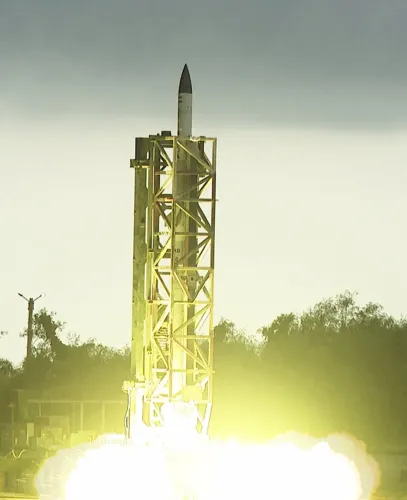
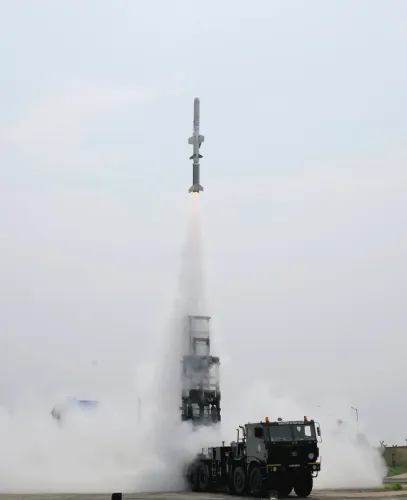
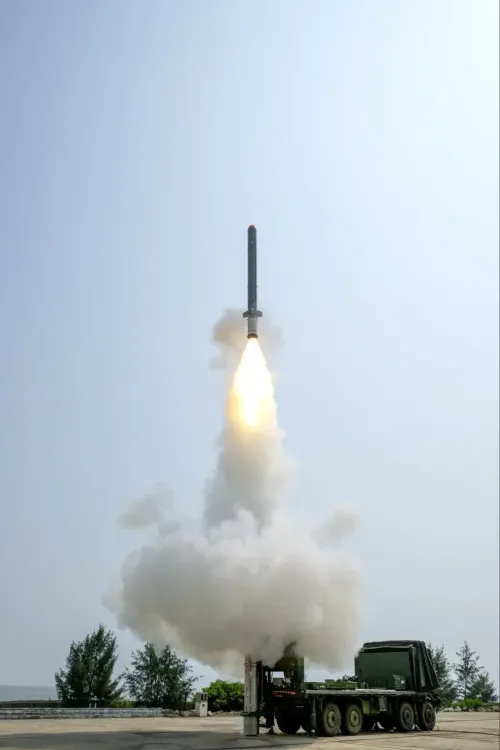
Union Education Minister Dharmendra Pradhan on 16 June 2026 congratulated DRDO on the successful flight-test of the Long Range Land Attack Cruise Missile (LRLACM) from Dr APJ Abdul Kalam Island, Odisha, calling it a key milestone in India's indigenous defence and self-reliance push.
Key Takeaways
Union Education Minister Dharmendra Pradhan publicly congratulated DRDO on the successful flight-test of the LRLACM on 16 June 2026 .
The missile was flight-tested from Dr APJ Abdul Kalam Island , India's premier integrated missile test range off the Odisha coast.
The LRLACM programme advances India's long-range land-attack capability and supports all three armed services.
The test aligns with the Atmanirbhar Bharat Abhiyan (2020) and the lineage of the Integrated Guided Missile Development Programme (1983) .
Next steps include extended user trials, operational evaluation, and potential defence budget deliberations on DRDO project funding.
Union Education Minister Dharmendra Pradhan on Tuesday, 16 June 2026, congratulated DRDO on the successful flight-test of the Long Range Land Attack Cruise Missile (LRLACM), calling it a key milestone in India's indigenous defence journey. The test was conducted from Dr APJ Abdul Kalam Island off the coast of Odisha.
Context
Pradhan took to X to commend the Defence Research and Development Organisation (DRDO), describing the LRLACM flight-test as 'a key milestone reinforcing India's indigenous defence capabilities and commitment to self-reliance in critical technologies.' While Pradhan holds the Education portfolio, his post reflects the cross-cutting political salience of defence self-reliance within the ruling dispensation.
Dr APJ Abdul Kalam Island, formerly known as Wheeler Island, is India's premier integrated missile test range situated off the Odisha coast. The facility has served as the launch site for several of DRDO's most significant strategic and tactical missile programmes over the decades.
Policy Backdrop
The LRLACM programme sits within a decades-long arc of indigenous missile development that traces its origins to the Integrated Guided Missile Development Programme (IGMDP), launched in 1983. That programme laid the foundation for India's family of surface-to-surface, surface-to-air, and anti-tank guided missiles.
The Atmanirbhar Bharat Abhiyan, announced in 2020, gave fresh political impetus to self-reliance in defence design, development, and production. Under its framework, the government has progressively expanded positive indigenisation lists, restricting imports of weapons systems that domestic industry and DRDO are expected to supply. The LRLACM test is widely seen as consistent with that policy direction.
Stakeholders and Impact
DRDO, which functions under the Ministry of Defence, is India's nodal agency for research and development of advanced weapons systems. A successful cruise missile flight-test of this category would be significant for all three services — the Army, Navy, and Air Force — each of which has requirements for precision long-range land-attack capability.
For DRDO scientists and engineers stationed at the missile complex, the milestone represents the culmination of sustained investment in propulsion, navigation, and guidance technologies. Domestically developed cruise missiles also carry export potential, aligning with India's broader ambition to become a defence manufacturing and export hub by 2047.
What's Next
Following a successful flight-test, the standard trajectory for DRDO missile programmes involves extended user trials conducted by the respective armed service, followed by developmental and operational evaluation before formal induction into inventory. Parliamentary standing committees on defence periodically review DRDO project funding and timelines, and the LRLACM programme is likely to feature in upcoming defence budget deliberations.
Broader strategic watchers will track whether the test accelerates integration timelines, spurs allied procurement interest, or prompts formal announcements on production agency partnerships — all of which would represent the next phase of India's expanding indigenous cruise missile capability.
Point of View
Not merely a defence-ministry brief. The LRLACM test, if confirmed through official DRDO channels, would mark a meaningful step in India's cruise missile capability — a domain where self-reliance has historically lagged behind ballistic systems. The timing, ahead of likely defence budget discussions, also gives the ruling party a concrete technological achievement to anchor its national-security messaging. Longer term, successful indigenous cruise missiles reduce strategic dependence on import supply chains and strengthen India's hand in defence diplomacy.
NationPress
15 Sept 2026
Frequently Asked Questions
What is the LRLACM missile tested by DRDO?
LRLACM stands for Long Range Land Attack Cruise Missile, a DRDO-developed indigenous system designed to strike land targets at long range. Its successful flight-test from Dr APJ Abdul Kalam Island, Odisha, was highlighted by Union Education Minister Dharmendra Pradhan on 16 June 2026.
Where is Dr APJ Abdul Kalam Island located?
Dr APJ Abdul Kalam Island, formerly known as Wheeler Island, is situated off the coast of Odisha in eastern India. It serves as DRDO's integrated missile test range and has been the launch site for numerous strategic and tactical missile tests.
What is Atmanirbhar Bharat in the context of defence?
Atmanirbhar Bharat Abhiyan, announced in 2020, is India's self-reliance initiative that in defence terms prioritises domestic design, development, and production of weapons systems. It has led to positive indigenisation lists that restrict imports of items DRDO and Indian industry can supply.
Why did Education Minister Pradhan comment on a defence test?
Dharmendra Pradhan is a senior BJP leader and Cabinet minister. Senior ministers across portfolios routinely amplify significant national achievements on social media, particularly those aligned with the government's Atmanirbhar Bharat narrative.
What happens after a successful DRDO missile flight-test?
After a successful flight-test, DRDO typically conducts extended user trials with the relevant armed service, followed by developmental and operational evaluation before the missile is formally inducted into inventory. Production agency partnerships and funding are reviewed through parliamentary defence committees.