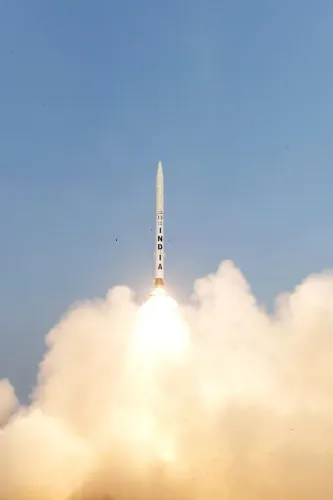
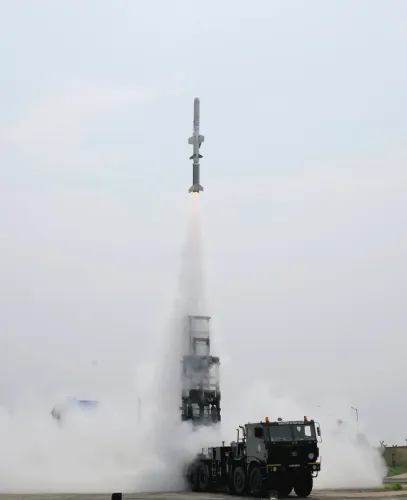
Giriraj Singh Hails India's Indigenous Cruise Missile Test
Synopsis
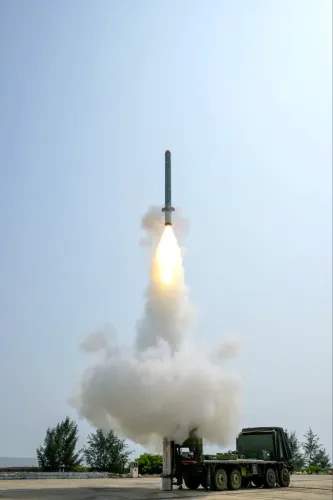
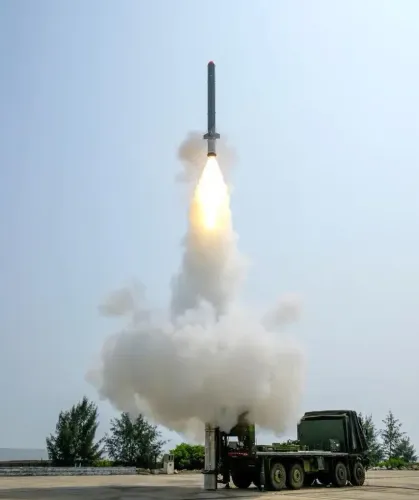
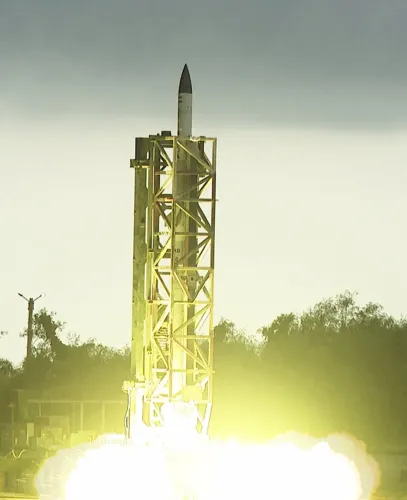
Union Textiles Minister Giriraj Singh on 16 June 2026 highlighted India's successful test of an indigenous long-range land-attack cruise missile, amplifying a key defence milestone that advances the country's Atmanirbhar Bharat self-reliance agenda in strategic weapons.
Key Takeaways
Union Textiles Minister Giriraj Singh shared news of India's successful indigenous long-range land-attack cruise missile test on 16 June 2026 .
The post was shared via the NaMo App , reflecting BJP's practice of amplifying national security milestones across party platforms.
DRDO is India's primary agency for developing cruise missiles, including the subsonic Nirbhay missile tested multiple times since 2013 .
India's cruise missile programme originates from the Integrated Guided Missile Development Programme launched in 1983 .
The test aligns with the Atmanirbhar Bharat initiative of 2020 , aimed at reducing dependence on imported defence equipment.
Next steps include official DRDO confirmation of test parameters, user trials by the armed forces, and potential induction announcements.
Union Textiles Minister Giriraj Singh on Tuesday, 16 June 2026, shared news of India successfully testing an indigenous long-range land-attack cruise missile, amplifying the development via the NaMo App and his official social media handle.
Context
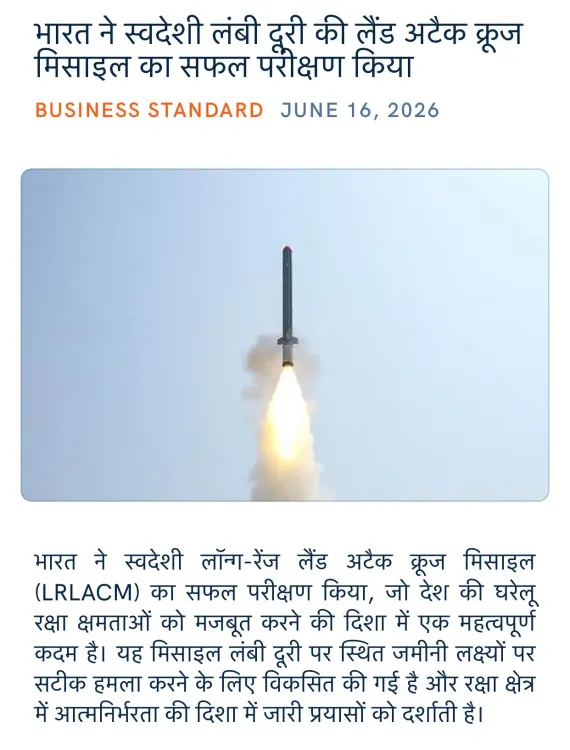
Singh's post, shared in Hindi, reads: 'Bharat ne swadeshi lambi doori ki land attack cruise missile ka safal parikshan kiya' — 'India has successfully tested an indigenous long-range land-attack cruise missile.' The post was accompanied by an image and linked to a report covering the test. While Singh is not a member of the defence establishment, the post reflects a pattern of senior BJP leaders amplifying significant national security milestones across party platforms.
Policy Backdrop
India's cruise missile programme traces its roots to the Integrated Guided Missile Development Programme (IGMDP), launched in 1983 under the stewardship of Dr APJ Abdul Kalam, which laid the foundation for indigenous missile development. The Defence Research and Development Organisation (DRDO) has been the nodal agency for developing the Nirbhay subsonic long-range land-attack cruise missile, which has undergone multiple flight trials since 2013.
These efforts have gained renewed momentum under the Atmanirbhar Bharat initiative announced in 2020, which set out to reduce India's dependence on imported defence equipment and raise the domestic content in defence procurement. Cruise missile capability is considered a key element of India's precision long-range strike portfolio.
Stakeholders and Impact
A successful long-range land-attack cruise missile test carries direct implications for the Indian Army, Indian Air Force, and Indian Navy, all of which have expressed interest in indigenous long-range strike systems. DRDO scientists and defence researchers stand at the centre of this effort, with successful tests moving programmes closer to user trials and eventual induction.
From a strategic standpoint, operationalising an indigenous cruise missile reduces procurement costs and supply-chain vulnerabilities, while signalling credible long-range conventional deterrence. The broader defence-industrial base — including public sector units and private partners under the Make in India framework — also benefits from each successful milestone.
What's Next
Analysts will watch for an official statement from the Ministry of Defence or DRDO detailing the test parameters, range demonstrated, and the missile's designation. The next step in the programme would typically involve user trials by the armed forces, followed by a formal induction order. Any reference in the forthcoming Defence Ministry annual report or Union Budget speech could signal the pace of operationalisation. India's continued investment in indigenous cruise missile technology underscores a long-term strategic shift toward self-reliance in high-end weapons systems.
Point of View
Not merely technical milestones. The post feeds into a broader political narrative around Atmanirbhar Bharat, where indigenous weapons successes are leveraged as proof of the administration's self-reliance agenda bearing fruit. For DRDO, each successful cruise missile test is a step toward operationalisation, but the gap between a flight trial and armed forces induction has historically been wide — making official follow-up statements critical. The development will be watched closely by regional neighbours and strategic analysts tracking India's evolving long-range conventional strike capability.
NationPress
15 Sept 2026
Frequently Asked Questions
What is India's indigenous long-range land-attack cruise missile?
India's long-range land-attack cruise missile programme is primarily associated with the DRDO-developed Nirbhay, a subsonic cruise missile designed for precision strikes at long range. It has undergone multiple flight trials since 2013 as part of India's effort to build indigenous long-range strike capability.
What did Giriraj Singh post about the missile test?
Union Textiles Minister Giriraj Singh shared a Hindi post on 16 June 2026 stating 'India has successfully tested an indigenous long-range land-attack cruise missile,' along with an image, via the NaMo App and his social media handle.
What is the Atmanirbhar Bharat initiative in defence?
Atmanirbhar Bharat, announced in 2020, is the Indian government's self-reliance initiative that includes raising the domestic content in defence procurement and reducing dependence on imported weapons systems. Cruise missile development is a key part of this effort.
What is DRDO's role in India's cruise missile programme?
DRDO, the Defence Research and Development Organisation, is the primary Indian agency responsible for developing indigenous missiles including the Nirbhay cruise missile. It manages research, development, and flight trials before handing systems over for user trials by the armed forces.
What are the next steps after India's cruise missile test?
After a successful flight trial, the typical next steps include an official DRDO statement on test parameters, user trials conducted by the Indian armed forces, and eventually a formal induction order. Analysts will also watch for references in the Defence Ministry's annual report or budget speech.