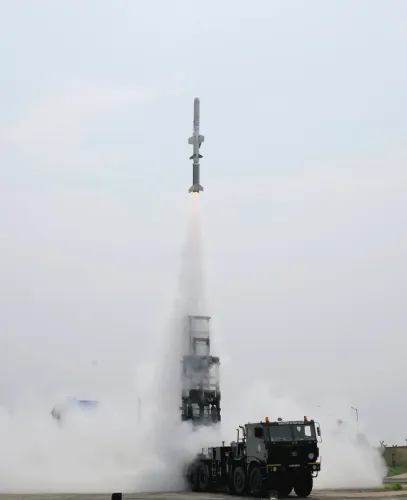
CM Yogi Hails DRDO's BMD and Anti-Ship Missile Tests

Synopsis
Uttar Pradesh CM Yogi Adityanath praised DRDO on 13 June 2026 after it demonstrated multi-layered Ballistic Missile Defence and anti-ship missile capabilities, calling it proof of India's growing strategic self-reliance under PM Modi's leadership.
Key Takeaways
Yogi Adityanath congratulated DRDO on 13 June 2026 following a successful demonstration of multi-layered Ballistic Missile Defence (BMD) and anti-ship missile capabilities.
DRDO has been developing a two-tier BMD architecture since at least 2006 , building on the Integrated Guided Missile Development Programme launched in 1983 .
The Atmanirbhar Bharat Abhiyan (2020) provided renewed policy and budgetary backing for defence indigenisation, aiming to cut import dependence.
A multi-layered BMD system improves overall intercept probability by engaging incoming threats at multiple altitude bands.
Operational induction timelines for the demonstrated systems by the Indian Armed Forces remain the key next milestone to watch.
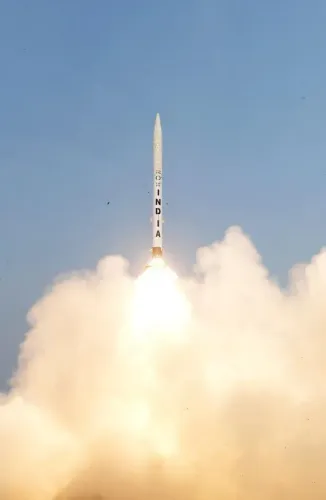
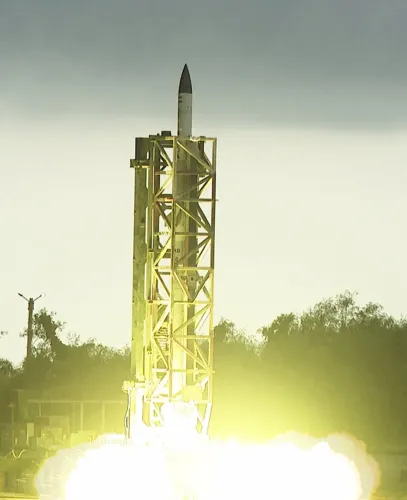
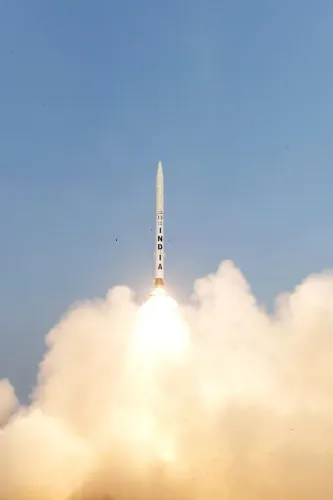
Uttar Pradesh Chief Minister Yogi Adityanath on Saturday, 13 June 2026, congratulated the Defence Research and Development Organisation (DRDO) after it successfully demonstrated multi-layered Ballistic Missile Defence (BMD) and anti-ship missile capabilities, calling the achievement a reflection of 'New India's scientific and strategic capabilities.'
Context
Yogi Adityanath posted his congratulations on X, stating that 'every milestone in indigenous defence technology strengthens the foundations of a secure, self-reliant and resilient India.' He attributed the achievement to the 'visionary leadership' of Prime Minister Narendra Modi and extended specific praise to DRDO's scientists and engineers.
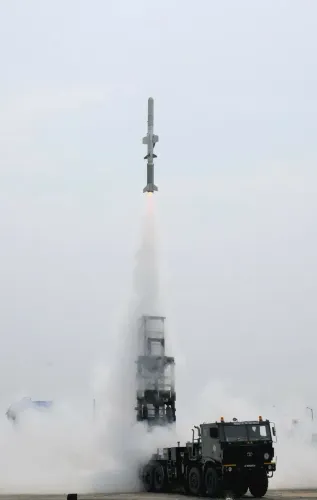
The post follows DRDO's reported demonstration of two distinct but complementary capabilities: a multi-layered BMD system designed to intercept incoming ballistic missiles at different altitudes, and an anti-ship missile system aimed at maritime strike roles. Together, these represent a significant step in India's effort to build an end-to-end indigenous defence technology ecosystem.
Policy Backdrop
DRDO has been developing ballistic missile defence architecture since at least 2006, when it conducted its first reported BMD interceptor test as part of a two-tier interception system. The broader programmatic foundation was laid by the Integrated Guided Missile Development Programme, launched in 1983, which produced core missile families including Prithvi and Agni.
The Atmanirbhar Bharat Abhiyan, announced in 2020, gave renewed political and budgetary momentum to defence indigenisation, explicitly targeting reduced import dependence. India has consistently sought to develop multi-layered missile defence to address regional ballistic and cruise missile threats, linking these programmes to the principle of strategic autonomy.
A multi-layered BMD system is designed so that if one intercept layer fails, a secondary layer can engage the incoming threat — substantially improving overall kill probability and reducing reliance on any single technology or supplier.
Stakeholders and Impact
DRDO's scientists and engineers are the immediate beneficiaries of the political recognition, with leaders across party lines routinely crediting the organisation after major test milestones. For the Indian Armed Forces, successful BMD demonstrations move the country closer to operational deployment of systems that can shield strategic assets and population centres from ballistic threats.
The anti-ship missile capability, if inducted, would enhance the Indian Navy's ability to deny adversaries freedom of manoeuvre in contested waters — a priority given the strategic importance of the Indian Ocean Region. Domestically, expanded indigenous production also supports the government's goal of growing India's defence export footprint.
What's Next
Attention will now shift to induction timelines: whether and when the demonstrated BMD layers and the anti-ship missile system will be formally cleared for operational deployment by the Indian Armed Forces. Further interceptor trials at higher altitudes and longer ranges are expected as part of maturing the full BMD architecture.
The political salience of indigenous defence milestones is unlikely to diminish ahead of continued geopolitical pressures on India's borders, making each successful DRDO test a moment that cuts across both strategic and domestic political narratives.
Point of View
Each such milestone serves a dual purpose: strategic signalling to adversaries and domestic messaging around self-reliance. The broader arc points toward India attempting to graduate from a net defence importer to a credible defence exporter within this decade.
NationPress
13 Sept 2026
Frequently Asked Questions
What did DRDO demonstrate that CM Yogi Adityanath congratulated?
DRDO successfully demonstrated multi-layered Ballistic Missile Defence (BMD) capabilities and anti-ship missile capabilities, which CM Yogi Adityanath hailed as a landmark in India's indigenous defence technology on 13 June 2026.
What is India's Ballistic Missile Defence programme?
India's BMD programme, developed by DRDO, is a two-tier system designed to intercept incoming ballistic missiles at different altitudes. Development began in earnest after a first reported interceptor test in 2006, building on the missile technology foundation of the 1983 Integrated Guided Missile Development Programme.
What is Atmanirbhar Bharat and how does it relate to DRDO?
Atmanirbhar Bharat Abhiyan, announced in 2020, is the government's self-reliance initiative that explicitly targets defence indigenisation and reduced import dependence. DRDO's missile and BMD programmes are central to meeting those goals.
Why is multi-layered BMD important for India?
A multi-layered BMD system intercepts threats at multiple altitude bands, so if one layer fails another can engage the incoming missile. This substantially improves India's ability to protect strategic assets and cities from ballistic missile threats posed by regional adversaries.
What is the significance of India's anti-ship missile capability?
An indigenous anti-ship missile enhances the Indian Navy's ability to strike adversary vessels and deny freedom of manoeuvre in the Indian Ocean Region, reducing dependence on foreign-supplied systems and supporting India's strategic autonomy.