DRDO successfully tests Kusha LR-SAM missile off Odisha coast
Synopsis
India has successfully test-fired the Kusha Long-Range Surface-to-Air Missile for the first time — a domestically developed system designed to fill the critical gap between the 80-km MR-SAM and the 400-km S-400. With induction planned between 2028 and 2030, Kusha could fundamentally reduce India's dependence on imported air defence systems and reshape its strategic posture.
Key Takeaways
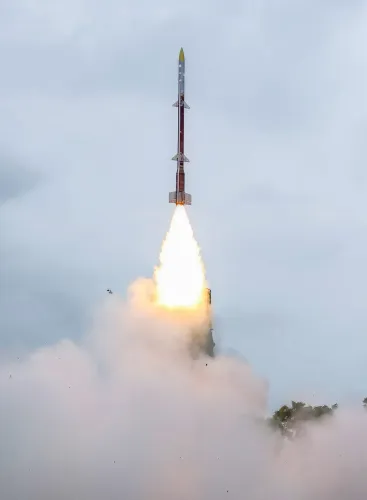
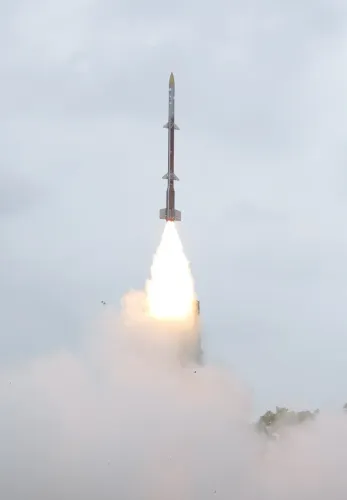
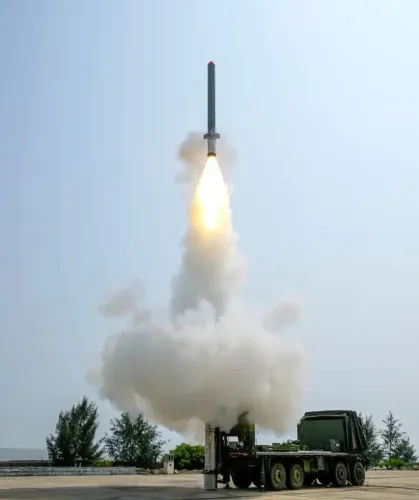
DRDO conducted the maiden flight-test of the Kusha LR-SAM on 23 July from APJ Abdul Kalam Island , Odisha.
The missile intercepted an electronic target simulating a high-speed, high-altitude aerial threat .
Kusha is designed to bridge the gap between the 80-km MR-SAM and the 400-km S-400 systems.
It will supplement the existing Barak-8 , S-400 , and Akash air defence systems.
Three variants are expected to be inducted into the Indian Air Force and Navy between 2028 and 2030 .
Defence Minister Rajnath Singh called the test a milestone, saying it will eliminate India's import dependency for long-range SAM systems.
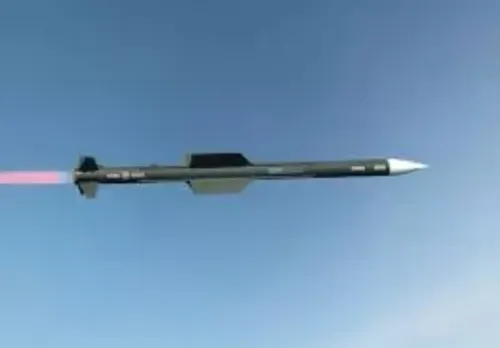
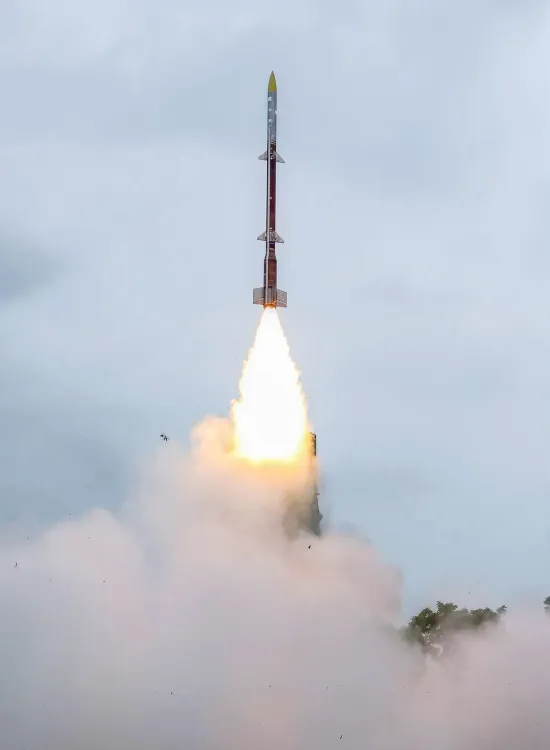
The Defence Research and Development Organisation (DRDO) on Thursday, 23 July conducted the maiden flight-test of the 'Kusha' Long-Range Surface-to-Air Missile (LR-SAM) from the APJ Abdul Kalam Island off the coast of Odisha, marking a significant milestone in India's indigenous air defence programme. The missile successfully intercepted an electronic target simulating a high-speed, high-altitude aerial threat.
What the Test Demonstrated
According to the DRDO, the Kusha system was validated against a simulated aerial threat replicating the profile of fast-moving, high-altitude targets — the most demanding category in modern air defence scenarios. All elements of the weapon system — missiles, radars, and the command and control centre — were developed entirely by DRDO laboratories and domestic industry partners.
In a statement, the DRDO said the Kusha missile system 'is capable of neutralising a wide variety of aerial threats including fighter jets, missiles, unmanned aerial vehicles and large enemy aircraft within a wide range and altitude envelope.'
Where Kusha Fits in India's Air Defence Architecture
Kusha is being developed under Project Kusha, which aims to deliver an Extended Range Air Defence System (ERADS) for the Indian Air Force and the Indian Navy. The system was earlier designated the Extreme Range Surface-to-Air Missile (XRSAM).
It is expected to plug a critical capability gap between the 80-km-range MR-SAM and the S-400, which can engage targets up to 400 km away. Once inducted, it will complement the existing Barak-8, S-400, and Akash systems that form India's layered air defence network. Notably, Kusha is also expected to become part of Mission Sudarshan Chakra, the Indian military's integrated air defence umbrella.
Three variants of the Kusha system are slated for induction into the armed services between 2028 and 2030.
What the Government Said
Defence Minister Rajnath Singh described the successful test as 'an important milestone in Indian defence R&D,' noting that the capability to develop long-range surface-to-air missile systems is possessed by only a handful of nations globally. Singh added that the Kusha programme will eliminate India's import dependency for such systems and represents 'a giant leap in India's air defence capability.'
Defence Secretary and Chairman of DRDO, Rajesh Kumar Singh, monitored all launch activities and congratulated the teams involved in the successful flight-test.
Strategic Significance
India's reliance on imported long-range air defence systems — most prominently the Russian S-400 — has long been flagged as a strategic vulnerability, particularly given supply-chain uncertainties. A domestically developed LR-SAM of Kusha's profile would reduce that exposure considerably. This test comes amid India's broader push under the Atmanirbhar Bharat defence initiative, which has sought to shift procurement from foreign suppliers to indigenous developers. The successful maiden test positions Kusha as a credible alternative, though full induction remains years away.
Point of View
A vulnerability that the Ukraine conflict has underscored for all S-400 operators globally. A credible indigenous LR-SAM would reduce that exposure, but the 2028-2030 induction timeline means the window of dependency remains open for years. The real test of Project Kusha will not be this maiden intercept but whether DRDO and its industry partners can achieve serial production at the scale and cost that makes the system genuinely competitive against future procurement of foreign alternatives.
NationPress
22 Oct 2026
Frequently Asked Questions
What is the Kusha missile tested by DRDO?
Kusha is India's indigenously developed Long-Range Surface-to-Air Missile (LR-SAM), built under Project Kusha to deliver an Extended Range Air Defence System (ERADS) for the Indian Air Force and Navy. It is designed to intercept a wide range of aerial threats including fighter jets, missiles, drones, and large aircraft.
Where was the Kusha missile test conducted?
The maiden flight-test was conducted on 23 July from APJ Abdul Kalam Island off the coast of Odisha. The missile successfully intercepted an electronic target simulating a high-speed, high-altitude aerial threat.
How does Kusha fit into India's existing air defence network?
Kusha is designed to fill the capability gap between the 80-km-range MR-SAM and the S-400, which can engage targets up to 400 km away. It will supplement the Barak-8, S-400, and Akash systems already in service, and is expected to be part of Mission Sudarshan Chakra, India's integrated air defence umbrella.
When will the Kusha missile be inducted into the Indian military?
Three variants of the Kusha system are expected to be inducted into the Indian Air Force and Navy between 2028 and 2030, subject to further development and trials.
Why is the Kusha missile strategically important for India?
India currently relies on imported systems such as the Russian S-400 for long-range air defence. A domestically developed LR-SAM like Kusha would reduce that import dependency — a point Defence Minister Rajnath Singh specifically highlighted after the successful test. The capability is currently held by only a handful of nations.