Did India Successfully Test the Pralay Quasi-Ballistic Missile Off the Odisha Coast?
Synopsis
India's rapid test of the Pralay missile signifies a leap in military capabilities. Conducted off the Odisha coast, this successful launch showcases the country's advancements in missile technology. With the ability to carry various warheads and a range of up to 500 km, the Pralay missile is a crucial asset for India's defense strategy.
Key Takeaways
Successful Launch: India conducted a rapid salvo launch of two Pralay missiles.
Strategic Importance: The missile has a range of 150 km to 500 km, enhancing India's defense capabilities.
Indigenous Development: The missile is developed by DRDO, showcasing India's indigenous defense technology.
Precision Technology: Equipped with advanced guidance systems for high accuracy.
Military Readiness: The successful test indicates imminent readiness for operational deployment.
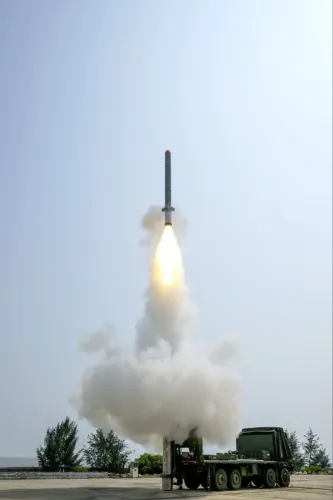
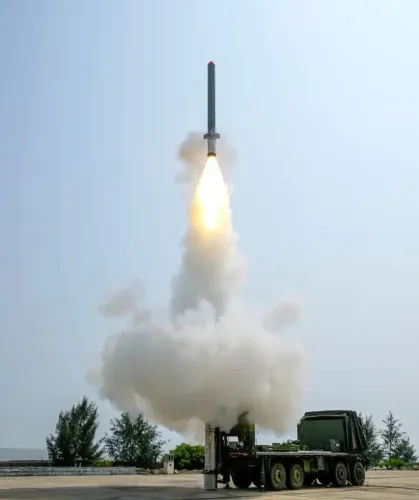
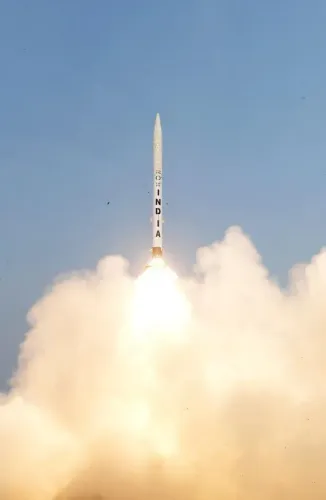
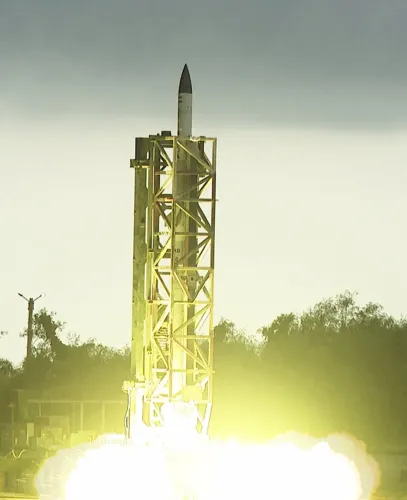
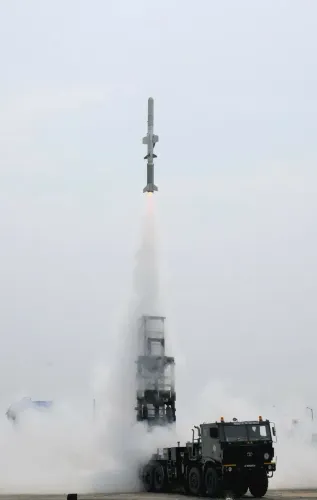
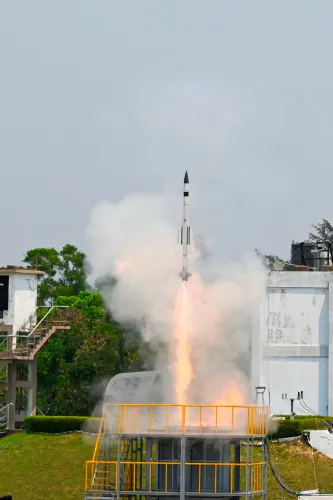
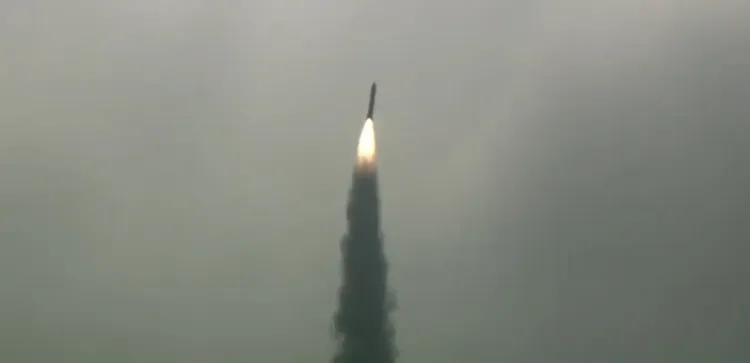
New Delhi, Dec 31 (NationPress) India has achieved a significant milestone with the successful salvo launch of two Pralay missiles in rapid succession on Wednesday. This important test was executed from the same launcher positioned off the Odisha coast and forms part of user evaluation trials.
The Ministry of Defence reported that the test took place at approximately 10:30 am on Wednesday, overseen by the Defence Research & Development Organisation (DRDO). Both missiles adhered to the planned trajectory, fulfilling all flight objectives as confirmed by tracking sensors positioned by the Integrated Test Range in Chandipur.
Attending the test were senior DRDO scientists, officers from the Indian Air Force and Indian Army, as well as industry representatives, including Development-cum-Production Partners.
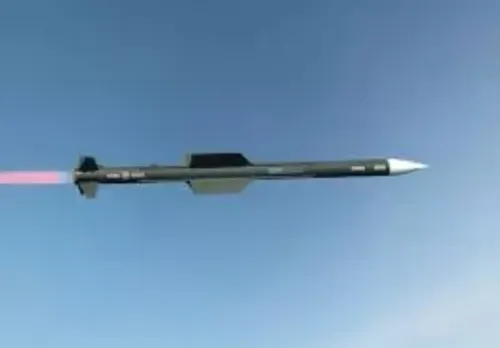
The Pralay missile is a surface-to-surface, short-range ballistic missile with a strike range between 150 km and 500 km. It is capable of carrying various types of warheads against multiple targets. Developed indigenously, it features a solid propellant and utilizes advanced guidance and navigation systems to ensure exceptional precision.
Defence Minister Rajnath Singh praised the DRDO, Indian Air Force, Indian Army, Defence Public Sector Units, and industry for the successful test-launch of the missiles.
The successful execution of the salvo launch has confirmed the missile's reliability, he emphasized.
The Pralay missile was developed by the Research Centre Imarat in Hyderabad in collaboration with various DRDO laboratories, including the Defence Research and Development Laboratory, Advanced Systems Laboratory, and others. For this test, systems were integrated by the two Development-cum-Production Partners.
DRDO Chairman Dr. Samir V Kamat also lauded the teams involved in the successful flight tests, indicating that this achievement signifies the imminent readiness for system induction by the users.
Point of View
This successful missile test highlights India's strategic advancements in defense technology, reinforcing its position on the global stage. The Pralay missile's capabilities suggest a significant enhancement of India's operational readiness, fostering confidence among the nation's defense forces and allies.
NationPress
19 Sept 2026
Frequently Asked Questions
What is the range of the Pralay missile?
The Pralay missile has a strike range between 150 km and 500 km.
Who conducted the test firing of the Pralay missile?
The test was conducted by the Defence Research & Development Organisation (DRDO).
What type of missile is the Pralay?
The Pralay is a surface-to-surface, short-range ballistic missile.
When was the Pralay missile test conducted?
The test was conducted on December 31, at around 10:30 am.
What organizations were involved in the Pralay missile development?
The Pralay missile was developed by the Research Centre Imarat in collaboration with various DRDO laboratories and industry partners.