Why Did Trump Defend Secrecy Surrounding the Venezuela Operation?
Synopsis
President Trump's defense of the covert US operation that led to Nicolas Maduro's arrest sparks debate on military secrecy and international relations. The operation serves as a strong warning to adversaries, highlighting the US's stance on sovereignty and stability in the region. Explore the implications of this significant action in our detailed report.
Key Takeaways
Trump defends secrecy in the operation leading to Maduro's arrest.
The operation aimed to eliminate threats to American sovereignty .
US military options remain available in the region .
Concerns raised over potential leaks from Congress.
The US to oversee Venezuela until it can be properly managed .
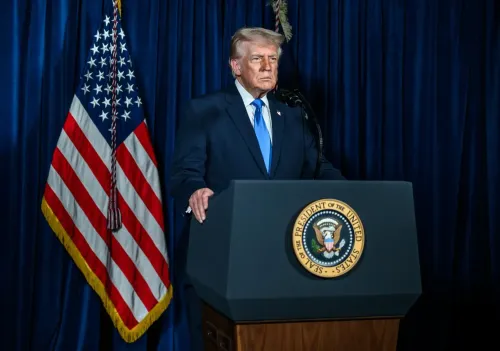
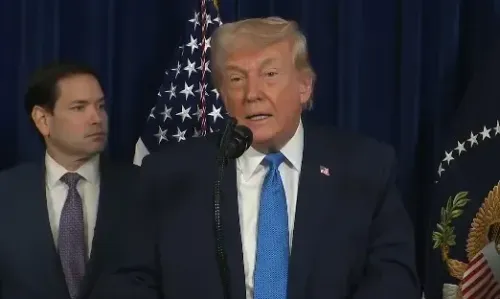
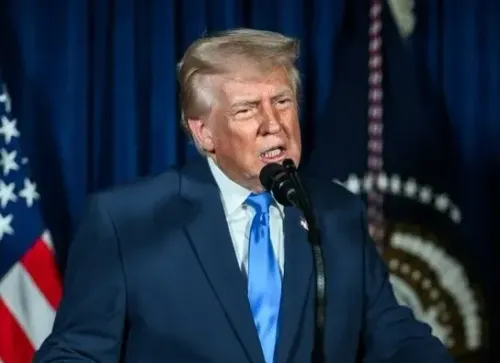
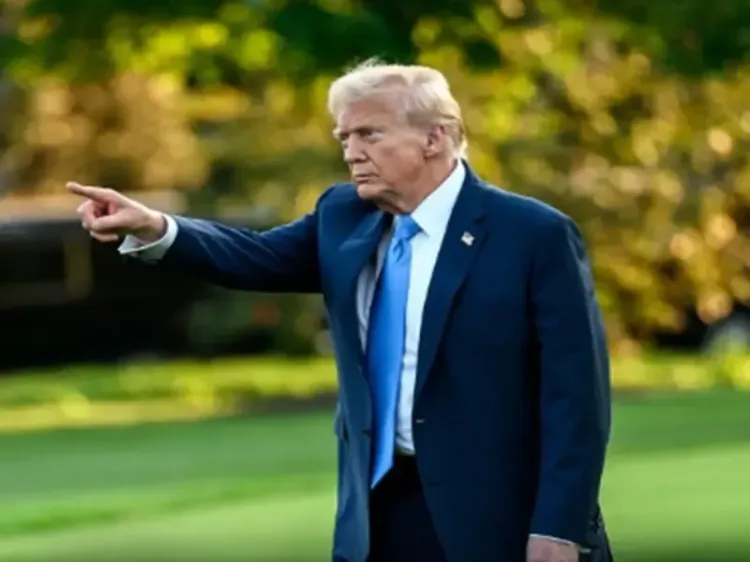
Washington, Jan 3 (NationPress) On Saturday, President Donald Trump defended the confidentiality surrounding the US operation that resulted in the capture of Venezuelan leader Nicolas Maduro. He cautioned that notifying Congress or others in advance could have "compromised the mission" and emphasized that the action conveyed a strong warning to adversaries both in the Western Hemisphere and beyond.
During a press conference held at his Mar-a-Lago estate following the operation, Trump dismissed the criticism regarding the lack of prior congressional briefings.
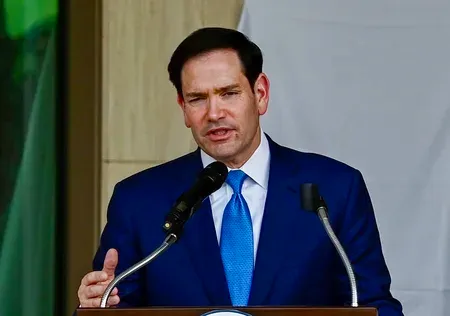
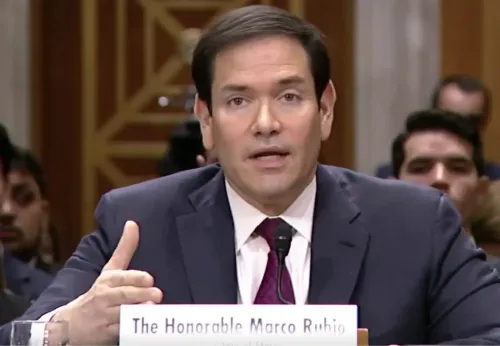
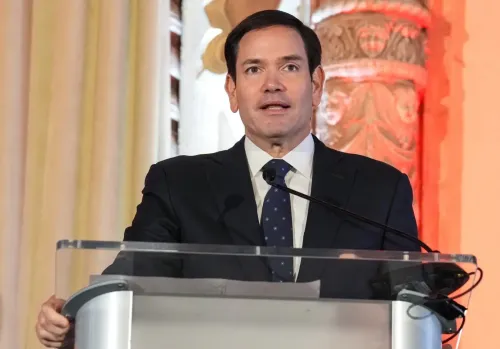
Secretary of State Marco Rubio, when questioned, clarified that the mission was "not the type of operation that warrants congressional notification," describing it as a "trigger-based mission" reliant on specific conditions met over several nights.
"It's simply not the nature of this mission to pre-notify, as it jeopardizes the operation," Rubio explained.
Trump concurred, stating that "Congress tends to leak information," suggesting that such leaks could have led to "a significantly different outcome."
He emphasized that the operation was fundamentally about the arrest of "two fugitives wanted by American justice," backed by US military forces.
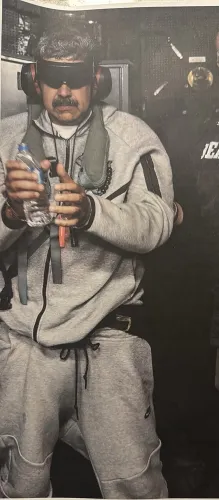
Trump noted that Maduro was apprehended while he was trying to reach a fortified safe haven, but US forces intercepted him before he could escape.
"He was attempting to find shelter," Trump remarked, adding that US troops acted promptly to thwart his escape.
When asked where Maduro would be detained, Trump revealed that he would ultimately be sent to New York, with the appropriate authorities to make the final detention decisions. He also mentioned that both Maduro and his wife would face trial in the United States.
Trump consistently framed the operation as a cautionary tale for adversaries.
"This exceedingly successful operation should act as a warning to anyone who threatens American sovereignty or jeopardizes American lives," he stated, asserting that the United States retains "all military options" and that American forces remain strategically positioned in the region.
In response to a question regarding regional leaders, Trump made pointed remarks about Colombian President Gustavo Petro, implicating him in cocaine production and asserting, "I stand by my initial statement."
He also characterized Cuba as "a disaster" and hinted that officials there might be concerned following the events in Venezuela.
Trump dismissed comparisons to previous US interventions that resulted in power vacuums, claiming his administration has a track record of "only victories." He asserted that the United States would oversee Venezuela until it could be "properly managed," arguing that a hasty withdrawal would invite renewed instability.
The President also touched on wider global ramifications, including Russia. When asked about Russian President Vladimir Putin, Trump remarked, "I’m not pleased with Putin," referencing the ongoing conflict and the scale of casualties, emphasizing that halting the loss of life is a priority.
Earlier, Rubio stated that the operation reinforced US deterrence, emphasizing, "When he tells you he’s going to do something, he means it."
Trump reiterated that sentiment, succinctly stating, "Don’t play games."
Venezuela has long been a focal point of US sanctions and diplomatic pressure, with Washington accusing its leadership of criminal conduct and regional destabilization, while successive US administrations have debated the extent of engagement with Caracas.
IANS
int/lkj/pgh
Point of View
I believe that transparency in military operations is vital, yet there are circumstances under which confidentiality can safeguard national interests. Trump's actions may serve as a strong deterrent to adversaries, but the long-term consequences of such operations warrant thorough examination and public discourse.
NationPress
6 Oct 2026
Frequently Asked Questions
What was the purpose of the US operation in Venezuela?
The operation aimed to capture Venezuelan leader Nicolas Maduro, who is viewed as a fugitive wanted by American justice.
Why did Trump choose to keep the operation secret?
Trump maintained that prior notification to Congress could have endangered the mission's success and emphasized the need for confidentiality.
What message does Trump believe the operation sends?
Trump believes the operation serves as a warning to adversaries who threaten American sovereignty and lives.
Where will Maduro be detained?
Maduro is expected to be brought to New York, where appropriate authorities will make detention decisions.
How does this operation relate to US foreign policy?
This operation reflects the US's ongoing stance on Venezuela, emphasizing its commitment to addressing criminal activities and regional destabilization.