Jal Shakti Minister Paatil Meets Bhupender Yadav, Discusses Viksit Bharat
Synopsis
Union Jal Shakti Minister C. R. Paatil held a courtesy meeting with Union Minister Bhupender Yadav on 7 July 2026, discussing governance, public welfare, and the Viksit Bharat vision. The exchange signals continued inter-ministerial coordination between the Jal Shakti and Environment ministries on flagship water and climate programmes.
Key Takeaways
Paatil , Union Minister of Jal Shakti, met Bhupender Yadav , Union Minister for Environment and Labour, on 7 July 2026 .
Discussions centred on good governance, public welfare, and the Viksit Bharat vision under PM Narendra Modi .
The Jal Jeevan Mission (launched 2019 ) and Atal Bhujal Yojana require sustained coordination between the Jal Shakti and Environment ministries.
The Viksit Bharat framework — targeting developed-nation status by 2047 — serves as the shared policy reference for inter-ministerial convergence.
Rural households and state governments are the primary stakeholders likely to benefit from tighter ministerial alignment on water and environmental clearances.
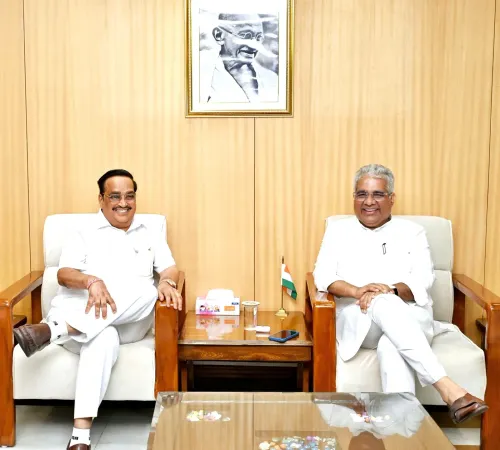
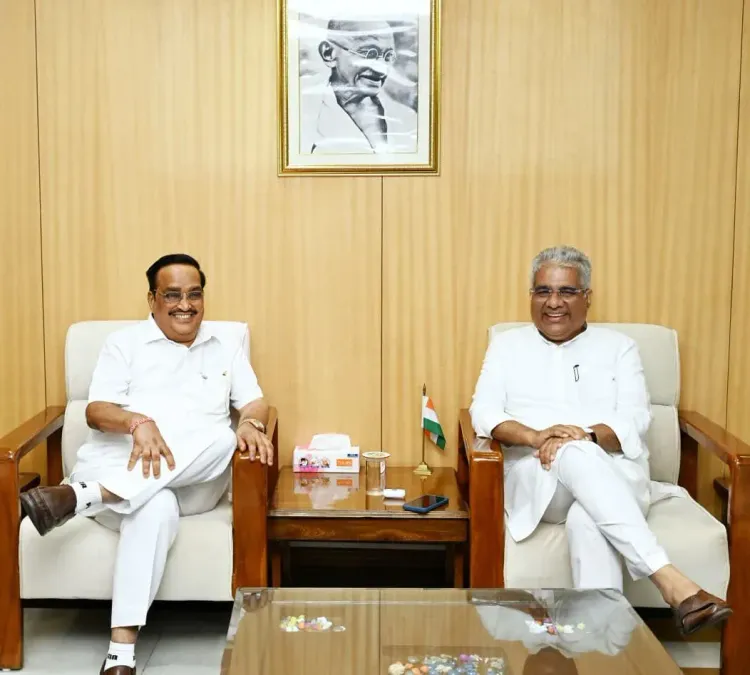
Union Jal Shakti Minister C. R. Paatil met Union Minister Bhupender Yadav on Tuesday, 7 July 2026 for a courtesy call in New Delhi, during which the two senior BJP leaders held wide-ranging discussions on governance, public welfare, and the Viksit Bharat vision under Prime Minister Narendra Modi.
Context
Paatil shared news of the meeting on X, writing that he had the opportunity for a 'aatmiy shishtachar bhent' ('warm courtesy meeting') with Yadav. He noted that the two held 'meaningful deliberations on various current and important topics related to advancing good governance, public welfare, and the resolve of Viksit Bharat under the leadership of honourable Prime Minister Narendra Modi.'
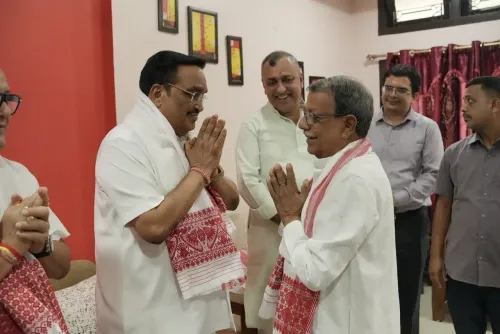
The post, accompanied by three photographs from the meeting, added that 'such dialogues provide new energy to coordinated efforts in the national interest and inspire a stronger commitment to public service.'
Policy Backdrop
Bhupender Yadav holds the portfolios of Environment, Forest and Climate Change and Labour and Employment, making him a natural interlocutor for the Jal Shakti Ministry on issues where water management intersects with environmental regulation. River rejuvenation programmes such as Namami Gange and climate-resilient water infrastructure sit at precisely this intersection.
The Jal Jeevan Mission, launched in 2019, aims to provide functional tap-water connections to every rural household and has required sustained inter-ministerial alignment — particularly between the Jal Shakti and Environment ministries — to clear forest and environmental clearances for water infrastructure projects. The Atal Bhujal Yojana, targeting groundwater management across water-stressed districts, similarly depends on coordinated data-sharing between the two ministries.
The Viksit Bharat framework, PM Modi's long-term national vision targeting developed-nation status by 2047, has been the overarching reference point for inter-ministerial coordination since it was articulated, providing a common language for convergence across Cabinet portfolios.
Stakeholders and Impact
Rural households — the primary beneficiaries of the Jal Jeevan Mission — stand to gain most directly from tighter coordination between the two ministries. Faster environmental clearances for water infrastructure and integrated approaches to river health and groundwater recharge translate into quicker delivery of potable water at the village level.
State governments, which implement centrally-sponsored water and environment schemes, also benefit when Union ministers align on policy priorities, reducing procedural friction at the state level. The BJP-led central government has made regular inter-ministerial meetings a visible governance signal since 2014, projecting a model of cooperative federalism.
What's Next
Observers will watch for any joint statements or coordinated policy announcements emerging from the Jal Shakti and Environment ministries in the coming weeks, particularly on Namami Gange progress or updates to the Atal Bhujal Yojana. The next round of state-level Jal Jeevan Mission review meetings will be an early indicator of whether Monday's discussions translate into concrete operational alignment. Such inter-ministerial consultations typically precede Cabinet-level deliberations on flagship scheme targets and budget allocations.
Point of View
Where Cabinet-level face time is used to project coordination ahead of scheme review cycles. With the Jal Jeevan Mission entering a consolidation phase and Namami Gange facing scrutiny over river health outcomes, the Jal Shakti Ministry has a clear incentive to keep the Environment Ministry closely aligned on clearances and data-sharing. Invoking the Viksit Bharat framework publicly also serves a political function: it anchors day-to-day administrative coordination within a larger, aspirational national narrative. Analysts will look for whether this meeting precedes any joint announcement or accelerated clearance for pending water infrastructure projects.
NationPress
6 Oct 2026
Frequently Asked Questions
Who is C. R. Paatil and what ministry does he head?
C. R. Paatil is a senior BJP leader and Union Minister of Jal Shakti, the ministry responsible for water resources, river development, and the Ganga rejuvenation programme. He is also a former BJP Gujarat state president.
What is the Viksit Bharat vision discussed at the meeting?
Viksit Bharat is Prime Minister Narendra Modi's long-term national vision to make India a developed nation by 2047, the centenary of independence. It serves as the overarching framework for inter-ministerial policy coordination across the central government.
Why would the Jal Shakti and Environment ministers need to coordinate?
The Jal Jeevan Mission and Namami Gange programme require environmental clearances for water infrastructure, making coordination between the Jal Shakti and Environment ministries essential for timely project delivery.
What is the Jal Jeevan Mission?
The Jal Jeevan Mission, launched in 2019, is a flagship central government programme that aims to provide functional household tap-water connections to every rural home in India.
What is the Atal Bhujal Yojana?
The Atal Bhujal Yojana is a central scheme focused on sustainable groundwater management in water-stressed districts across India, requiring coordination between multiple ministries including Jal Shakti and Environment.