Akhilesh demands women's quota for OBC, Muslim women in UP 2027
Synopsis
Samajwadi Party president Akhilesh Yadav has demanded that the Women's Reservation Bill guarantee representation for OBC and Muslim women under the PDA framework, that Rajya Sabha seats be expanded via delimitation, and that the quota be enforced before the 2027 Uttar Pradesh assembly elections.
Key Takeaways
Samajwadi Party president Akhilesh Yadav posted three legislative demands on 7 July 2026 relating to delimitation and women's reservation.
He demanded expansion of Rajya Sabha seats through a delimitation bill.
He called for the Women's Reservation Bill to guarantee representation for OBC and minority Muslim women within the PDA framework.
He demanded that women's reservation be implemented before the 2027 Uttar Pradesh assembly elections , ahead of the delimitation-linked timeline in the current law.
The Nari Shakti Vandan Adhiniyam (2023) ties women's quota rollout to post-census delimitation, which critics say could delay implementation by a decade.
The demands are aimed at shaping the political agenda ahead of UP's 403-seat assembly election , India's most consequential state poll.
Samajwadi Party president Akhilesh Yadav on Tuesday, 7 July 2026, publicly demanded that women's reservation be extended to backward-class and minority Muslim women through the delimitation and women's reservation bills, and that the quota be implemented in time for the 2027 Uttar Pradesh assembly elections.
Context
In the post, Akhilesh laid out three specific demands. First, that seats in the upper house — the Rajya Sabha — be increased through a delimitation bill. Second, that the Women's Reservation Bill ensure 'adequate representation' (uchit pratinidhitva) for backward-class women and minority Muslim women belonging to the party's PDA coalition — an alliance of Pichhda (backward classes), Dalit and Alpsankhyak (minority) communities. Third, that women's reservation be operationalised before the 2027 Uttar Pradesh Vidhan Sabha elections.
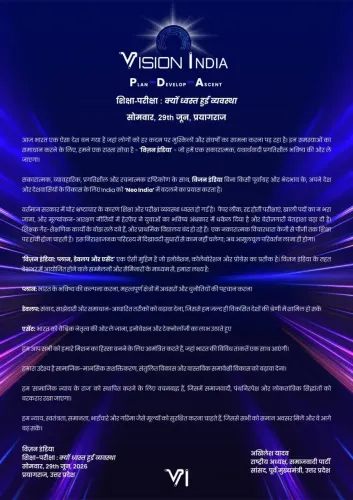
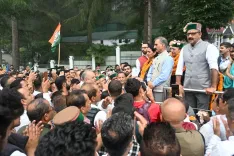
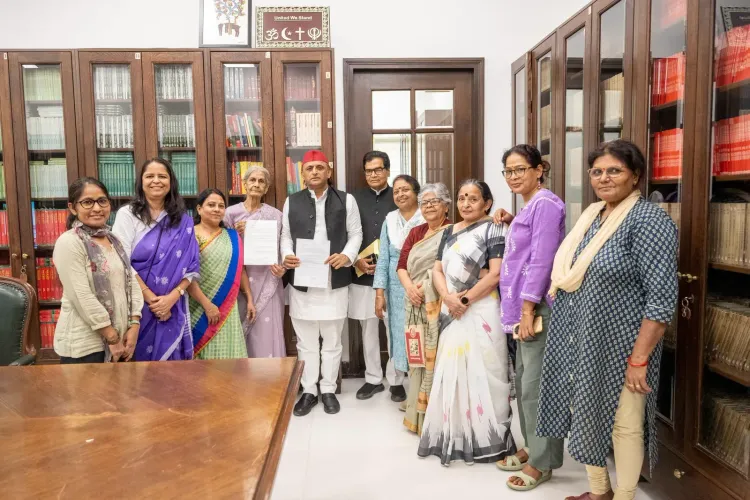
The post was accompanied by two images and was published in Hindi, signalling an appeal directed at the party's core constituency in Uttar Pradesh.
Policy Backdrop
The Nari Shakti Vandan Adhiniyam, passed by Parliament in September 2023, reserves one-third of seats for women in the Lok Sabha and state assemblies. However, the law explicitly links its implementation to delimitation based on the first census conducted after 2023, meaning it cannot take effect until after that census is completed and constituency boundaries are redrawn.
Delimitation of Lok Sabha and assembly seats was last completed in 2002 and was constitutionally frozen until 2026 under the 84th and 87th Constitutional Amendments. With delimitation now back on the national agenda, opposition parties — including the Samajwadi Party — have argued that the delay effectively postpones women's political representation by years.
Akhilesh's demand for a separate 'parisiman bill' to expand upper-house seats is a distinct legislative ask. The research background notes that the exact legislative text or timing of any such proposed bill cannot be independently verified at this stage.
Stakeholders and Impact
The demands most directly affect OBC women and Muslim women in Uttar Pradesh, India's most populous state. The Samajwadi Party has consistently argued that without an explicit sub-quota or safeguard within the women's reservation framework, the seats are likely to accrue disproportionately to upper-caste women, leaving PDA communities under-represented.
If implemented before 2027, the reservation would reshape candidate selection across 403 Uttar Pradesh assembly constituencies, with significant implications for the Samajwadi Party's own ticket distribution and the ruling Bharatiya Janata Party's electoral calculus in the state.
Since 2023, multiple opposition parties have echoed the call for OBC and minority sub-quotas within women's reservation, making this a cross-party pressure point ahead of both the census and the delimitation exercise.
What's Next
The immediate legislative test will be whether the central government introduces amendments to the Nari Shakti Vandan Adhiniyam to create sub-quotas for OBC and minority women, or moves to delink the bill's implementation from the delimitation timeline. Any such move would directly answer Akhilesh's third demand — early rollout for the 2027 UP polls.
With the delimitation exercise expected to gather pace after the 2026-27 census, the Samajwadi Party's demands are likely to become a recurring flashpoint in Parliament and in the run-up to what promises to be a fiercely contested Uttar Pradesh assembly election.
Point of View
The party is drawing a sharp ideological line: women's reservation without caste and community disaggregation, it argues, is reservation that benefits the already privileged. The demand to delink implementation from delimitation is particularly pointed, given that the census-and-delimitation trigger was widely seen as a way to delay the law's effect by a decade or more. Whether the Centre engages with these demands or dismisses them will itself become campaign material in India's most electorally decisive state.
NationPress
7 Jul 2026
Frequently Asked Questions
What has Akhilesh Yadav demanded regarding women's reservation?
Akhilesh Yadav has demanded that the Women's Reservation Bill ensure adequate representation for OBC and minority Muslim women under the Samajwadi Party's PDA framework, and that the reservation be implemented before the 2027 Uttar Pradesh assembly elections.
When will the Women's Reservation Bill be implemented in India?
Under the Nari Shakti Vandan Adhiniyam passed in September 2023, women's reservation is linked to delimitation after the first post-2023 census. Akhilesh Yadav is demanding that it be implemented earlier, at least for the 2027 UP polls.
What is the PDA coalition of the Samajwadi Party?
PDA stands for Pichhda (backward classes), Dalit and Alpsankhyak (minority) — the three social groups whose political consolidation forms the core of the Samajwadi Party's electoral strategy under Akhilesh Yadav.
What is the delimitation bill Akhilesh Yadav is referring to?
Akhilesh Yadav has called for a delimitation bill that would increase the number of seats in the upper house (Rajya Sabha). The exact legislative proposal has not been tabled in Parliament as of this report.
Why do opposition parties want OBC sub-quotas within women's reservation?
Opposition parties, including the Samajwadi Party, argue that without explicit sub-quotas, the one-third women's reservation will disproportionately benefit upper-caste women, leaving OBC and minority women — who are numerically large but politically under-represented — without meaningful gains.