CM Yogi Invokes 2016, 2019, Op Sindoor as India's Red Lines
Synopsis
UP CM Yogi Adityanath declares India has set its own security red lines, citing the 2016 Surgical Strikes, 2019 Balakot Air Strike, and 2025 Operation Sindoor as evidence of PM Modi's doctrine of decisive retaliation against terrorism.
Key Takeaways
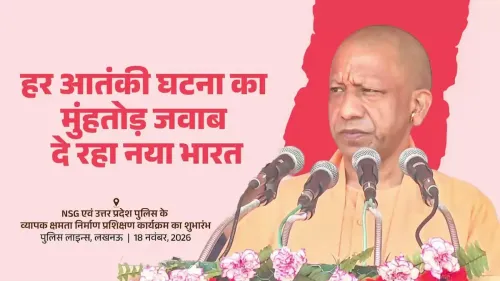
CM Yogi Adityanath , posting via the Chief Minister's Office of Uttar Pradesh on 18 November 2026 , stated India now independently defines its security red lines.
Three operations are cited: the 2016 Surgical Strikes , the 2019 Balakot Air Strike , and 2025 Operation Sindoor .
All three are framed as responses to terrorist provocations under PM Narendra Modi's leadership.
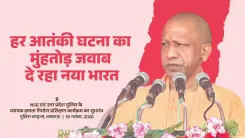
The statement uses the phrase 'muh-tod jawab' — 'crushing retaliation' — to characterise India's standing counter-terrorism posture.
The post represents a state government account amplifying central government security messaging, a pattern typical of BJP political communication.
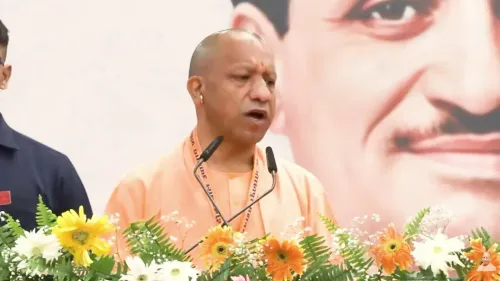
India no longer absorbs terrorist strikes — it answers them. That is the central argument Uttar Pradesh Chief Minister Yogi Adityanath put on record on Wednesday, 18 November 2026, invoking three military operations across a decade to illustrate what he called India's self-drawn red lines on national security.
Quoting Chief Minister Adityanath directly: 'आज हम ऐसे दौर में हैं, जहां भारत ने अपनी सुरक्षा नीति की रेड लाइन स्वयं तय की है' — 'Today we are in an era where India has drawn its own red lines in its security policy.' The statement, posted by the Chief Minister's Office of Uttar Pradesh, credits Prime Minister Narendra Modi's leadership as the decisive shift behind this posture.
Three Operations, One Doctrine
The post names three distinct military actions as proof points. The 2016 Surgical Strikes — cross-LoC ground operations targeting terror launchpads in Pakistan-occupied territory following the Uri attack — were India's first publicly acknowledged offensive response of this kind. Three years later, the 2019 Balakot Air Strike saw Indian Air Force jets cross the international border into Pakistan's Khyber Pakhtunkhwa province after the Pulwama suicide bombing, marking a further escalation of the response threshold.
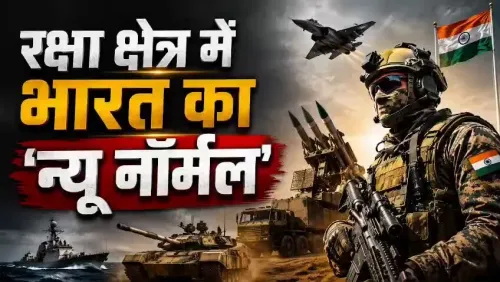
The third operation named — Operation Sindoor, 2025 — is cited as the most recent demonstration of this doctrine. The post positions all three as part of a continuous, deliberate policy of 'muh-tod jawab' ('crushing retaliation') against every terrorist attempt — not isolated events but sequential chapters of a standing security doctrine.
Why a State CM Is Framing National Security Doctrine
It is notable that this statement comes from the Chief Minister's Office of Uttar Pradesh, a state government account, rather than the central government or the defence establishment. CM Yogi Adityanath has consistently positioned himself as an assertive nationalist voice within the ruling Bharatiya Janata Party. Statements like these serve dual political and communicative roles: reinforcing the party's security credentials with the electorate while simultaneously framing the opposition's historical reluctance to respond militarily as a contrast.
The reference to Modi's leadership — tagging @narendramodi directly — also signals this as a coordinated message amplification rather than an off-the-cuff remark. It is a reminder that in Indian political communication, security achievements are rarely left unattributed.
The Doctrine Behind the Declarations
Taken together, the three operations CM Yogi cites represent a visible evolution in India's stated counter-terrorism posture: from strategic restraint, to calibrated cross-border retaliation, to what Operation Sindoor apparently represents as the latest iteration. Each operation raised the operational ceiling; each was followed by intense diplomatic activity and domestic political messaging.
India's security establishment has long debated 'escalation dominance' — the ability to respond proportionately without triggering full-scale conflict. The public political narrative being built around these operations, now stretching across nearly a decade, suggests that deterrence through demonstrated response has become an explicit and vote-facing part of India's strategic communication.
The question that hangs in the air is not whether India will respond to the next provocation — but how high the ceiling now sits.
Point of View
Not a policy announcement — it anchors three military operations into a single retrospective doctrine narrative ahead of what could be a charged political season in Uttar Pradesh. By attributing all three responses explicitly to PM Modi's leadership, the post reinforces the BJP's core electoral identity as a party of muscular national security. The inclusion of the still-recent 'Operation Sindoor 2025' alongside the already-canonised 2016 and 2019 operations signals an effort to cement the newer operation in public memory with equal symbolic weight. For analysts, the more consequential question is how the articulation of ever-higher response ceilings shapes public expectations — and diplomatic constraints — the next time a provocation occurs.
NationPress
18 Nov 2026
Frequently Asked Questions
What is Operation Sindoor 2025?
Operation Sindoor is a military operation carried out by India in 2025 , cited by CM Yogi Adityanath alongside the 2016 Surgical Strikes and 2019 Balakot Air Strike as part of India's counter-terrorism response doctrine under PM Modi.
What were the 2016 Surgical Strikes?
The 2016 Surgical Strikes were cross-Line of Control ground operations conducted by the Indian Army targeting terrorist launchpads in Pakistan-occupied territory, carried out following the Uri attack.
What was the 2019 Balakot Air Strike?
The 2019 Balakot Air Strike was an Indian Air Force operation in which jets crossed into Pakistan's Khyber Pakhtunkhwa province to strike what India described as a terrorist training camp, conducted after the Pulwama suicide bombing.
Why did CM Yogi Adityanath make a statement on national security?
CM Yogi Adityanath posted the statement via the official Chief Minister's Office of Uttar Pradesh account, framing India's military responses under PM Modi as evidence of a new, assertive national security doctrine, consistent with his role as a prominent BJP voice on nationalist issues.
What does India's 'red line' security policy mean?
CM Yogi used the phrase 'India has drawn its own red lines' to describe a policy posture where India independently decides when and how to retaliate against terrorist attacks, without waiting for international permission or precedent.