Rajnath Singh Inspects JMSDF Frigate 'Natori' at Yokosuka
Synopsis
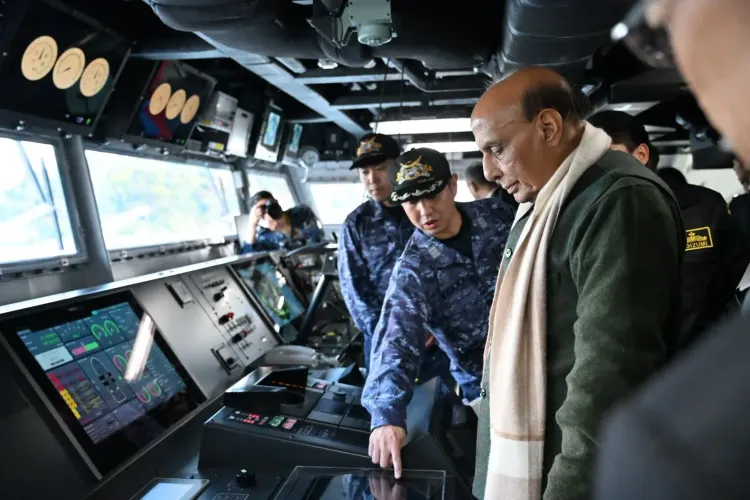
Union Defence Minister Rajnath Singh visited the Japan Maritime Self-Defense Force base at Yokosuka on 18 November 2026, inspecting the Mogami-class frigate Natori alongside Japanese Defence Minister Shinjiro Koizumi, underscoring the two countries' deepening maritime partnership and shared commitment to a free, rules-based Indo-Pacific.
Key Takeaways
Rajnath Singh visited the JMSDF base at Yokosuka on 18 November 2026 alongside Japanese Defence Minister Shinjiro Koizumi .
The two ministers inspected the Mogami-class multi-mission frigate Natori , Japan's most advanced class of surface combatant.
Singh described advancing India-Japan maritime cooperation as reflecting 'deep mutual trust' toward a free, open, rules-based Indo-Pacific.
India and Japan have held a Special Strategic and Global Partnership since 2014 and signed the Acquisition and Cross-Servicing Agreement in 2020 .
The visit continues a pattern of reciprocal port calls and high-level naval engagement, including the annual JIMEX naval exercise.
The next key milestone is the India-Japan 2+2 Ministerial Dialogue and potential technology-cooperation announcements.
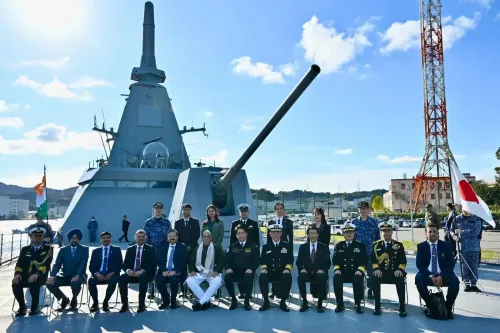
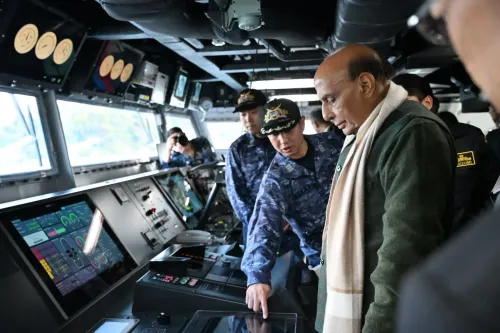
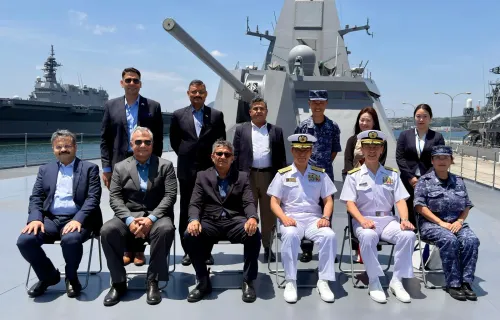
At the Japan Maritime Self-Defense Force base in Yokosuka, Union Defence Minister Rajnath Singh stepped aboard the Mogami-class multi-mission frigate Natori on Wednesday, 18 November 2026 — a hands-on signal that the India-Japan maritime partnership is moving well beyond diplomatic communiqués and into the engine rooms of each other's warships.
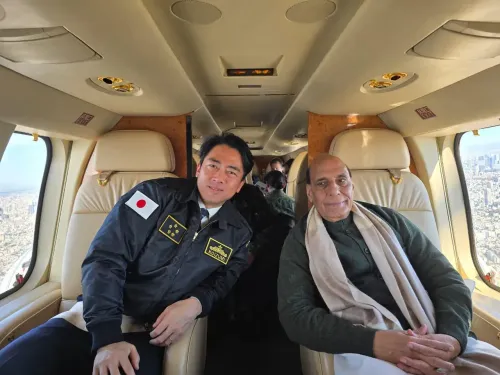
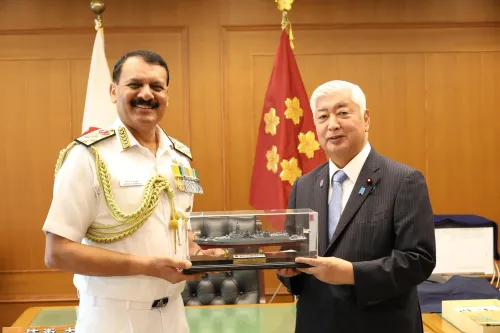
Singh was accompanied by Japanese Defence Minister Shinjiro Koizumi for the inspection. In a post sharing photographs from the visit, Singh described the advancing maritime cooperation between the two nations as reflecting 'deep mutual trust and a shared resolve' toward realising a 'free, open, and rules-based Indo-Pacific.'
What the Natori represents in Japan's naval modernisation
The Mogami-class frigates are Japan's newest and most versatile surface combatants — designed for anti-submarine warfare, mine countermeasures, and surface strike, all within a single, relatively compact hull. Inspecting the Natori at Yokosuka, home to one of the JMSDF's most operationally significant fleet commands, is not incidental. It is a deliberate display of the hardware Japan is willing to open to its partners.
For India, a close look at cutting-edge Japanese naval architecture carries real significance: the two countries have been exploring defence technology cooperation, and understanding each other's platforms is a prerequisite for meaningful interoperability.
A partnership built in layers since 2014
India and Japan elevated their relationship to a Special Strategic and Global Partnership in 2014, and have since constructed a layered defence architecture around it. The Acquisition and Cross-Servicing Agreement (ACSA), signed in 2020, allows each country's armed forces to draw on the other's logistical support — fuel, ammunition, supplies — during joint exercises or operations. That agreement made reciprocal port calls, like this Yokosuka visit, operationally meaningful rather than merely ceremonial.
The bilateral naval exercise JIMEX has become a fixture in the two navies' calendars, sharpening interoperability on anti-submarine warfare, communication protocols, and humanitarian response. Each high-level visit reinforces the political will that keeps those exercises funded and ambitious.
Why the Indo-Pacific framing matters right now
Singh's explicit invocation of a 'free, open, rules-based Indo-Pacific' is deliberate diplomatic language — the same phrase that anchors the Quad framework linking India, Japan, the United States, and Australia. At a moment when freedom-of-navigation remains contested in waters stretching from the South China Sea to the Indian Ocean, a sitting Defence Minister inspecting a partner's most modern frigate on their home soil is a concrete, visible commitment to that order.
The next milestone to watch: the India-Japan 2+2 Ministerial Dialogue — the foreign and defence minister format — which is expected to set the agenda for joint exercises and any technology-cooperation announcements that may follow this visit.
When a defence minister boards an ally's warship, he is not just checking specifications. He is telling every stakeholder in the region exactly where his country stands.
Point of View
Singh signals that bilateral maritime ties have matured from policy documents into platform-level familiarity. The ACSA of 2020 gave this partnership logistical teeth; visits like this one give it operational credibility. With the India-Japan 2+2 dialogue on the horizon, the groundwork laid at Yokosuka could accelerate joint technology development and exercise ambition well into 2027.
NationPress
18 Nov 2026
Frequently Asked Questions
Why did Rajnath Singh visit Yokosuka in Japan?
Rajnath Singh visited the Japan Maritime Self-Defense Force base at Yokosuka on 18 November 2026 to inspect the Mogami-class frigate Natori alongside Japanese Defence Minister Shinjiro Koizumi, as part of ongoing high-level defence engagement between India and Japan.
What is the Mogami-class frigate Natori?
The Natori is a Mogami-class multi-mission frigate of the Japan Maritime Self-Defense Force, designed for anti-submarine warfare, mine countermeasures, and surface strike — representing Japan's latest generation of naval surface combatants.
What is the India-Japan Acquisition and Cross-Servicing Agreement?
The Acquisition and Cross-Servicing Agreement (ACSA), signed by India and Japan in 2020, allows the armed forces of each country to access the other's logistical support — including fuel, ammunition, and supplies — during joint exercises and operations.
What is JIMEX, the India-Japan naval exercise?
JIMEX is a bilateral naval exercise held regularly between the Indian Navy and Japan Maritime Self-Defense Force, focused on anti-submarine warfare, communication interoperability, and humanitarian response.
What is India and Japan's Special Strategic and Global Partnership?
India and Japan upgraded their bilateral relationship to a Special Strategic and Global Partnership in 2014, establishing a framework for deeper cooperation in defence, technology, infrastructure, and maritime security.