Dr. Jitendra Singh Flags J&K's GI-Tagged Products Going Global
Synopsis
Union Minister Dr. Jitendra Singh highlighted six Geographical Indication-tagged products from Jammu and Kashmir — including Kishtwar saffron, Basohli Pashmina, and Bhaderwah rajma — as proof that the region's traditional crafts and produce are earning global recognition and economic opportunity for local artisans.
Key Takeaways
Jitendra Singh posted on 18 November 2026 spotlighting six GI-tagged products from Jammu and Kashmir.
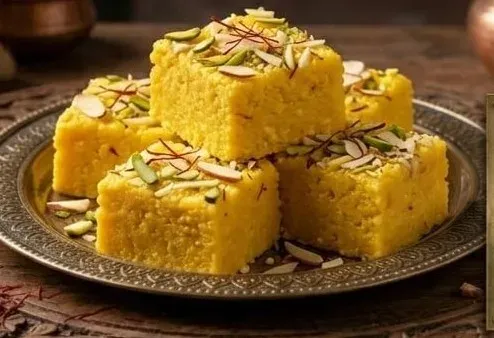
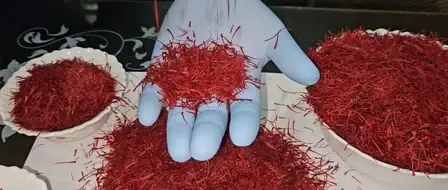
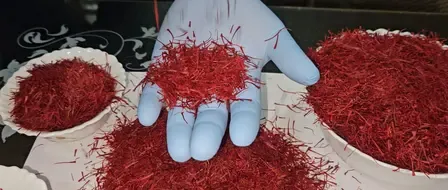
Products listed: Kishtwar saffron , Udhampur Kaladi , Basohli paintings , Basohli Pashmina , Ramban Sulai honey , and Bhaderwah rajma .
GI protection under the Geographical Indications of Goods Act, 1999 grants exclusive regional rights and boosts export potential for certified producers.
The push for J&K GI registrations accelerated after the reorganisation of the former state in August 2019 .
The minister framed GI tags as tools for artisan livelihoods, cultural identity, and economic integration with national and global markets.
Further GI applications from remaining J&K districts and export-promotion schemes remain the next benchmarks to watch.
From the saffron fields of Kishtwar to the hand-loomed Pashmina of Basohli, the traditional crafts and flavours of Jammu and Kashmir are earning a place on the world map — and Union Science and Technology Minister Dr. Jitendra Singh wants that story told. On Wednesday, 18 November 2026, the minister posted on X, spotlighting a cluster of Geographical Indication-tagged products from J&K as proof that local heritage can become a global identity.
Posting in Hindi, Dr. Singh wrote: 'Jammu-Kashmir ki samriddh virasat aur paramparik hunar ko mil rahi hai vaishvik pehchan' — 'Jammu and Kashmir's rich heritage and traditional skills are gaining global recognition.' He listed six GI-tagged products by name: Kishtwar saffron, Udhampur's Kaladi cheese, Basohli paintings, Basohli Pashmina, Ramban's Sulai honey, and Bhaderwah rajma — framing them as anchors of local identity, artisan livelihoods, and economic opportunity, in line with Prime Minister Narendra Modi's leadership.
What a GI Tag Actually Means for a Kashmiri Artisan
Geographical Indication protection, granted under the Geographical Indications of Goods (Registration and Protection) Act, 1999, is not a ceremonial badge. It is a legal shield — preventing imitation products from riding a region's reputation, and giving certified producers exclusive rights to market their goods under a protected name. For a saffron farmer in Kishtwar or a Pashmina weaver in Basohli, that translates into better bargaining power, premium pricing, and a credible passport to export markets.
The six products Dr. Singh highlighted span the breadth of J&K's Jammu division — from a mountain spice and a honey drawn from alpine flora, to a sharp artisan cheese, a legume cultivated at high altitude, and two craft traditions rooted in centuries of Dogra and Pahari culture. Each carries a geography that cannot be replicated elsewhere, and a GI tag makes that irreproducibility enforceable in law.
Post-2019 Push: Turning Cultural Assets into Economic Ones
The acceleration of GI registrations for J&K products is part of a deliberate policy arc that gained momentum after August 2019, when the reorganisation of the former state brought it under direct central administration. With that constitutional shift came a focus on integrating J&K's artisan economy with national and international supply chains — and GI tagging emerged as a primary tool.
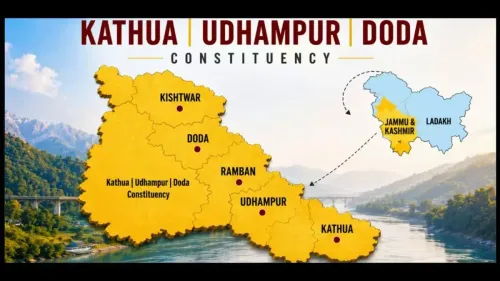
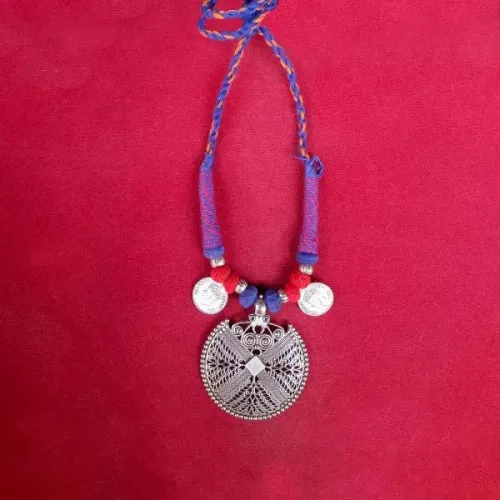
Basohli, a historic town in Kathua district, is emblematic of the approach. Its miniature paintings, traceable to the late 17th-century Basohli school of art, and its Pashmina wool — softer than the more-famous Kashmiri variety, produced at different altitudes — now carry formal GI protection. Ramban's Sulai honey, harvested from wild bees in the Chenab valley's forested ridges, and Bhaderwah's rajma, grown in the high-altitude Bhaderwah valley and prized for its distinct flavour, follow the same logic: a product unique to its microclimate, now legally anchored to it.
Local Artisans and Farmers at the Centre of the Narrative
The minister's framing — 'sthaniya virasat, vaishvik pehchan', or 'local heritage, global recognition' — positions GI tags not just as trade instruments but as instruments of cultural dignity. The direct beneficiaries are the farmers who cultivate Kishtwar's prized saffron threads and the artisans whose hands produce Basohli's painted panels. Whether the policy machinery translates GI status into measurable income gains on the ground depends on downstream support: export linkages, e-commerce integration, packaging standards, and marketing investment.
With several districts of J&K still without GI-registered products, the pipeline for further registrations — and the government schemes that must accompany them — will be the real measure of ambition.
Point of View
Rather than the more internationally familiar Kashmir Valley items, signals a deliberate effort to surface sub-regional identities within J&K that rarely make national headlines. The 'local heritage, global recognition' formulation is consistent with a broader BJP-era vocabulary that conflates national integration with market integration. The harder political test, however, is whether GI status alone generates ground-level income gains without sustained export infrastructure and artisan-support schemes.
NationPress
18 Nov 2026
Frequently Asked Questions
What GI-tagged products from Jammu and Kashmir did Dr. Jitendra Singh mention?
Dr. Jitendra Singh highlighted six products: Kishtwar saffron, Udhampur Kaladi cheese, Basohli paintings, Basohli Pashmina, Ramban Sulai honey, and Bhaderwah rajma — all holding Geographical Indication status.
What is a Geographical Indication (GI) tag and why does it matter?
A GI tag, granted under India's Geographical Indications of Goods Act of 1999, legally links a product to its region of origin. It prevents imitation, allows premium pricing, and helps producers access export markets with a certified identity.
Why did GI registrations for J&K products accelerate after 2019?
After the reorganisation of Jammu and Kashmir in August 2019, the central government prioritised integrating J&K's artisan and agricultural economy into national and international markets, with GI tagging as a key policy tool.
What is Basohli Pashmina and how is it different from Kashmiri Pashmina?
Basohli Pashmina is a wool product from the Basohli area of Kathua district in J&K's Jammu region, produced at different altitudes from the more famous Kashmiri variety. It now holds GI protection as a distinct regional product.
What is Sulai honey from Ramban?
Sulai honey is harvested from wild bees in the forested ridges of the Chenab valley in Ramban district, prized for its distinct alpine flavour and now protected under a GI tag.