Jharkhand CMO: 11 tribal crafts and textiles get GI tag
Synopsis
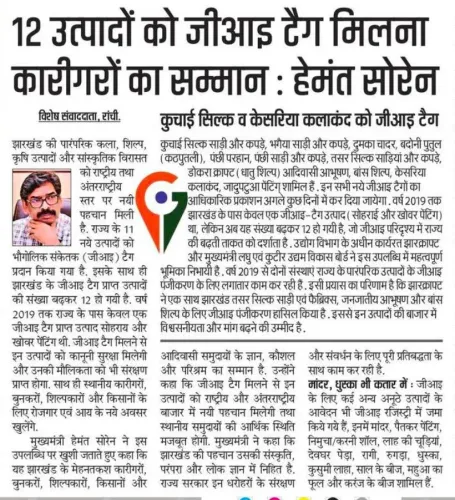
The Jharkhand Chief Minister's Office announced on 17 June 2026 that eleven traditional products — including Kuchai Silk, Tassar Silk, Dokra Craft, Tribal Jewellery, Bamboo Crafts, Jadupatua Paintings, and Kesariya Kalakand — have received Geographical Indication protection, strengthening legal safeguards for tribal artisans and handloom weavers across the state.
Key Takeaways
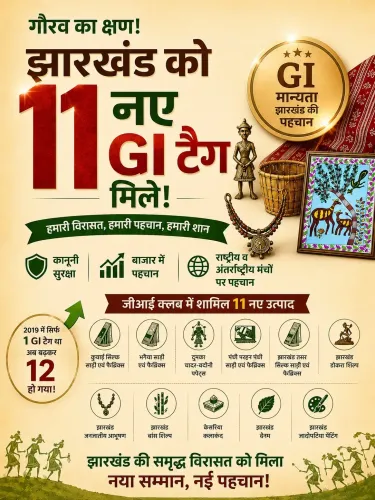
Eleven products from Jharkhand have received Geographical Indication (GI) protection, announced by the Chief Minister's Office on 17 June 2026 .
The list includes Kuchai Silk , Bhagaiya sarees, Tassar Silk , Dokra Craft , Tribal Jewellery , Bamboo Crafts , Dumka Chadar Badoni Putul , Panchhi Parhan sarees, Kesariya Kalakand , and Benam and Jadupatua Paintings .
GI protection under the Geographical Indications of Goods (Registration and Protection) Act, 1999 gives producers legal recourse against imitation.
Tribal artisans and handloom weavers across Jharkhand are the primary beneficiaries, with craft clusters in districts such as Kuchai and Dumka .
Jadupatua Paintings , a ritual scroll art of the Santhal community, and Dokra Craft , an ancient lost-wax metal casting tradition, are among the culturally significant inclusions.
Post-registration marketing support and export promotion will be critical to translating GI status into tangible income gains for artisans.
The Chief Minister's Office of Jharkhand announced on Wednesday, 17 June 2026 that eleven of the state's traditional craft and textile products have received Geographical Indication (GI) protection, marking a significant step in formalising legal recognition for the region's tribal cultural heritage.
What was announced
The CMO's post listed the following products as newly GI-tagged: Kuchai Silk sarees and fabric, Bhagaiya sarees and fabric, Dumka Chadar Badoni Putul, Panchhi Parhan and Panchhi sarees and fabric, Tassar Silk sarees and fabric, Dokra Craft, Tribal Jewellery, Bamboo Crafts, Kesariya Kalakand, and Benam and Jadupatua Paintings. The announcement described these as having joined the 'GI Club' — a colloquial reference to the growing roster of GI-registered goods from the state.
Context
Geographical Indication protection in India is governed by the Geographical Indications of Goods (Registration and Protection) Act, 1999. A GI tag certifies that a product's quality, reputation, or other characteristic is essentially attributable to its geographic origin, granting producers legal recourse against imitation and misuse of the name.
Jharkhand's tribal communities have long been custodians of these craft traditions. Tassar Silk, woven from wild silkworms in the state's forests, is central to tribal handloom livelihoods. Dokra Craft is an ancient lost-wax metal casting technique practised by tribal artisans and recognised internationally for its distinctive folk motifs. Jadupatua Paintings are scroll-based ritual artworks of the Santhal community, depicting mythological and social narratives.
Policy backdrop
Indian states have steadily expanded GI registrations for textiles, crafts, and foods since the mid-2000s, using the framework to safeguard intangible cultural heritage and improve artisan incomes. Jharkhand has been among the states filing successive rounds of GI applications, particularly for products tied to its significant tribal population.
The GI tag does not by itself guarantee market access or income uplift — it must be paired with branding, marketing infrastructure, and export promotion. Central and state handloom schemes have been the primary vehicles for post-registration support in past cycles.
Stakeholders and impact
The primary beneficiaries are tribal artisans and handloom weavers across districts including Kuchai, Dumka, and other craft clusters in Jharkhand. GI status gives them a legal basis to brand and market their products distinctively, and can deter counterfeit goods from undercutting their prices in domestic and export markets.
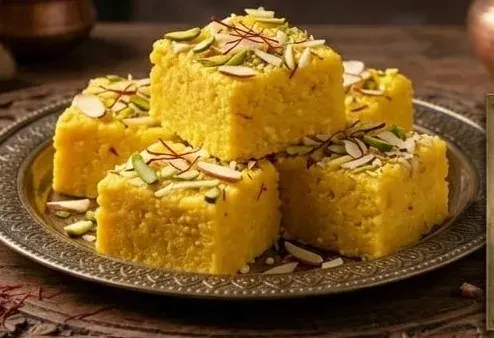
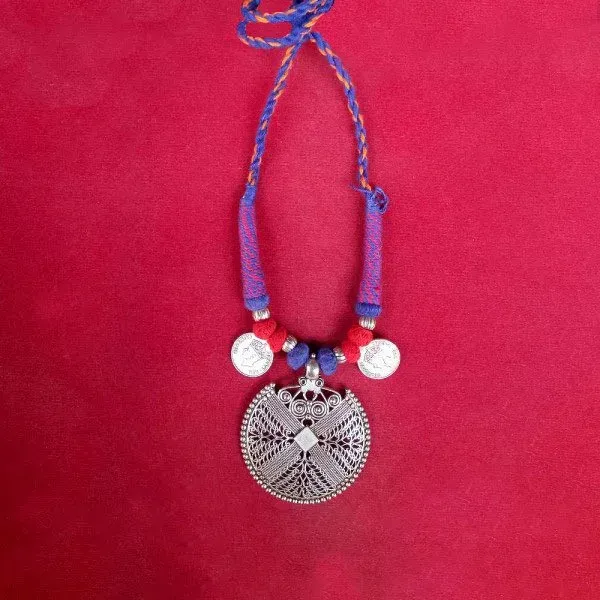
Craft categories such as Bamboo Crafts and Tribal Jewellery represent the livelihoods of large numbers of rural households. Kesariya Kalakand, a traditional sweet, adds a food product to the state's GI portfolio, broadening the scope beyond textiles and visual arts.
What's next
Attention will now shift to whether the state government rolls out dedicated marketing support, e-commerce linkages, and export promotion measures for the newly tagged products under existing handloom and handicraft schemes. The scale of benefit to artisans will depend on how quickly institutional infrastructure — including certified producer groups and quality-control mechanisms — is put in place around the new GI designations.
Point of View
However, a necessary but not sufficient condition: the policy arc that matters most is whether Jharkhand follows through with certified producer organisations, e-commerce integration, and export facilitation. The inclusion of a food item — Kesariya Kalakand — alongside textiles and crafts suggests a broadening of the state's GI strategy beyond the handloom sector. How quickly institutional infrastructure catches up with legal recognition will determine whether this announcement translates into measurable income gains for tribal communities.
NationPress
17 Sept 2026
Frequently Asked Questions
What is a GI tag and why does it matter for Jharkhand's crafts?
A Geographical Indication (GI) tag is a legal certification under India's GI Act of 1999 that links a product's quality or reputation to its place of origin. For Jharkhand's tribal crafts and textiles, it provides protection against imitation and helps artisans brand their products distinctively in domestic and export markets.
Which Jharkhand products received GI protection in June 2026?
The Jharkhand CMO announced GI protection for Kuchai Silk sarees and fabric, Bhagaiya sarees and fabric, Dumka Chadar Badoni Putul, Panchhi Parhan and Panchhi sarees and fabric, Tassar Silk sarees and fabric, Dokra Craft, Tribal Jewellery, Bamboo Crafts, Kesariya Kalakand, and Benam and Jadupatua Paintings.
What is Jadupatua Painting?
Jadupatua Painting is a scroll-based ritual art form practised by the Santhal tribal community in Jharkhand. It depicts mythological and social themes and is now protected under a Geographical Indication tag.
What is Dokra Craft from Jharkhand?
Dokra Craft is an ancient lost-wax metal casting technique practised by tribal artisans in Jharkhand. It is known for distinctive folk motifs and is internationally recognised as a significant form of traditional Indian metalwork.
Will the GI tag directly increase income for Jharkhand tribal artisans?
A GI tag provides legal protection and branding rights but does not automatically increase artisan incomes. The actual benefit depends on follow-up measures such as marketing support, certified producer groups, e-commerce linkages, and export promotion under state and central schemes.