Jharkhand CMO seeks GI tags for Mandar, Dhuska, Rugda and more
Synopsis
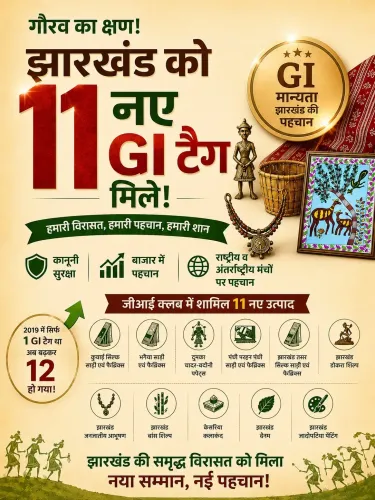
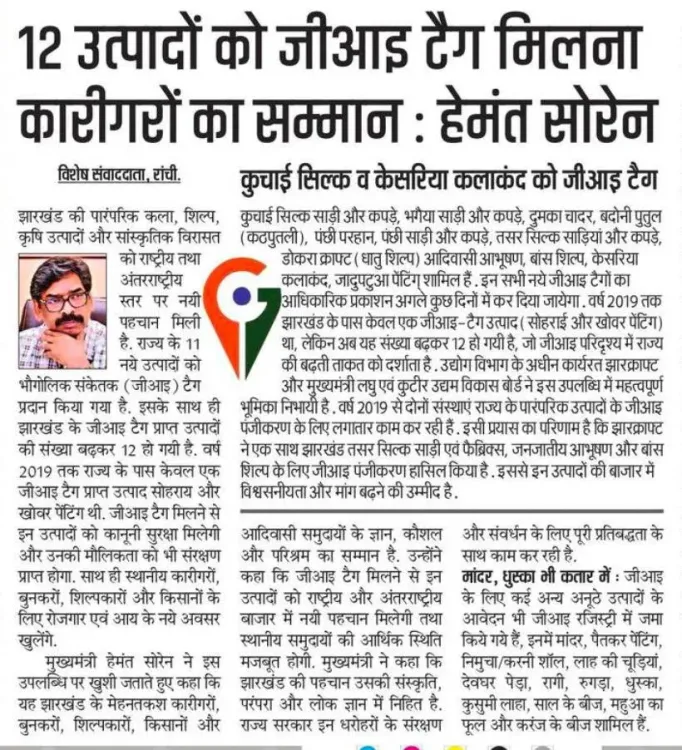
The Chief Minister's Office of Jharkhand has announced that GI tag applications are in process for several unique state products — Mandar, Dhuska, Paitkar paintings, Deoghar Peda, and Rugda — as part of a broader push to protect cultural heritage and support artisan livelihoods through intellectual-property law.
Key Takeaways
The Chief Minister's Office of Jharkhand confirmed on 18 June 2026 that GI tag applications are underway for multiple distinctive state products.
Products in the pipeline include the Mandar tribal drum, Dhuska (a fried rice-lentil snack), Paitkar paintings , Deoghar Peda , and the forest mushroom Rugda .
GI tags in India are governed by the Geographical Indications of Goods (Registration and Protection) Act, 1999 .
Successful registration would offer legal protection to traditional artisans and local food producers against imitation and misuse.
The move aligns with a wider national trend of state governments using IP tools to commercialise and preserve regional cultural heritage.
Next steps include examination by the GI Registry , publication in the GI Journal, and a potential opposition window before tags are formally granted.
The Chief Minister's Office of Jharkhand announced on Thursday, 18 June 2026 that several of the state's distinctive cultural and culinary products — including the Mandar drum, Dhuska, Paitkar paintings, Deoghar Peda, and the forest mushroom Rugda — are currently in the application process for Geographical Indication (GI) tags, signalling a concerted state-level push to protect Jharkhand's intangible and tangible heritage through intellectual-property law.
Context
The post, shared on the official @JharkhandCMO account, states in Hindi: 'Mandar, Dhuska, Paitkar Painting, Deoghar Peda, aur Rugda jaise kai anya anokhe utpadon ke liye bhi avedan prakriya mein hain…' — meaning, 'Applications are also in process for many other unique products such as Mandar, Dhuska, Paitkar Painting, Deoghar Peda, and Rugda.' The ellipsis suggests the list is illustrative, not exhaustive, pointing to a broader portfolio of products being pursued simultaneously.
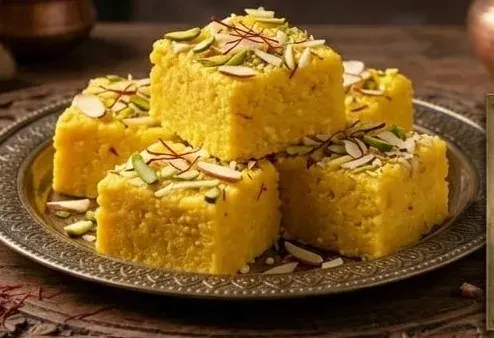
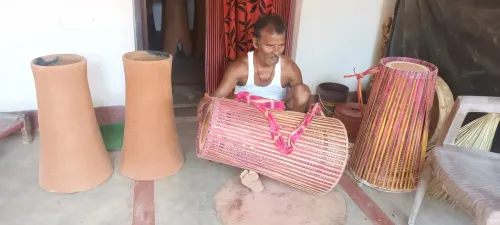
Each product carries deep cultural significance. The Mandar is a traditional tribal drum central to the performing arts of Jharkhand's indigenous communities. Dhuska is a fried rice-and-lentil delicacy associated with the state's cuisine. Paitkar paintings are a centuries-old scroll-painting tradition practised by the Chitrakar community. Deoghar Peda is a milk-based sweet tied to the pilgrimage economy of Deoghar, home to the revered Baidyanath Temple. Rugda is a wild mushroom foraged from Jharkhand's forests and prized in local cooking.
Policy Backdrop
GI tags in India are governed by the Geographical Indications of Goods (Registration and Protection) Act, 1999, administered by the Geographical Indications Registry under the Ministry of Commerce and Industry. A registered GI tag confers legal protection against imitation and misuse, and is widely regarded as a tool to boost the commercial value of region-specific goods.
Indian states have increasingly filed GI applications as part of a national effort to document and commercialise cultural heritage. Jharkhand's move fits into this broader pattern, with state governments viewing GI status as a way to strengthen rural livelihoods, support traditional artisans, and put lesser-known regional products on the national and international map.
Stakeholders and Impact
The primary beneficiaries of successful GI registration would be traditional artisans — including Paitkar painters and Mandar craftspeople — and local food producers such as Deoghar Peda makers and Rugda foragers. A GI tag would give these communities legal recourse against counterfeit products and could open doors to premium pricing in export markets.
For Deoghar, a GI tag for its Peda could reinforce the town's identity as a pilgrimage and cultural destination, potentially boosting tourism-linked commerce. For tribal communities, recognition of the Mandar and Paitkar tradition through an IP framework adds a formal layer of cultural preservation to what has historically been oral and community-transmitted knowledge.
What's Next
The applications are currently being processed by the Geographical Indications Registry. Once examined and published in the GI Journal, applications are open to opposition before a tag is formally granted. The timeline for each product may vary based on documentation completeness and any objections raised during the process.
Should these GI tags be approved, the Jharkhand government is expected to pursue state-level branding and marketing initiatives to leverage the protected status — a step that could significantly raise the profile of these products beyond the state's borders and integrate them into mainstream craft and food commerce.
Point of View
Visual crafts, and food products signals a maturing state strategy that treats cultural heritage as an economic asset, not merely a symbolic one. By anchoring these applications in formal IP law, the government is attempting to convert soft cultural capital — tribal drumming traditions, centuries-old scroll paintings, pilgrimage-town sweets — into legally defensible commercial identities. The move also carries political weight: in a state where tribal identity is central to electoral and social discourse, formalising recognition of indigenous products through a Union government registry sends a message of institutional validation. The real test will be whether GI approval translates into meaningful income gains for artisans, or remains a certificate on a wall.
NationPress
19 Sept 2026
Frequently Asked Questions
What is a GI tag and why does it matter for Jharkhand products?
A Geographical Indication (GI) tag is a legal certification under the Geographical Indications of Goods (Registration and Protection) Act, 1999 that links a product to a specific region. For Jharkhand products like Paitkar paintings and Deoghar Peda, it provides legal protection against imitation and can help producers command premium prices in national and international markets.
Which Jharkhand products are currently in the GI tag application process?
According to the Chief Minister's Office of Jharkhand , products currently in the GI application process include the Mandar drum, Dhuska , Paitkar paintings , Deoghar Peda , and Rugda mushroom, among others.
What is Paitkar painting?
Paitkar painting is a centuries-old scroll-painting tradition practised by the Chitrakar community in Jharkhand. It is one of India's oldest folk-art forms and is now being pursued for GI tag protection to preserve and promote the tradition.
What is Rugda and why is it significant?
Rugda is a wild mushroom foraged from the forests of Jharkhand. It holds cultural and culinary significance in the state and is being pursued for a GI tag to protect its regional identity and support the livelihoods of those who harvest it.
How long does it take to get a GI tag in India?
The GI registration process in India involves filing an application with the Geographical Indications Registry , examination, publication in the GI Journal, and an opposition window. The timeline varies by product and can range from several months to a few years depending on documentation and any legal objections raised.