Jal Shakti Minister Paatil Meets Punjab Industry Leaders
Synopsis
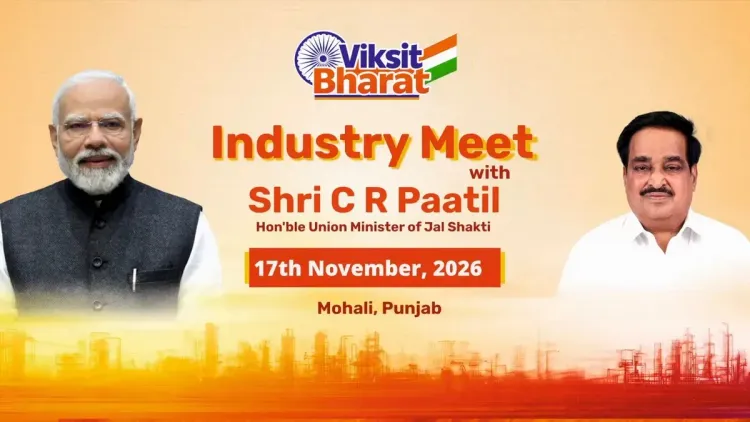
Union Jal Shakti Minister C. R. Paatil met Punjab industrialists on 18 November 2026, assuring them of full central commitment to resolving sectoral challenges and completing pending projects under PM Modi's governance framework.
Key Takeaways
Union Jal Shakti Minister C.
Paatil held a direct dialogue with representatives of Punjab's industrial community on 18 November 2026 .
Paatil assured industry leaders that all pending issues and challenges would be addressed with 'full commitment.' He invoked PM Narendra Modi's 'culture of completion' — accelerating long-stalled projects — as the guiding framework for Punjab's industrial push.
The outreach aligns with the broader Make in India initiative launched in 2014 to strengthen domestic manufacturing at the state level.
Paatil's stated three-part goal: 'prosperous industry, empowered employment, and a developed Punjab.' Specific resolutions and follow-up timelines from the meeting are yet to be formally announced.
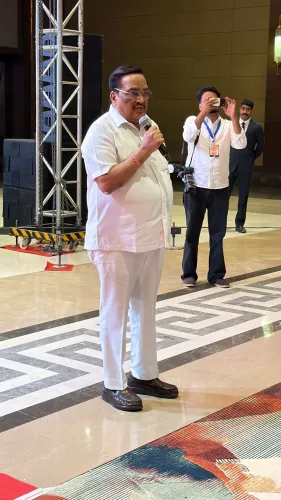
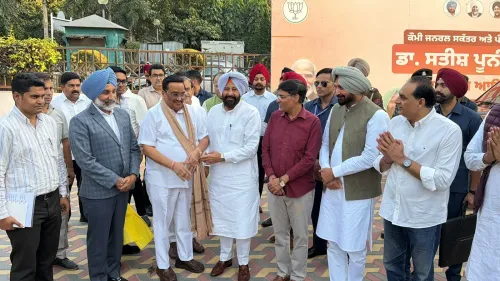
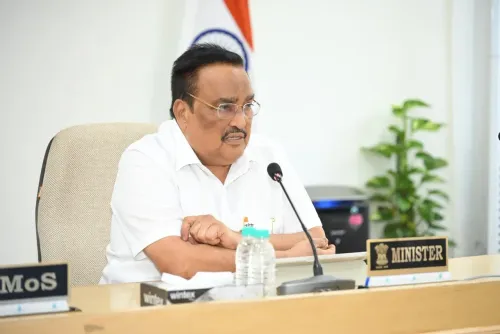
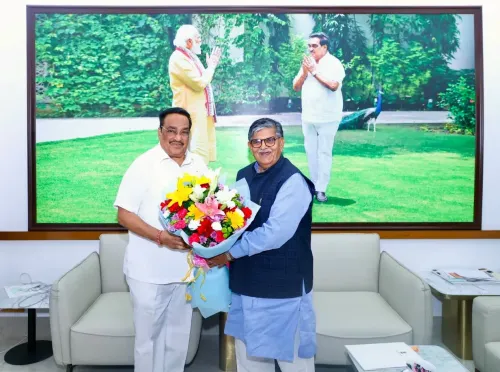
Industry is not merely a vehicle for trade — it is the livelihood of thousands of families and the bedrock of a state's economic progress. That was the framing Union Jal Shakti Minister C. R. Paatil brought to a direct dialogue with representatives of Punjab's industrial community on Wednesday, 18 November 2026, pledging full commitment to resolving sectoral challenges and propelling the state to new heights of development.
Posting on X in Hindi, Paatil wrote: 'Udyog keval vyapar ka madhyam nahin, balki hazaron parivaron ki aajivika aur pradesh ki aarthik pragati ka aadhar hain' — 'Industries are not just a medium of trade, but the foundation of the livelihood of thousands of families and the economic progress of the state.' He added that he had listened carefully to the expectations and challenges of Punjab's industry leaders and assured them that every pending concern would be addressed with complete commitment.
Modi's 'culture of completion' as the template
Paatil anchored his assurances in what he called the 'karya sanskriti' — work culture — shaped by Prime Minister Narendra Modi's leadership: a governance philosophy centred on accelerating long-pending projects and carrying them through to completion. That framing is deliberate. Since 2014, the central government has repeatedly held up the execution of stalled infrastructure and industrial projects as a defining difference from earlier administrations, and Paatil invoked that same narrative as the blueprint for Punjab.
The meeting fits a wider pattern of BJP's central leadership engaging directly with state-level industry bodies — an approach that blends political outreach with the economic messaging of Make in India, the flagship manufacturing push launched in 2014 to attract investment and deepen domestic production across every state.
Why Punjab's industrial base is the focus
Punjab carries a significant manufacturing and industrial footprint — from textiles and auto-parts clusters to agro-processing — but the state has faced headwinds on infrastructure gaps, power costs, and project clearances. A senior central minister sitting down with local industry heads to map unresolved concerns signals that these pain points have reached the federal agenda. Paatil's post closes with a three-part resolution: 'Samridh udyog, sashakt rozgar aur viksit Punjab' — 'prosperous industry, empowered employment, and a developed Punjab.'
The specific resolutions or follow-up timelines from the November 2026 dialogue have not yet been formally announced. What to watch: whether a central-state coordination mechanism or targeted project-clearance fast-track emerges in the weeks ahead, translating Tuesday's conversation into measurable outcomes for Punjab's factory floors and workforce.
For a state whose industrial sector directly feeds hundreds of thousands of households, the question is not whether the intent is genuine — it is whether the pipeline of pending projects starts moving before the next election cycle does.
Point of View
Particularly one where the party seeks to strengthen its foothold. The deliberate invocation of Modi's 'culture of completion' ties local industrial promises to the broader national governance brand, making any future project delivery a credit to the Centre. What gives this moment policy weight is Punjab's genuinely unresolved industrial infrastructure backlog — the meeting is an opportunity to convert political rhetoric into a concrete clearance pipeline. The real test arrives when specific pending projects either accelerate or stall in the months that follow.
NationPress
18 Nov 2026
Frequently Asked Questions
Why did C. R. Paatil meet Punjab industry representatives?
Union Jal Shakti Minister C. R. Paatil met Punjab industrialists on 18 November 2026 to understand their expectations and challenges, and to assure them that the central government would work with full commitment to resolve industrial issues and drive the state's economic growth.
What is the 'culture of completion' Paatil referred to?
Paatil referred to PM Narendra Modi's governance approach of accelerating and completing long-pending infrastructure and industrial projects — a policy emphasis that has been central to the BJP government's narrative since 2014.
What is C. R. Paatil's current position in the government?
C. R. Paatil is the Union Minister of Jal Shakti. He is also a senior BJP leader and a former president of the BJP's Gujarat state unit.
What is Make in India and how does it relate to Punjab's industry?
Make in India is a flagship central government initiative launched in 2014 to attract investment and strengthen domestic manufacturing across Indian states. Paatil's outreach to Punjab industrialists is consistent with its goal of boosting state-level industrial activity.
What specific commitments were made for Punjab's industrial sector?
Paatil pledged to resolve industrial challenges and complete pending projects with full commitment, citing PM Modi's project-completion work culture. Specific resolutions or timelines from the 18 November 2026 dialogue have not yet been formally announced.