Rajnath Singh tours JMSDF Naval Base in Yokosuka, eyes deeper India-Japan maritime ties
Synopsis
Defence Minister Rajnath Singh's tour of the JMSDF Naval Base in Yokosuka — his third bilateral meeting with Japan's Shinjiro Koizumi in just four months — signals that the India-Japan defence axis is shifting from ceremonial partnership to operational depth, with joint exercises, defence tech transfers, and industrial tie-ups all on the table at the fourth 2+2 Dialogue.
Key Takeaways
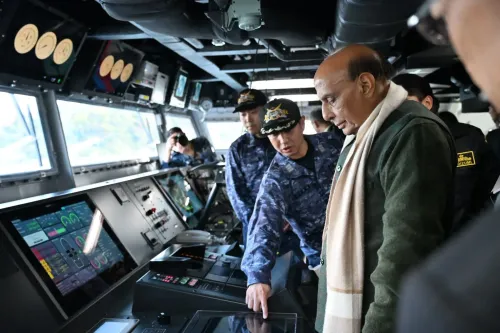
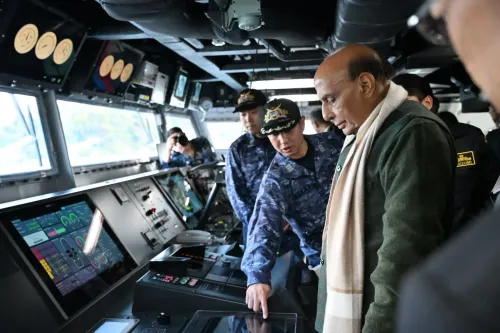
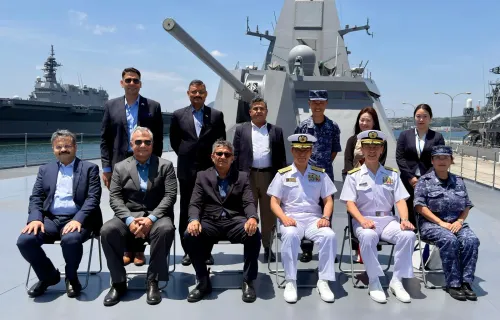
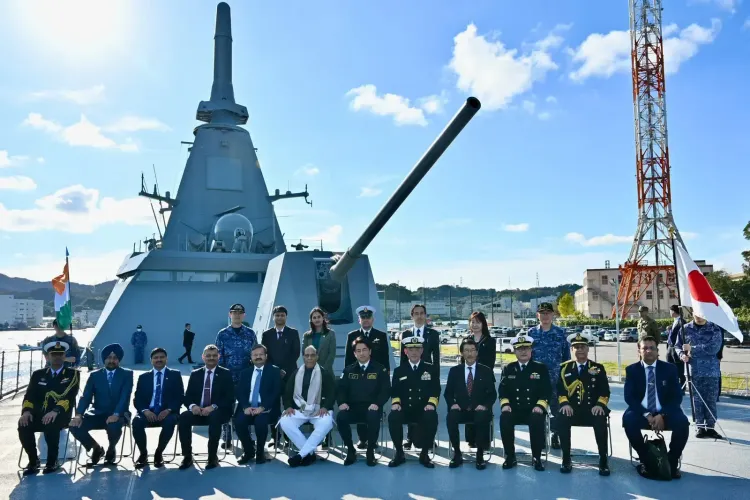
Rajnath Singh visited the JMSDF Naval Base in Yokosuka on 18 November 2026 , touring the Mogami-class frigate JS Natori with Japan's Defence Minister Shinjiro Koizumi .
This is Singh and Koizumi's third bilateral meeting in four months , following engagements in New Delhi (August) and Cebu (October) .
The fourth India-Japan 2+2 Ministerial Dialogue will be co-chaired by Singh and EAM S.
Jaishankar , along with Koizumi and Foreign Minister Toshimitsu Motegi .
Agenda covers maritime security , defence equipment and technology collaboration , joint exercises across all three services , and industrial defence partnerships .
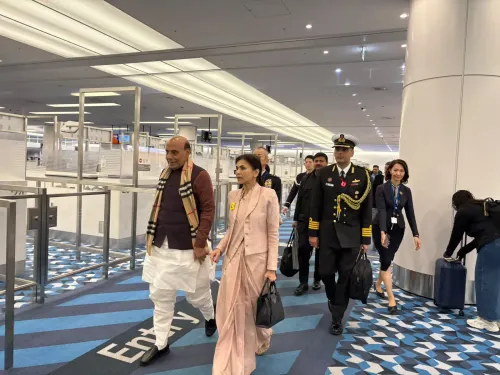
India's Ambassador Nagma Mallick received Singh at the airport; Singh was also accorded a ceremonial Guard of Honour at Japan's Ministry of Defence in Tokyo .
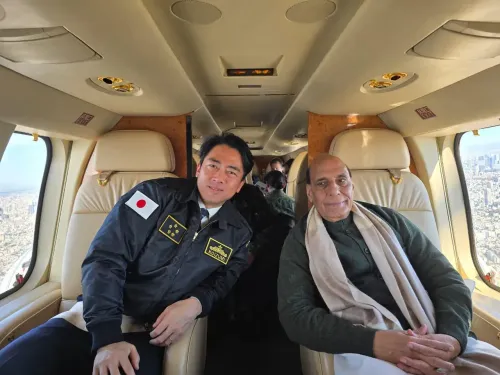
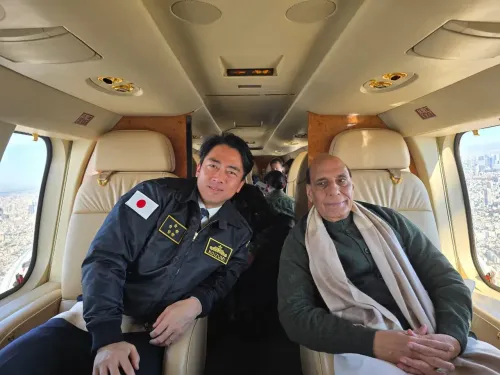
Defence Minister Rajnath Singh on 18 November 2026 visited the Japan Maritime Self-Defence Force (JMSDF) Naval Base in Yokosuka, touring the Mogami-class multi-mission frigate JS Natori alongside Japan's Defence Minister Shinjiro Koizumi. The visit underscores the rapid deepening of India-Japan defence cooperation, with both sides preparing for their fourth 2+2 Ministerial Dialogue in Tokyo.
Inside the Naval Base Visit
Singh and Koizumi toured the JS Natori, one of Japan's newest and most capable multi-mission frigates under the Mogami-class programme. The vessel is designed for anti-submarine warfare, surface combat, and mine-laying — a platform that speaks directly to shared concerns about maritime security in the Indo-Pacific.
Posting pictures on X, Singh stated: 'Visited the JMSDF Naval Base in Yokosuka today along with Japan's Defence Minister Shinjiro Koizumi and toured the Mogami-class multi-mission frigate, JS Natori. Our growing maritime cooperation reflects the deep trust and shared commitment of India and Japan toward ensuring a free, open, and rules-based Indo-Pacific.'
Koizumi, whose hometown is Yokosuka, also posted on X that he looked forward to welcoming Singh and would do his 'utmost' to make the visit 'a meaningful one.'
Third Meeting in Four Months
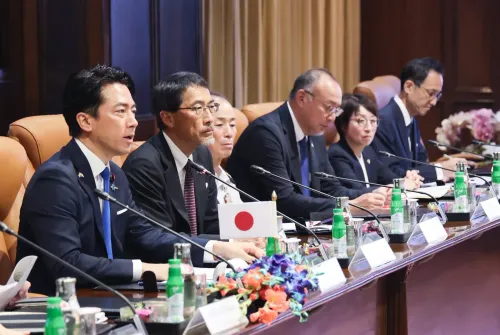
The Yokosuka stop is part of a broader visit during which Singh and Koizumi will hold their third bilateral defence ministerial meeting in four months — following engagements in New Delhi in August 2026 and on the sidelines of the ASEAN Defence Ministers' Meeting-Plus in Cebu in October 2026. The frequency signals an intentional acceleration of bilateral defence ties that goes beyond routine diplomacy.
Koizumi confirmed the two leaders will discuss 'a wide range of topics, including maritime security cooperation,' at the meeting. Earlier in the day, Singh was accorded a ceremonial Guard of Honour at Japan's Ministry of Defence in Tokyo. India's Ambassador to Japan, Nagma Mallick, received Singh at the airport upon his arrival.
What the 2+2 Dialogue Covers
The fourth India-Japan Foreign and Defence Ministers' 2+2 Dialogue will be co-chaired by Singh and External Affairs Minister S. Jaishankar on the Indian side, with Koizumi and Japan's Foreign Minister Toshimitsu Motegi representing Tokyo. According to the Ministry of Defence, both sides will review the full spectrum of bilateral strategic and defence cooperation, exchange views on regional and global developments, and reaffirm commitment to a 'free, open, inclusive, and rules-based Indo-Pacific.'
Specific agenda items include advancing defence equipment and technology collaboration, enhancing the scale and complexity of joint exercises across all three services, and deepening industrial defence partnerships. Notably, this is the fourth such 2+2 dialogue — a format that has become a cornerstone of the India-Japan Special Strategic and Global Partnership since it was launched.
India-Japan Defence Partnership: The Bigger Picture
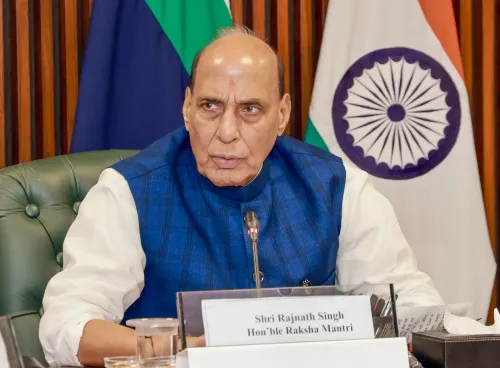
Singh, prior to departure, had outlined the visit's strategic intent, stating: 'During this visit, we will review the steady progress in our defence and security cooperation and explore new avenues to deepen collaboration in technology, maritime security, and regional stability.'
He further noted on X: 'India and Japan share a Special Strategic and Global Partnership rooted in mutual trust, democratic values, and a shared vision for a free, open, and rules-based Indo-Pacific.' This comes amid growing strategic convergence between New Delhi and Tokyo on China's assertiveness in the South China Sea and the broader Indo-Pacific, with both nations also active in the Quad alongside the United States and Australia.
The Ministry of Defence had earlier stated that the visit aims to 'further deepen bilateral defence ties and chart the roadmap for enhanced operational and industrial synergy between the two countries.' With three ministerial meetings in a single year and a 2+2 dialogue now in its fourth edition, the India-Japan defence axis is maturing into one of Asia's most consequential bilateral security arrangements.
Point of View
Alongside the Quad framework. What mainstream coverage underplays is the industrial dimension: joint exercises are visible, but defence manufacturing tie-ups between India and Japan could quietly reshape both countries' procurement pipelines. The JS Natori tour is symbolic, but the real deliverable to watch is whether the 2+2 produces binding commitments on co-production — not just cooperation language that fills joint statements.
NationPress
18 Nov 2026
Frequently Asked Questions
Why did Rajnath Singh visit the JMSDF Naval Base in Yokosuka?
Singh visited the JMSDF Naval Base in Yokosuka on 18 November 2026 to strengthen India-Japan maritime cooperation, touring the Mogami-class frigate JS Natori with Japan's Defence Minister Shinjiro Koizumi. The visit was part of his broader official trip to Japan for the fourth India-Japan 2+2 Ministerial Dialogue.
What is the India-Japan 2+2 Ministerial Dialogue?
The 2+2 Dialogue is a joint foreign and defence ministerial format between India and Japan, now in its fourth edition. It is co-chaired by Defence Minister Rajnath Singh and External Affairs Minister S. Jaishankar alongside Japan's Defence Minister Shinjiro Koizumi and Foreign Minister Toshimitsu Motegi, and covers strategic, defence, and regional security issues.
What topics will Singh and Koizumi discuss at their meeting?
The two ministers will discuss maritime security cooperation, defence equipment and technology collaboration, enhancing joint military exercises across all three services, and deepening industrial defence partnerships. This will be their third bilateral meeting in four months.
What is the Mogami-class frigate JS Natori that Singh toured?
JS Natori is a Mogami-class multi-mission frigate of the Japan Maritime Self-Defence Force, designed for anti-submarine warfare, surface combat, and mine-laying. It is one of Japan's newest surface combatants and represents the cutting edge of JMSDF capabilities.
How significant is India-Japan defence cooperation?
India and Japan share a Special Strategic and Global Partnership, with both nations active in the Quad alongside the United States and Australia. The two sides have held three bilateral defence ministerial meetings in 2026 alone, signalling a rapid deepening of ties centred on a shared vision for a free, open, and rules-based Indo-Pacific.