Japan Defence Minister Koizumi praises India ties, cites Navy's emergency aid
Synopsis
Japan's Defence Minister Shinjiro Koizumi didn't just exchange pleasantries with Rajnath Singh — he cited a live naval emergency where the Indian Navy stepped in to help a JMSDF vessel as proof that the India-Japan partnership works when it counts. That operational moment, paired with Koizumi's personal connection to India's atomic-bomb memorial tradition, signals a defence relationship that has moved well beyond diplomatic formality.
Key Takeaways
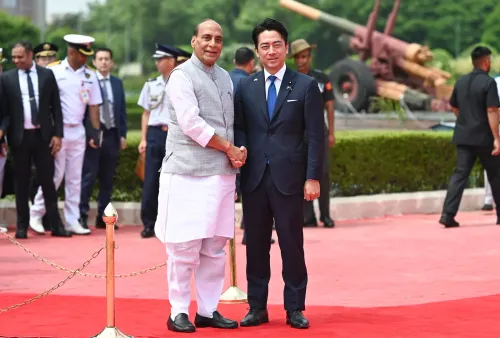
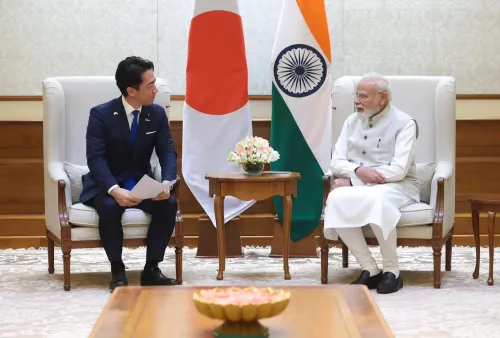
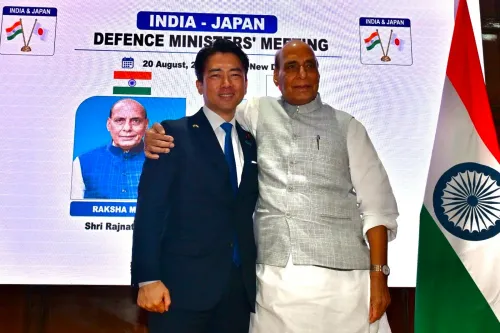
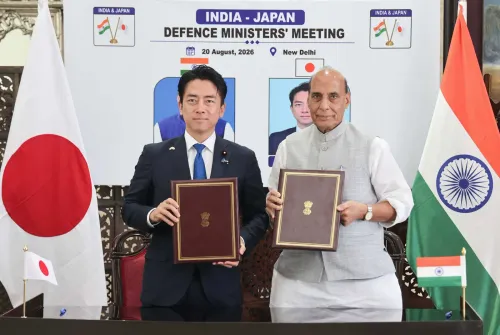
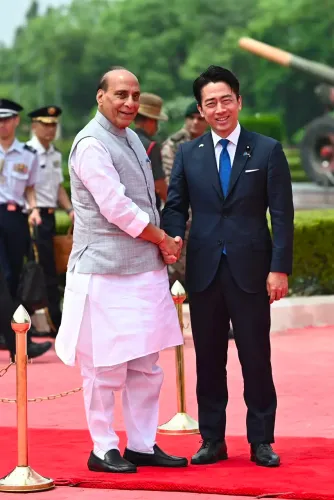
Japanese Defence Minister Shinjiro Koizumi met Defence Minister Rajnath Singh in New Delhi on 20 August .
Koizumi credited the Indian Navy for providing timely support during a medical emergency aboard a JMSDF vessel , calling it a symbol of mutual cooperation.
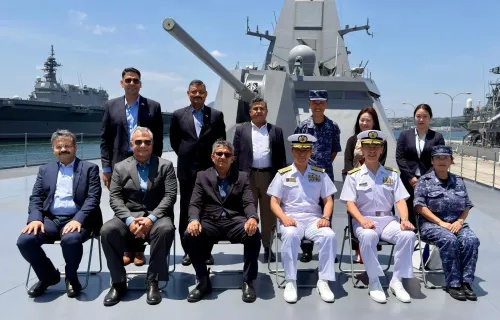
Koizumi visited the Western Naval Command and destroyer INS Chennai in Mumbai , travelling aboard an Indian Air Force aircraft with Admiral Krishna Swaminathan .
He praised Admiral Swaminathan personally and said he holds 'a special place for India' in his heart.
Koizumi recalled participating in India's atomic-bomb memorial ceremony on 6 August 2018 , noting India is likely the only Parliament outside Japan to hold such an annual ceremony.
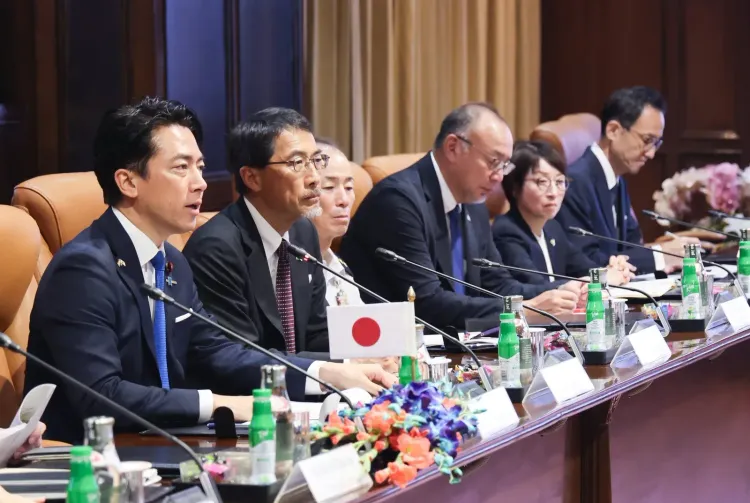
Japanese Defence Minister Shinjiro Koizumi on Thursday, 20 August underscored the depth of India-Japan defence ties during a bilateral meeting with Defence Minister Rajnath Singh in New Delhi, pointing to the Indian Navy's swift assistance during a medical emergency aboard a Japan Maritime Self-Defense Force (JMSDF) vessel as a defining symbol of the partnership.
Key Developments
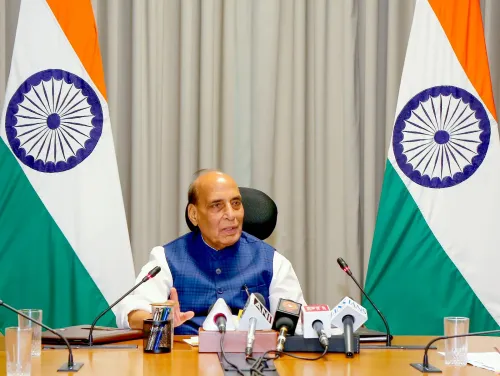
In his opening remarks, Koizumi thanked Singh for expressing condolences to those affected by the earthquake in Kumamoto Prefecture, Japan. He then highlighted the naval incident as evidence of the bilateral relationship's practical strength.
'I also appreciate the support provided by the Indian Navy during the medical emergency that occurred on a JMSDF vessel. This symbolises our cooperative relationship, where we help each other when we are in trouble,' Koizumi said.
Koizumi's Visit to Mumbai and INS Chennai
Ahead of the New Delhi meeting, Koizumi flew to Mumbai aboard an Indian Air Force aircraft alongside Chief of the Naval Staff Admiral Krishna Swaminathan. He visited the Western Naval Command and the destroyer INS Chennai, describing the experience as a first-hand look at the capabilities and morale of the Indian Armed Forces.
'Yesterday, I flew to Mumbai aboard an Indian Air Force aircraft, accompanied by Chief of the Naval Staff Admiral Swaminathan. I visited the Western Naval Command and the destroyer Chennai (INS Chennai). I was able to see first-hand the high capabilities and strong morale of the Indian Armed Forces,' he stated.
Koizumi also praised Admiral Swaminathan personally, calling him 'a great person, not only as an Admiral but also as the host of yesterday's visit and today's visit,' and adding that he holds 'a special place for India in my heart.'
A Personal Connection to India
Koizumi recalled a visit to India on 6 August 2018, when he participated in a memorial ceremony for victims of the atomic bomb alongside fellow members of the Japanese Parliament. He noted that India is 'probably the only Parliament outside Japan that holds such a ceremony every year,' expressing his respect and gratitude for the tradition.
This personal thread — running from the atomic-bomb memorial to the naval emergency assistance — illustrates how India-Japan ties have developed beyond formal treaty frameworks into a relationship marked by mutual goodwill and operational cooperation.
Broader Significance
The meeting comes as both nations deepen their defence and security cooperation under the framework of the India-Japan Special Strategic and Global Partnership. This is the first in-person meeting between Koizumi and Singh, and the Japanese minister's visit to operational naval assets signals intent to advance practical military-to-military engagement. Notably, the Indian Navy's role in the JMSDF medical emergency reflects the growing interoperability between the two forces — a cornerstone of the Quad security grouping, of which both countries are members.
Further details on outcomes from the Singh-Koizumi bilateral are expected to be formalised in the coming days.
Point of View
Not a procurement deal, but a naval medical emergency where Indian sailors helped Japanese counterparts. That framing — operational solidarity over formal architecture — reflects a deliberate effort by Tokyo to deepen people-to-people and force-to-force trust with New Delhi. Against the backdrop of a more assertive China in the Indo-Pacific, both countries have strong incentives to move from strategic declarations to demonstrated interoperability. The Quad remains the formal container, but moments like the JMSDF incident suggest the real substance is being built ship by ship, port by port.
NationPress
5 Oct 2026
Frequently Asked Questions
Why did Japanese Defence Minister Koizumi visit India?
Koizumi visited India to hold bilateral defence talks with Defence Minister Rajnath Singh in New Delhi and to inspect Indian naval assets in Mumbai. The visit aimed at strengthening India-Japan defence and security cooperation under their Special Strategic and Global Partnership.
What was the JMSDF medical emergency that Koizumi referenced?
Koizumi referred to an incident in which the Indian Navy provided assistance during a medical emergency aboard a Japan Maritime Self-Defense Force vessel. He described the episode as a symbol of the two countries' cooperative relationship, though specific details of the incident were not disclosed at the meeting.
What did Koizumi see during his Mumbai visit?
Koizumi visited the Western Naval Command and the destroyer INS Chennai in Mumbai, travelling there aboard an Indian Air Force aircraft accompanied by Chief of the Naval Staff Admiral Krishna Swaminathan. He described seeing the high capabilities and strong morale of the Indian Armed Forces first-hand.
What is the significance of Koizumi's reference to India's atomic-bomb memorial?
Koizumi recalled visiting India on 6 August 2018 to attend a memorial ceremony for atomic-bomb victims, noting that India is likely the only Parliament outside Japan to hold such a ceremony annually. He used this to highlight a deep personal and historical connection to India beyond formal defence ties.
How does this visit fit into the broader India-Japan relationship?
The meeting is part of the India-Japan Special Strategic and Global Partnership and reflects growing military-to-military engagement between the two Quad member nations. Koizumi's focus on practical cooperation — including the naval emergency assistance — signals both sides are prioritising operational interoperability alongside strategic dialogue.