India-Japan joint warship production: Defence ties enter new phase
Synopsis
India and Japan are moving from arms deals to joint shipbuilding — a strategic leap with real Indo-Pacific consequences. The Mogami-class frigate co-development proposal, backed by the UNICORN mast transfer and PM Takaichi's New Delhi visit, marks the most ambitious phase yet of a partnership that both sides now see as essential to countering China's naval expansion.
Key Takeaways
India and Japan are in discussions to jointly develop and produce Mogami-class frigates , among the most advanced multi-mission warships in service.
Japan has transferred its UNICORN (Unified Complex Radio Antenna) mast technology to the Indian Navy , marking a shift from buyer-seller to co-production.
Japan's relaxation of its arms exports policy has enabled deeper defence-industrial collaboration with partner nations including India.
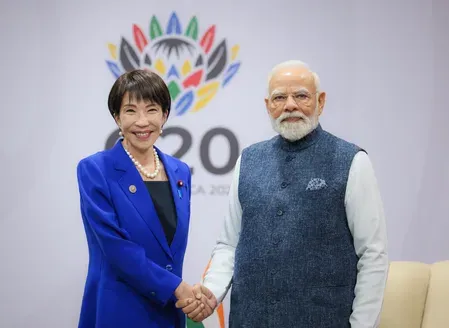
Japanese Prime Minister Sanae Takaichi's visit to India earlier this month highlighted the political priority placed on bilateral defence manufacturing ties.
The cooperation supports India's Aatmanirbhar Bharat goals while giving Japanese defence firms access to greater production scale beyond their constrained domestic market.
Joint naval platforms would enhance interoperability across anti-submarine warfare , disaster relief, and sea-lane protection missions in the Indo-Pacific.
India and Japan are moving toward a new era of maritime defence cooperation, with joint warship production emerging as the logical centrepiece of their deepening security partnership, according to an analysis published in The Diplomat. The shift comes as China continues to expand its naval footprint across the Indo-Pacific, raising the strategic stakes for both nations.
From Technology Transfer to Shipyard Collaboration
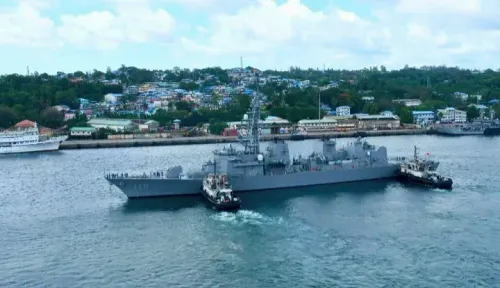
A concrete signal of this trajectory is the transfer of Japan's advanced Unified Complex Radio Antenna (UNICORN) mast technology to the Indian Navy — a move that analysts say demonstrates both countries can move decisively beyond a conventional buyer-seller dynamic. Japan's concurrent relaxation of its arms exports policy has further opened the door to deeper industrial collaboration.
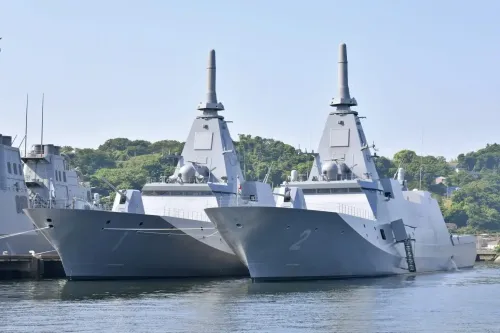
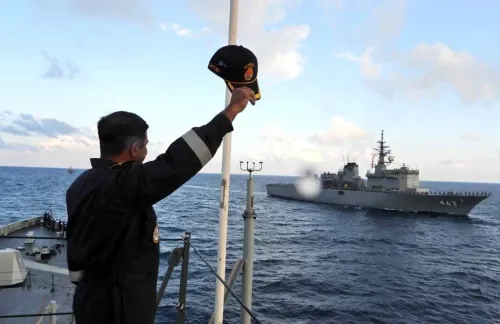
Ongoing discussions on the co-development of Mogami-class frigates represent the most ambitious proposal on the table. The Mogami class is among the most modern multi-mission frigates in service today, integrating stealth features, high levels of automation, and advanced anti-submarine warfare capabilities.
What Joint Shipbuilding Would Deliver
'Joint shipbuilding creates long-term industrial linkages that involve advanced manufacturing, electronics, propulsion systems, artificial intelligence, and maintenance ecosystems. Such cooperation also strengthens both military capability and economic resilience,' the article in The Diplomat states.
For India, the partnership aligns directly with the objectives of Aatmanirbhar Bharat. Indian shipyards have already demonstrated capability in designing and constructing destroyers, frigates, and offshore patrol vessels. Access to Japan's expertise in automation, integrated ship systems, and advanced maritime electronics could substantially elevate India's next generation of naval platforms.
Japan's Strategic and Industrial Incentive
The arrangement is not one-sided. Despite possessing world-class maritime technology, Japanese defence companies operate within a relatively small domestic market. A partnership with India would provide greater production scale, strengthen supply-chain resilience, and support the long-term sustainability of Japan's defence industrial base — making the collaboration a genuine win-win, according to the report.
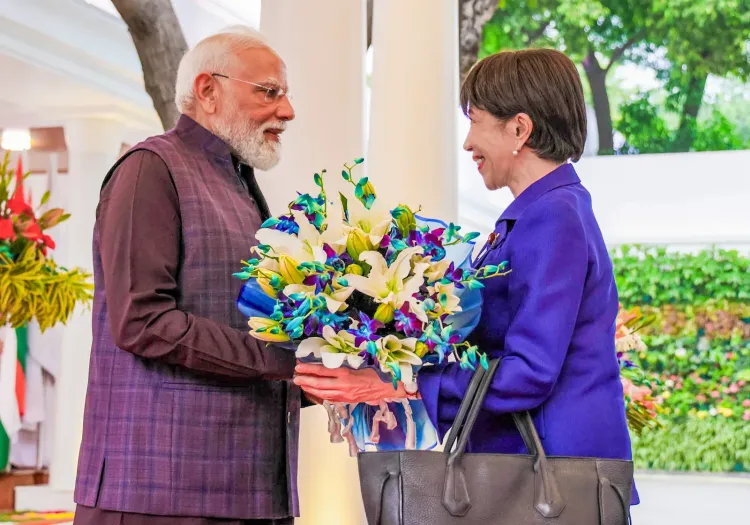
This need for enhanced bilateral defence industrial cooperation was also underscored during Japanese Prime Minister Sanae Takaichi's visit to India earlier this month, signalling political will at the highest level.
Broader Indo-Pacific Implications
Strategically, India-Japan shipbuilding cooperation would recalibrate the regional maritime balance. Both nations occupy critical positions along the Indo-Pacific's key sea lanes and share a common interest in preserving freedom of navigation, adherence to international law, and a rules-based maritime order.
Jointly developed naval platforms would also improve operational interoperability across missions ranging from anti-submarine warfare and humanitarian assistance to the protection of critical sea lines of communication. This comes amid a broader pattern of Quad-aligned nations deepening defence-industrial ties as an answer to shifting power dynamics in the region.
With technology transfer already underway and political momentum building, the next phase of India-Japan defence cooperation is increasingly likely to be built — literally — in the shipyard.
Point of View
And Japan's defence export culture, though liberalising, remains cautious. The real test will be whether the two sides can agree on intellectual property terms and production-sharing ratios, the sticking points that have derailed similar arrangements in the past. If they can, this partnership could become the Indo-Pacific's most consequential non-US defence-industrial axis.
NationPress
22 Oct 2026
Frequently Asked Questions
What is India and Japan's joint warship production plan?
India and Japan are in discussions to co-develop and produce Mogami-class frigates — advanced multi-mission warships with stealth features, automation, and anti-submarine warfare capabilities. The proposal builds on Japan's recent transfer of UNICORN mast technology to the Indian Navy and Japan's relaxed arms exports policy.
What is the UNICORN mast technology transferred to India?
The Unified Complex Radio Antenna (UNICORN) is an advanced integrated mast system developed by Japan that combines radar, communications, and electronic warfare sensors into a single structure. Its transfer to the Indian Navy marks a significant step toward deeper co-production, moving beyond a standard buyer-seller relationship.
Why does Japan want to co-produce warships with India?
Japanese defence companies possess world-class maritime technology but are constrained by a small domestic market. Partnering with India provides greater production scale, strengthens supply-chain resilience, and improves the long-term sustainability of Japan's defence industrial base.
How does this cooperation support Aatmanirbhar Bharat?
Access to Japanese expertise in automation, integrated ship systems, and advanced maritime electronics would boost India's indigenous shipbuilding capability, directly advancing the Aatmanirbhar Bharat goal of self-reliance in defence manufacturing. Indian shipyards already build destroyers, frigates, and patrol vessels domestically.
What was the significance of PM Takaichi's visit to India?
Japanese Prime Minister Sanae Takaichi's visit to India earlier this month placed the enhancement of bilateral defence industrial cooperation firmly on the political agenda, signalling high-level commitment from both governments to accelerating the shipbuilding partnership.