India-Japan naval shipbuilding pact: joint development, repairs on the table
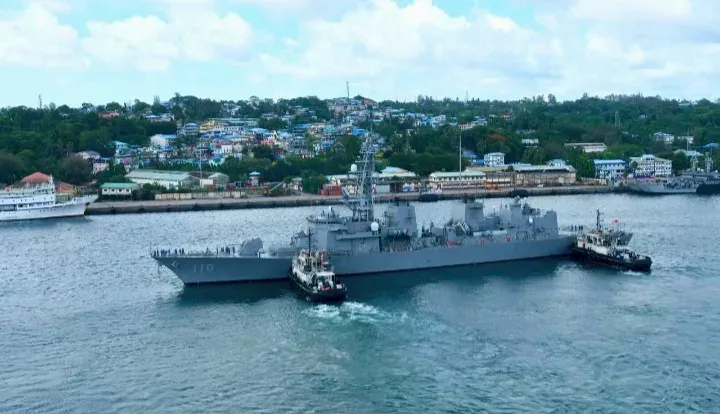
Synopsis
India and Japan are moving beyond diplomacy into concrete defence-industrial territory — exploring joint naval shipbuilding and design while signing a maritime security MoA. With Japan commanding 11% of global shipbuilding and India targeting a top-5 ranking by 2047, this partnership could be the technological shortcut India's shipyard ambitions have been waiting for.
Key Takeaways
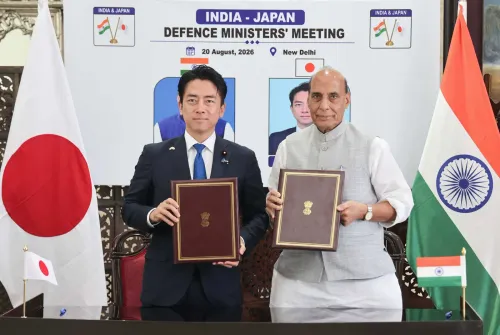
Rajnath Singh and Shinjiro Koizumi signed a Memorandum of Arrangement on maritime security in New Delhi on Thursday.
India and Japan will explore joint naval shipbuilding and design, combining Japan's technology with India's 'Make in India' production base.
Japan ranks third globally in shipbuilding with a nearly 11% share; India targets 5% of the world's fleet by 2035 and a top-5 position by 2047 .
The MoA covers MDA information sharing , SAR , HADR , mine countermeasures, and reciprocal ship repair facilities.
Japan Air Self-Defence Force fighters will visit India for the first time under exercise 'Veer Guardian 26' , scheduled this year.
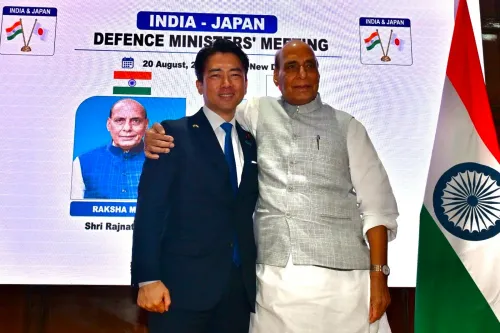
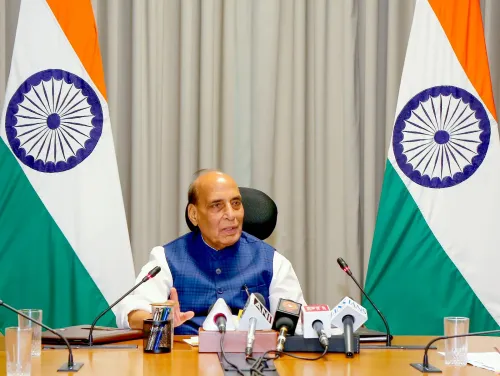
Defence Minister Rajnath Singh and his Japanese counterpart Shinjiro Koizumi on Thursday issued a joint statement in New Delhi announcing that India and Japan will explore joint development in naval shipbuilding and design — combining Japan's technological expertise with India's production capabilities under the 'Make in India' framework. The two ministers also signed a Memorandum of Arrangement (MoA) on maritime security cooperation between the two nations' defence ministries.
What the Agreement Covers
The joint statement outlined a broad framework for maritime cooperation, including information sharing in the field of Maritime Domain Awareness (MDA), enhanced collaboration in Search and Rescue (SAR) operations, and Humanitarian Assistance and Disaster Relief (HADR). The two sides also discussed reciprocal provision of ship repair facilities, with a formal ship repair arrangement expected to be concluded in the near future.
Both ministers emphasised the need to protect sea lines of communication through mutual naval ship visits, joint exercises, personnel exchanges, Subject Matter Expert (SME) exchanges, and logistical support — including use of ports and maintenance facilities. They also agreed to maximise synergies to enhance mine countermeasures capabilities.
India's Shipbuilding Ambitions
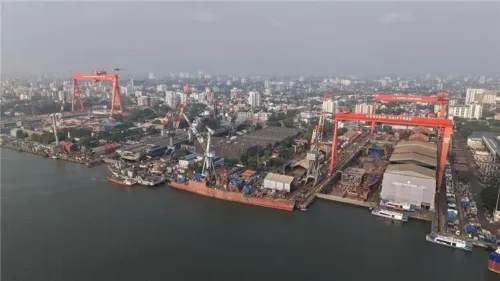
The agreement comes at a critical juncture for India's shipbuilding sector. India has set an ambitious target of building 5 per cent of the world's fleet by 2035 and entering the ranks of the top five shipbuilding nations by 2047. New shipyards are currently being planned to support this push.
Japan, which holds a nearly 11 per cent share of global shipbuilding output, ranks third among shipbuilding nations worldwide. A partnership with Tokyo, therefore, offers India access to advanced design and engineering capabilities that could accelerate its own industry targets.
Bilateral Exercises Get a Boost
The two ministers welcomed the expansion of bilateral defence exercises, specifically citing the Japan-India Army exercise 'Dharma Guardian' and the Japan-India Maritime Exercise 'JAIMEX'. Notably, they highlighted steady progress on the Japan-India Air Force exercise 'Veer Guardian 26', scheduled for this year, under which Japan Air Self-Defence Force fighter aircraft will, for the first time, visit India and participate in the exercise.
Both sides agreed to further deepen cooperation through enhanced complexities in joint exercises, integration of unmanned systems, and pursuing exercises at short notice whenever opportunities arise.
Strategic Significance
The MoA and the broader discussions signal a meaningful deepening of the India-Japan defence partnership, which has grown steadily since the two countries elevated ties to a Special Strategic and Global Partnership. This comes amid shared concerns over maritime security in the Indo-Pacific, where both nations have a strategic stake in keeping sea lanes open and secure. Officials noted that such cooperation is vital not only bilaterally but also for the broader region and the international community.
Concrete steps under the maritime security framework are expected to move swiftly, with both sides expressing intent to realise cooperation that serves their respective strategic and operational needs.
Point of View
An area where past bilateral defence deals have often stalled at the MoU stage. India's 2047 shipbuilding target is ambitious; without deep technology collaboration — not just repair arrangements — it risks remaining aspirational.
NationPress
5 Oct 2026
Frequently Asked Questions
What did India and Japan agree on in naval shipbuilding?
India and Japan agreed to explore joint development in naval shipbuilding and design, combining Japan's technological expertise with India's production capabilities under the 'Make in India' framework. The two sides also discussed reciprocal ship repair facilities, with a formal arrangement expected soon.
What is the Memorandum of Arrangement signed by India and Japan?
The Memorandum of Arrangement (MoA) signed between the Indian and Japanese defence ministries provides a framework for maritime security cooperation. It covers information sharing in Maritime Domain Awareness, Search and Rescue, Humanitarian Assistance and Disaster Relief, mine countermeasures, and joint naval exercises.
What is India's shipbuilding target and why does Japan matter?
India aims to build 5 per cent of the world's fleet by 2035 and rank among the top five shipbuilding nations by 2047. Japan, which holds nearly 11 per cent of global shipbuilding output and ranks third worldwide, offers the advanced design and engineering capabilities India needs to achieve those targets.
What is 'Veer Guardian 26' and why is it significant?
'Veer Guardian 26' is a Japan-India Air Force exercise scheduled for 2026 under which Japan Air Self-Defence Force fighter aircraft will visit India and participate in joint exercises for the first time. Both defence ministers welcomed the progress on the exercise as a milestone in bilateral defence ties.
Which other bilateral exercises were discussed at the India-Japan meeting?
The two ministers highlighted the Japan-India Army exercise 'Dharma Guardian' and the Japan-India Maritime Exercise 'JAIMEX', in addition to 'Veer Guardian 26'. Both sides agreed to deepen cooperation through greater complexity, integration of unmanned systems, and short-notice joint exercises.