India-Japan defence ministers sign maritime pact, deepen Indo-Pacific ties
Synopsis
India and Japan have moved beyond diplomatic signalling into binding operational architecture — signing a Maritime Security Cooperation pact, committing to joint naval patrols, and scheduling Japan's first-ever fighter aircraft visit to India under Veer Guardian 26. The partnership is now one of the most operationally substantive in India's strategic neighbourhood.
Key Takeaways
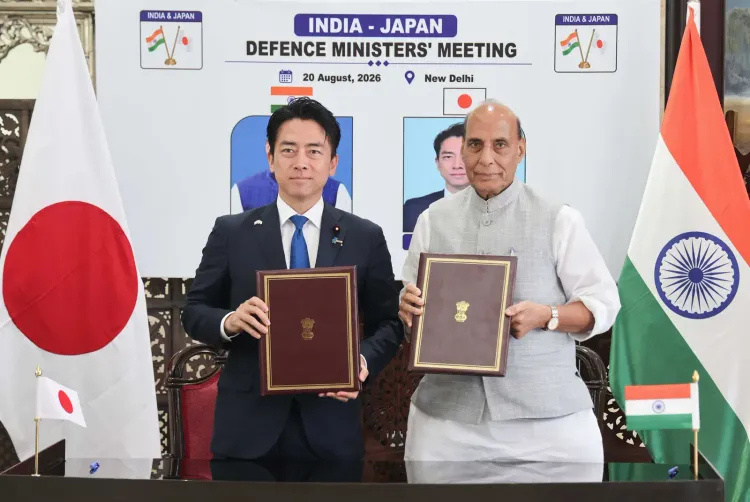
Rajnath Singh and Shinjiro Koizumi signed a Memorandum of Arrangement on Maritime Security Cooperation in New Delhi on 20 August .
The pact covers Maritime Domain Awareness (MDA) , Search and Rescue (SAR) , and Humanitarian Assistance and Disaster Relief (HADR) between the Indian Navy and Japan Maritime Self-Defense Force .
Veer Guardian 26 will mark the first-ever visit by Japan Air Self-Defence Force fighter aircraft to India for a joint exercise.
Both sides agreed to explore Japan's use of India's defence production capabilities under the Make in India framework, including reciprocal ship repair facilities.
The two ministers reaffirmed opposition to any unilateral actions threatening freedom of navigation or attempts to change the regional status quo by force.
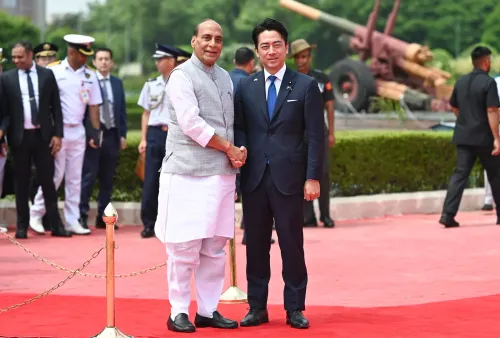
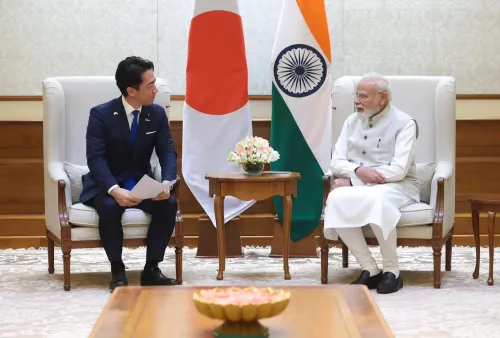
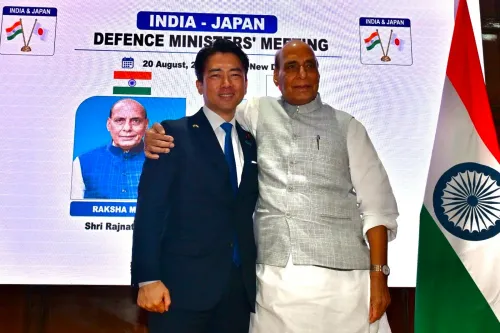
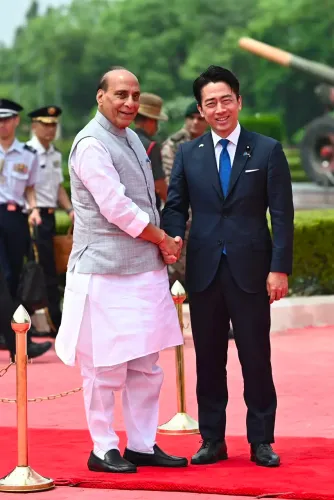
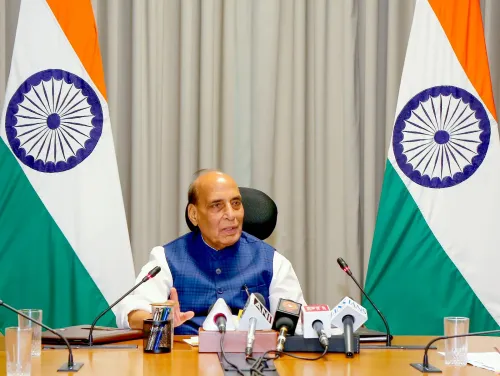
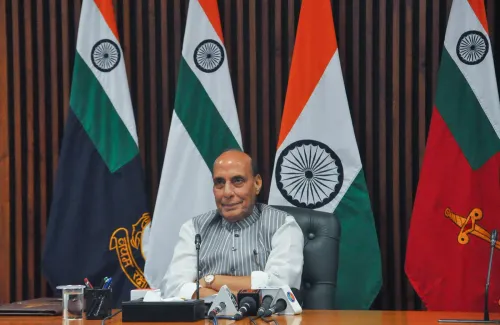
Defence Minister Rajnath Singh and his Japanese counterpart Shinjiro Koizumi on 20 August signed a Memorandum of Arrangement on Maritime Security Cooperation in New Delhi, marking a significant step in the Japan-India Special Strategic and Global Partnership. The agreement, reached at the Japan-India Defence Ministers' Meeting, formalises a framework for deeper naval coordination between the two nations in the Indo-Pacific.
What the Maritime Pact Covers
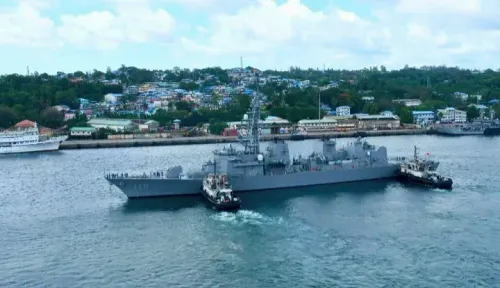
The Memorandum of Arrangement lays out a structured framework for advancing cooperation between the Japan Maritime Self-Defense Force and the Indian Navy. Key pillars include information sharing under Maritime Domain Awareness (MDA), joint operations in Search and Rescue (SAR), and collaboration on Humanitarian Assistance and Disaster Relief (HADR).
A joint statement issued after the meeting noted that the two sides would 'strengthen coordination between both sides for the protection of Sea Lines of Communications through mutual visits by naval ships and units, joint exercises, personnel and Subject Matter Expert (SME) exchanges and logistical support including use of ports, maintenance and repair facilities.'
Exercises and Operational Cooperation
Both ministers welcomed the continued expansion of bilateral military exercises, including the army exercise Dharma Guardian and the maritime exercise JAIMEX. Notably, the air force exercise Veer Guardian 26, scheduled for later this year, will see Japan Air Self-Defence Force fighter aircraft visit India for the first time to participate in joint drills — a landmark in bilateral air cooperation.
The two sides also committed to increasing the complexity of future exercises, integrating unmanned systems, and pursuing joint exercises at short notice. They further agreed to promote exchanges between their respective Special Operations Forces and to explore cooperation with India's integrated theatre commands once those structures are established.
Defence Production and Make in India
A significant dimension of the talks was defence industrial cooperation. According to the joint statement, both sides agreed to 'leverage each other's strengths in the field of defence shipbuilding and related areas' and to deepen discussions on Japan's use of India's production capabilities under the Make in India framework. The two countries also emphasised the need to advance reciprocal ship repair facilities, with an arrangement expected to be concluded in the near future.
Singh welcomed Japan's recent review of its framework for the transfer of defence equipment and technology, expressing confidence that Tokyo would 'further contribute to peace and stability in the Indo-Pacific region and the wider world.'
Strategic Context and Regional Significance
The meeting recalled the Japan-India Joint Statement of July 2026, with both ministers reaffirming their commitment to realising a free and open Indo-Pacific. This comes amid heightened global tensions and growing concerns over unilateral actions that threaten freedom of navigation and overflight in regional waters — a pointed reference, analysts note, to assertive maritime posturing in the South China Sea and the broader Indo-Pacific.
The two sides stressed the importance of sharing assessments of the regional and international security environment, and expressed strong opposition to any attempts to change the status quo by force or coercion. Both governments assured that consultations would be held whenever necessary to safeguard the security of both nations and regional stability. With the Veer Guardian 26 exercise and the new maritime pact both on the horizon, the India-Japan defence partnership is entering one of its most operationally active phases.
Point of View
Not just its security architecture. What mainstream coverage underplays is the Veer Guardian 26 significance: Japan flying fighters into Indian airspace for joint drills is a threshold crossed, not a routine exercise. The question now is whether this bilateral momentum can survive domestic political headwinds in Japan and India's traditionally cautious approach to formal alliances.
NationPress
5 Oct 2026
Frequently Asked Questions
What was signed at the India-Japan Defence Ministers' Meeting on 20 August?
India and Japan signed a Memorandum of Arrangement on Maritime Security Cooperation at the Japan-India Defence Ministers' Meeting in New Delhi on 20 August. The pact formalises cooperation between the Indian Navy and the Japan Maritime Self-Defense Force, covering Maritime Domain Awareness, Search and Rescue, and Humanitarian Assistance and Disaster Relief.
Who represented India and Japan at the defence ministers' meeting?
India was represented by Defence Minister Rajnath Singh, and Japan by Defence Minister Shinjiro Koizumi. The meeting was held in New Delhi and resulted in a joint statement and the signing of the maritime cooperation memorandum.
What is Veer Guardian 26 and why is it significant?
Veer Guardian 26 is a scheduled Japan-India Air Force exercise in which Japan Air Self-Defence Force fighter aircraft will visit India and participate in joint drills for the first time. This marks a landmark step in bilateral air force cooperation between the two countries.
How does Make in India feature in the India-Japan defence partnership?
Both sides agreed to leverage each other's strengths in defence shipbuilding and to deepen discussions on Japan's use of India's production capabilities under the Make in India framework. They also emphasised advancing reciprocal ship repair facility arrangements, with a formal agreement expected in the near future.
What is the broader strategic significance of the India-Japan defence partnership?
The partnership operates under the Japan-India Special Strategic and Global Partnership, described as a pillar of peace and stability in the Indo-Pacific. Both sides expressed strong opposition to unilateral actions threatening freedom of navigation and any attempts to change the regional status quo by force or coercion, reflecting shared concerns about maritime security in the region.