Japan MOFA: India indispensable partner for free Indo-Pacific
Synopsis
Japan's Foreign Ministry didn't just reaffirm ties with India — it named Prime Minister Modi personally and anchored a 10-year bilateral roadmap to two new operational maritime frameworks. The Quad is shifting from statements to structures, and New Delhi is at the centre of it.
Key Takeaways
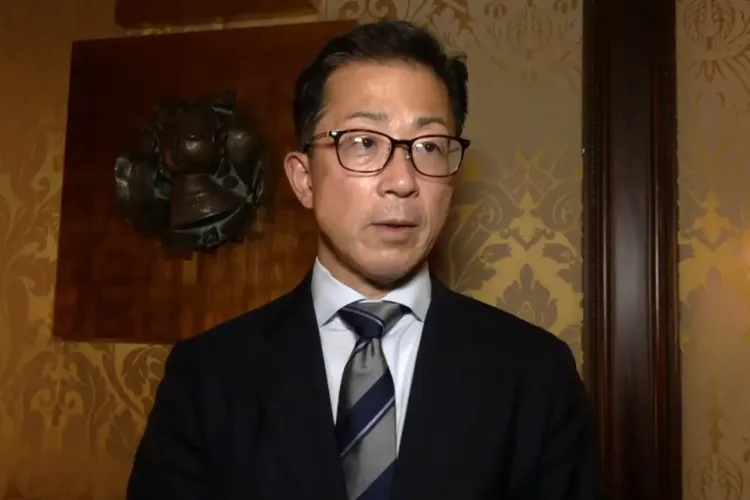
Japan's MOFA Press Secretary Toshihiro Kitamura called India 'a very important and indispensable partner' for a free and open Indo-Pacific on 26 May in New Delhi .
Two new maritime frameworks were launched: the Quad Maritime Domain Awareness Initiative and the Indo-Pacific Maritime Surveillance Cooperation initiative .
US Secretary of State Marco Rubio formally announced the maritime initiatives following talks with EAM S.
Jaishankar and Japanese FM Toshimitsu Motegi .
Japan raised concerns over export restrictions on critical minerals and announced commitment to the Indo-Pacific Energy Security Initiative .
Tokyo confirmed it will continue cooperation with India under a bilateral joint statement covering the next 10 years .
Japan's Ministry of Foreign Affairs (MOFA) Press Secretary Toshihiro Kitamura on Tuesday, 26 May described India as 'a very important and indispensable partner for Japan in realising a free and open Indo-Pacific,' speaking in New Delhi following the Quad Foreign Ministers' meeting. The remarks underline the deepening strategic alignment between Tokyo and New Delhi at a moment of heightened geopolitical competition in the region.
India-Japan Partnership Reaffirmed
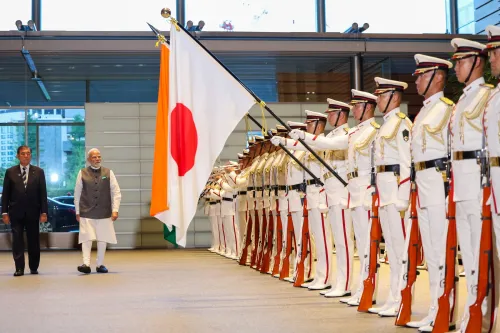
Kitamura expressed Tokyo's appreciation for the Indian government's commitment to bilateral cooperation, singling out Prime Minister Narendra Modi by name. 'We welcome the commitment of the Indian government, especially Prime Minister Modi, to work with the Japanese government,' he said. He added that Japan looks forward to continuing cooperation based on the joint statement between the two countries covering the next 10 years.
New Maritime Security Initiatives Launched
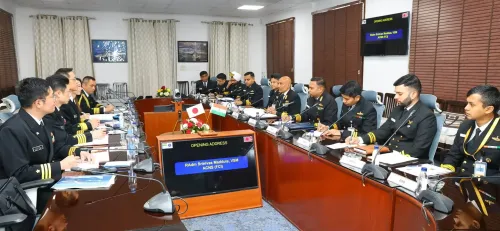
A significant portion of the discussions centred on maritime security and freedom of navigation — both priorities shared by India and Japan given their dependence on sea lines of communication. Kitamura highlighted two new frameworks launched at the meeting: the Quad Maritime Domain Awareness Initiative and the Indo-Pacific Maritime Surveillance Cooperation initiative. 'Securing free navigation is very important for both countries,' he noted, stressing that Tokyo expects these initiatives to deliver 'tangible outcomes.'
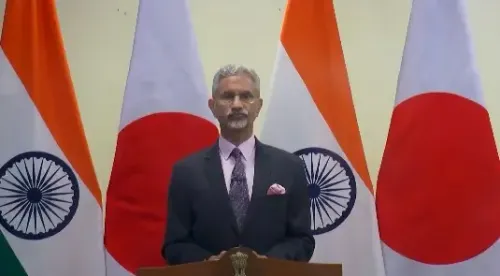
The Indo-Pacific Maritime Surveillance Cooperation initiative was formally announced by US Secretary of State Marco Rubio following his meeting with External Affairs Minister S. Jaishankar and visiting Japanese Foreign Minister Toshimitsu Motegi. The expansion of the Indo-Pacific Maritime Domain Awareness initiative was announced alongside it.
Critical Minerals and Energy Security on the Agenda
Japan also raised concerns at the meeting over export restrictions on critical minerals — a supply-chain vulnerability that has grown more acute amid global trade tensions. Kitamura underscored the importance of building stable supply chains for critical minerals and securing energy supplies across the Indo-Pacific. Tokyo announced its commitment to the Indo-Pacific Energy Security Initiative, framing it as a vehicle for 'concrete and tangible support' to the region through four-nation cooperation.
What This Means for the Quad
The New Delhi meeting signals that the Quad is moving beyond declaratory diplomacy toward operational frameworks — maritime surveillance, domain awareness, and energy security are each areas where joint infrastructure, data-sharing, and funding commitments are now being formalised. This comes amid sustained Chinese naval activity in the South China Sea and the Indian Ocean Region, which has sharpened the urgency of the initiatives announced on Tuesday. For India, being described as 'indispensable' by a Quad partner carries diplomatic weight as New Delhi continues to balance its strategic autonomy with deepening alignment on the Indo-Pacific order.
Point of View
Not just partners. What is underreported is the operational shift: the Quad is no longer just a talking shop. Two maritime initiatives in a single meeting, tied to surveillance and domain awareness, suggest the grouping is quietly building the institutional muscle that China has long argued it lacks. For India, the challenge is translating this diplomatic capital into leverage — on critical minerals, on technology transfer, and on the terms of the 10-year joint statement — without ceding strategic autonomy. The energy security initiative, if funded and operationalised, could also reshape India's dependence on Gulf energy corridors.
NationPress
9 Oct 2026
Frequently Asked Questions
Why did Japan call India an indispensable partner for the Indo-Pacific?
Japan's MOFA Press Secretary Toshihiro Kitamura used the term at the Quad Foreign Ministers' meeting in New Delhi on 26 May, citing shared interests in free navigation and open sea lines of communication. The remark reflects the deepening strategic alignment between Tokyo and New Delhi within the Quad framework.
What are the new maritime initiatives launched at the Quad Foreign Ministers' meeting?
Two initiatives were launched: the Quad Maritime Domain Awareness Initiative and the Indo-Pacific Maritime Surveillance Cooperation initiative. Both are aimed at securing freedom of navigation and improving maritime monitoring across the Indo-Pacific region.
Who attended the Quad Foreign Ministers' meeting in New Delhi?
The meeting brought together External Affairs Minister S. Jaishankar, US Secretary of State Marco Rubio, and Japanese Foreign Minister Toshimitsu Motegi, among Quad counterparts. Japan's MOFA Press Secretary Toshihiro Kitamura also spoke to reporters following the meeting.
What did Japan say about critical minerals at the Quad meeting?
Japan shared serious concerns regarding export restrictions on critical minerals and emphasised the importance of building stable supply chains. Tokyo also announced its commitment to the Indo-Pacific Energy Security Initiative to provide concrete support to the region.
What is the India-Japan 10-year joint statement?
It is a bilateral framework between India and Japan that sets out cooperation priorities over a decade. Kitamura confirmed that Japan intends to continue engagement with India based on this joint statement, covering areas including maritime security and energy.