Quad Foreign Ministers' 11th Meeting: Free Indo-Pacific is non-negotiable, says Japan's Motegi
Synopsis
At the 11th Quad Foreign Ministers' Meeting in New Delhi, Japan's Toshimitsu Motegi invoked six years of personal history with the grouping to deliver a pointed message: the Quad's commitment to a free and open Indo-Pacific is non-negotiable. With the FOIP framework now a decade old and under pressure from shifting global power structures, Tuesday's meeting signals a deliberate upgrade — from values-based rhetoric to resilience-first, economically grounded strategy.
Key Takeaways
Japanese Foreign Minister Toshimitsu Motegi called the 11th Quad Foreign Ministers' Meeting in New Delhi an ‘unshakable and firm message’ for a free and open Indo-Pacific.
Jaishankar noted the ministers were meeting for the third time in under 18 months , signalling accelerating Quad engagement.
The updated Free and Open Indo-Pacific (FOIP) framework, first advocated 10 years ago , now centres on economic security and national resilience, per Japanese PM Takaichi .
Key agenda items include supply chain resilience , maritime security , critical technologies , and Humanitarian Assistance and Disaster Relief (HADR) .
The Quad comprises Australia , India , Japan , and the United States .
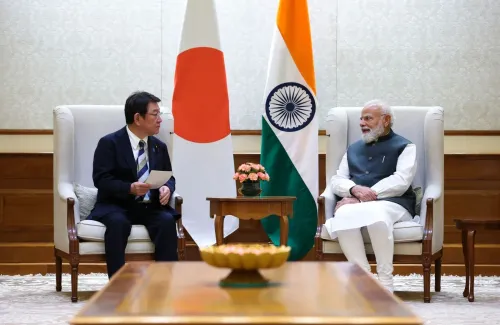
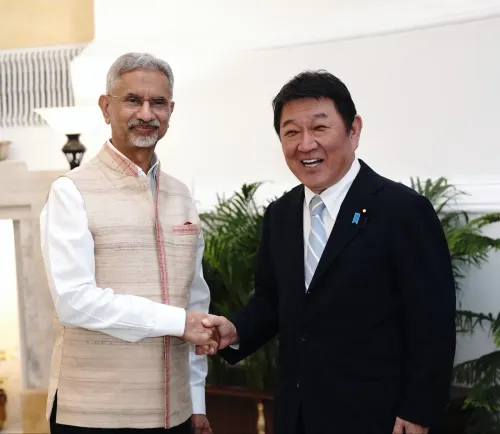
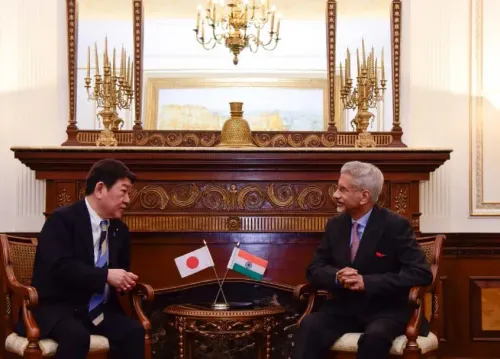
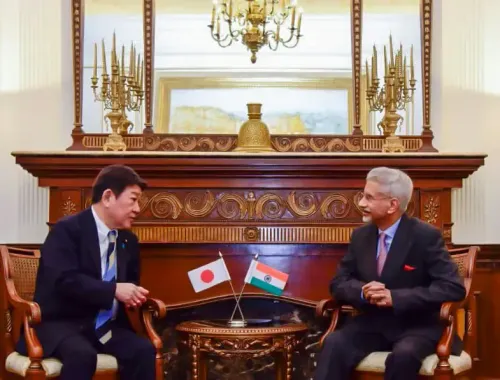
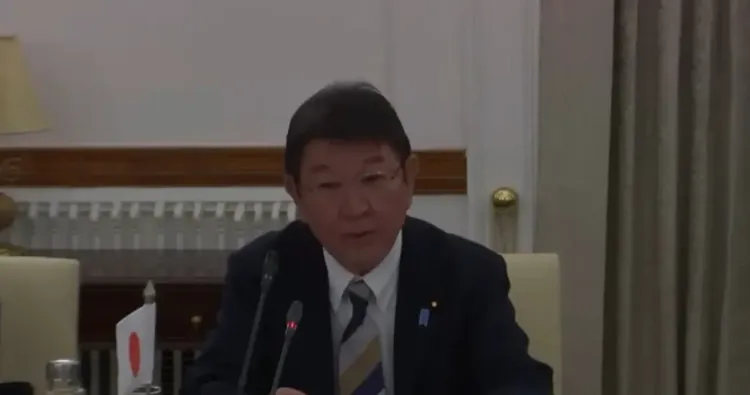
Japanese Foreign Minister Toshimitsu Motegi on Tuesday, 26 May declared that the 11th Quad Foreign Ministers' Meeting in New Delhi sends “an unshakable and firm message” to the world — that the four-nation grouping will advance practical cooperation to secure a free and open Indo-Pacific. The meeting, hosted by External Affairs Minister S. Jaishankar, brought together the top diplomats of Australia, India, Japan, and the United States.
Motegi's Opening Remarks
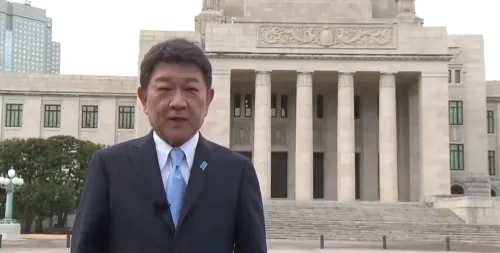
Invoking personal history, Motegi recalled that the inaugural Quad Foreign Ministers' Meeting was held in September 2019 during his previous tenure as Japan's foreign minister. “I have special fondness for the Quad Meeting,” he said, noting that this 11th edition reinforces the grouping's collective resolve. He added that the meeting “signifies an unshakable and firm message to the world that the Quad will strongly promote practical cooperation to realise free and open Indo-Pacific.”
Motegi also pointed to the evolution of the Free and Open Indo-Pacific (FOIP) framework, which was first advocated 10 years ago. He noted that structural shifts in the international order have since made the framework's update imperative. Citing Japanese Prime Minister Sanae Takaichi, he said the updated FOIP centres on enabling Indo-Pacific nations to “strengthen resilience and the necessary capacity to determine their own future, including their economic security.”
Jaishankar Sets the Agenda
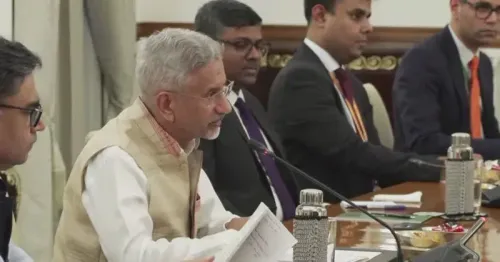
External Affairs Minister S. Jaishankar underscored the meeting's momentum, noting that the Quad foreign ministers were convening “for the third time in less than 18 months.” He described the Indo-Pacific as the grouping's “specific limit” and outlined the agenda: supply chain resilience, connectivity choke points, manufacturing and resource concentrations, and critical infrastructure gaps.
“Each one of them offers a new argument for more partnerships, stronger growth and realising the promise of technologies,” Jaishankar said. He stressed that the region must remain a driver of global growth and stability, and that achieving this requires “trusted and transparent partnerships.”
Progress on Core Priorities
Jaishankar reported that Quad officials had, over the preceding months, advanced collaboration across maritime security, critical technologies, economic resilience, and Humanitarian Assistance and Disaster Relief (HADR). He described progress across these tracks as “encouraging.”
The Quad's agenda spans maritime security, resilient supply chains, critical minerals, infrastructure development, disaster relief, and emerging technologies — a portfolio that has expanded steadily since the grouping was revived at the leader level in 2021.
Why This Meeting Matters
The New Delhi gathering comes amid heightened geopolitical flux — from tensions in the South China Sea to supply chain vulnerabilities exposed by recent global disruptions. The Quad's growing institutionalisation, now meeting at ministerial level for the 11th time, reflects a deliberate effort by member states to translate shared values into concrete deliverables. Notably, this is also one of the first major multilateral engagements in New Delhi to explicitly reference economic security alongside traditional maritime concerns.
The outcome of Tuesday's deliberations is expected to shape the Quad's workplan ahead of the next leaders' summit, with sectoral working groups likely to receive fresh mandates on critical minerals and technology governance.
Point of View
Semiconductor supply agreements, and HADR coordination that actually activates in a crisis. The frequency of ministerial meetings is rising; whether institutional depth is keeping pace is the harder question.
NationPress
21 Sept 2026
Frequently Asked Questions
What was decided at the 11th Quad Foreign Ministers' Meeting in New Delhi?
The 11th Quad Foreign Ministers' Meeting in New Delhi on 26 May focused on advancing cooperation across maritime security, critical technologies, supply chain resilience, and Humanitarian Assistance and Disaster Relief (HADR). The ministers reaffirmed the grouping's commitment to a free and open Indo-Pacific and discussed the updated Free and Open Indo-Pacific (FOIP) framework.
What is the Free and Open Indo-Pacific (FOIP) framework?
FOIP is a strategic concept first advocated by Japan roughly 10 years ago, centred on maintaining open sea lanes, rules-based order, and economic connectivity across the Indo-Pacific region. Its updated version, as outlined by Japanese PM Takaichi, now emphasises economic security and the capacity of Indo-Pacific nations to determine their own futures.
Who are the members of the Quad?
The Quad comprises four democracies — Australia, India, Japan, and the United States. The grouping focuses on maritime security, resilient supply chains, critical minerals, infrastructure, disaster relief, and emerging technologies.
Why is the Quad meeting significant in the current geopolitical context?
The meeting comes amid structural shifts in the international order, including tensions over supply chains and maritime access. With ministers convening for the third time in under 18 months, the Quad is signalling an accelerated effort to translate shared values into concrete deliverables ahead of the next leaders' summit.
What did EAM Jaishankar say at the Quad Foreign Ministers' Meeting?
EAM S. Jaishankar said the Quad must address supply chain resilience, connectivity choke points, manufacturing and resource concentrations, and critical infrastructure gaps. He noted encouraging progress on maritime security, critical technologies, economic resilience, and HADR, and called for trusted and transparent partnerships to keep the Indo-Pacific a driver of global growth.