Assam Rifles trains Nagaland youth in organic honey production under civic programme
Synopsis
The Assam Rifles is bringing scientific beekeeping into Nagaland's districts of Dimapur and Chumoukedima — but the real story is the scale of what's untapped. Nagaland can theoretically produce 10,000 MT of honey a year; it currently produces just 440 MT. With organic Nagaland honey now selling online nationwide, this civic programme could be the push that finally begins to close that gap.
Key Takeaways
Assam Rifles , under the Army's Spear Corps , launched beekeeping and organic honey production training in Dimapur and Chumoukedima , Nagaland.
Training is part of the Assam Rifles Civic Action Programme , targeting youth self-employment and socio-economic development.
According to the NBHM , Nagaland has the potential to produce 10,000 MT of honey annually but currently produces only 440 MT .
The state can accommodate up to 22 lakh bee colonies and produce 10 MT of beeswax per year.
Around 33% of human food consumption globally depends on honeybee pollination, underlining the broader significance of apiculture.
Organic honey from Nagaland is already being sold online across India , signalling growing market demand.
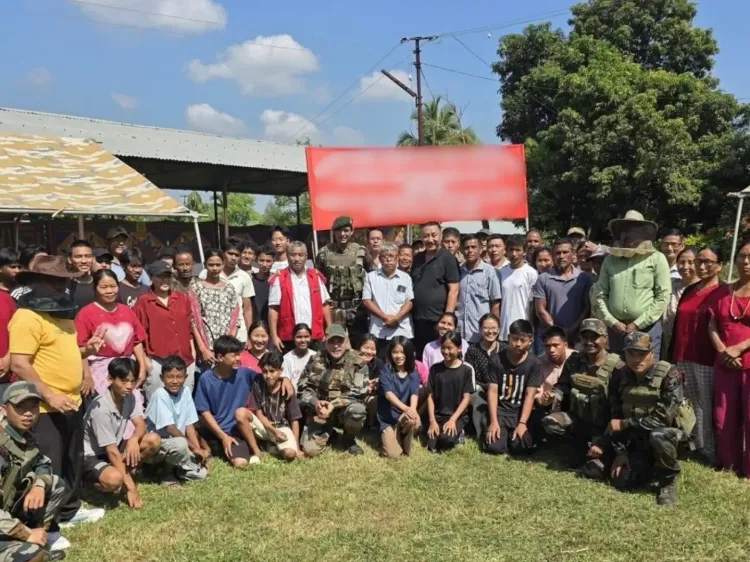
The Assam Rifles, operating under the Army's Spear Corps, has launched a scientific beekeeping and organic honey production training initiative for residents of Nagaland, officials said on Thursday, 22 October 2026. The programme, conducted under the Assam Rifles Civic Action Programme, targets participants in the districts of Dimapur and Chumoukedima, with a focus on building self-employment pathways for local youth.
Training Goals and Community Focus
The initiative is designed to strengthen practical beekeeping skills and foster entrepreneurial development among Nagaland's younger population. Officials stated that the programme reaffirms the paramilitary force's broader commitment to youth empowerment and socio-economic development in the region. Beekeeping has long been an economically significant activity in Nagaland, supported by the state's rich indigenous bee populations, abundant natural vegetation, and favourable agro-climatic conditions.
Nagaland's Honey Potential: A Largely Untapped Resource
According to the Nagaland Beekeeping and Honey Mission (NBHM), the state has the potential to support 22 lakh bee colonies and produce up to 10,000 MT of honey and 10 MT of beeswax annually. However, current production stands at just 440 MT of honey — a fraction of its capacity — indicating that a significant portion of the state's apicultural potential remains unexploited. Organic honey produced in Nagaland is now being marketed and sold online across India, reflecting growing demand.
The NBHM's Broader Mission
The NBHM aims to leverage locally available indigenous bee species to promote beekeeping as a livelihood option, while simultaneously addressing food security through honeybee pollination services. Notably, around 33 per cent of food consumed globally by humans depends on honeybee pollination, making apiculture vital to crop productivity and farmers' incomes. The mission also aligns with multiple Sustainable Development Goals (SDGs), including zero hunger, climate action, gender equality, and good health and wellbeing.
What the Assam Rifles Said
An Assam Rifles official said, 'Even we are in favour of a Nagaland that is peaceful and prosperous. These initiatives are aimed towards that.' The force's community outreach through programmes like this is seen as a vehicle for drawing more residents into income-generating agricultural activities. The NBHM envisions a transformed Nagaland where apiculture, biodiversity conservation, and environmental protection drive sustainable livelihoods and social harmony.
With the gap between Nagaland's honey production capacity and actual output still wide, sustained interventions from agencies with community reach — such as the Assam Rifles — could prove critical in unlocking the state's full apicultural potential.
Point of View
And that gap is a development failure as much as an agricultural one. What makes this noteworthy is the convergence of military outreach and a state-backed mission (NBHM) that has already laid the policy groundwork. The question is whether sporadic training drives can scale into sustained supply chains, given that production capacity and market linkage are two different problems. The online sales channel for Nagaland honey is a promising signal, but the distance between 440 MT and 10,000 MT demands more than civic programmes alone.
NationPress
23 Oct 2026
Frequently Asked Questions
What is the Assam Rifles Civic Action Programme in Nagaland?
It is an outreach initiative under which the Assam Rifles, part of the Army's Spear Corps, conducts skill development and community welfare activities in Nagaland. The current drive focuses on scientific beekeeping and organic honey production training in the districts of Dimapur and Chumoukedima, aimed at creating self-employment for local youth.
What is Nagaland's honey production potential according to the NBHM?
According to the Nagaland Beekeeping and Honey Mission (NBHM), the state can support 22 lakh bee colonies and produce up to 10,000 MT of honey and 10 MT of beeswax annually. Current production stands at just 440 MT, meaning most of this potential remains untapped.
Why is beekeeping important for Nagaland's economy?
Beekeeping is a traditional and economically significant activity in Nagaland, supported by ideal agro-climatic conditions and indigenous bee species. It generates income for local producers, supports crop pollination — on which roughly 33% of human food consumption depends — and aligns with sustainable development goals including zero hunger and climate action.
Is Nagaland honey available for purchase across India?
Yes, organic honey produced in Nagaland is currently being sold online across India, reflecting growing national demand for locally sourced and naturally produced honey. The NBHM actively promotes local bee species and indigenous production methods to strengthen this market.
What role does the NBHM play in Nagaland's apiculture sector?
The Nagaland Beekeeping and Honey Mission (NBHM) works to promote beekeeping as a livelihood, build producer capacity through skill upgradation, and conserve biodiversity through increased apicultural activity. It also aims to achieve food security by leveraging honeybee pollination services and aligns its goals with several UN Sustainable Development Goals.