Rajasthan CMO Cites Surgical Strike, Balakot & Operation Sindoor as India's Anti-Terror Resolve

Synopsis
The Chief Minister's Office of Rajasthan invoked PM Modi's Surgical Strike, Balakot Air Strike, and Operation Sindoor on 21 October 2026, framing the three operations as proof of India's declared, unwavering commitment to fighting cross-border terrorism.
Key Takeaways
The Chief Minister's Office of Rajasthan posted on 21 October 2026 , tagging CM Bhajan Lal Sharma , citing three major counter-terrorism operations under PM Narendra Modi .
The 2016 Surgical Strike targeted militant launchpads across the Line of Control in response to the Uri attack .
The 2019 Balakot Air Strike hit a Jaish-e-Mohammed facility in Pakistan's Khyber Pakhtunkhwa following the Pulwama attack that killed 40 CRPF personnel .
Operation Sindoor is cited alongside the earlier two operations as part of India's counter-terrorism record.
Rajasthan 's border with Pakistan makes national security messaging particularly resonant for the state.
The post reflects the BJP's wider strategy of reinforcing the central government's security narrative through state-level platforms.
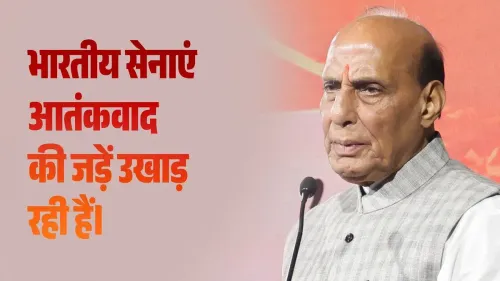
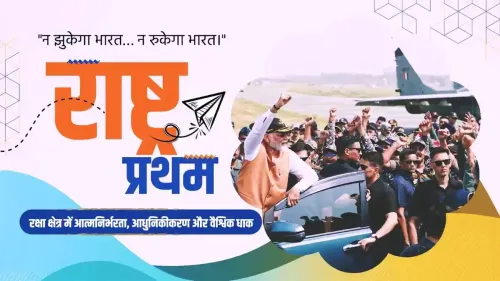
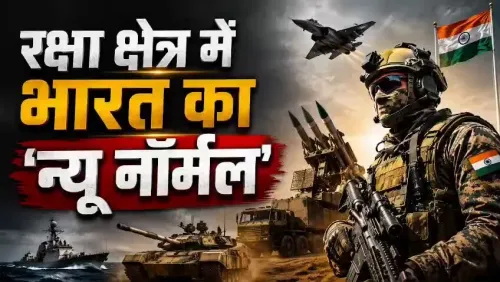
Three operations, one unmistakable message: India hits back. The Chief Minister's Office of Rajasthan invoked Prime Minister Narendra Modi's national security record on Wednesday, 21 October 2026, citing the Surgical Strike, the Balakot Air Strike, and Operation Sindoor as proof of the country's unflinching commitment to fighting cross-border terrorism.
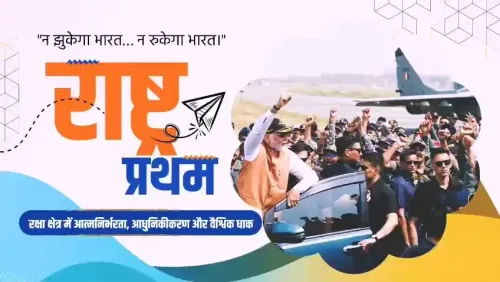
The post, shared from the official @RajCMO account and tagging Chief Minister Bhajan Lal Sharma, reads: 'Pradhan Mantri Shri Narendra Modi ji ke netritva mein Surgical Strike, Balakot Air Strike aur Operation Sindoor ne aatankwaad ke viruddh Bharat ki dridh pratibaddhtaa ko pradarshit kiya hai' — 'Under the leadership of Prime Minister Shri Narendra Modi, the Surgical Strike, the Balakot Air Strike, and Operation Sindoor have demonstrated India's firm commitment against terrorism.'
From Uri to Pulwama: the chain of retaliatory force
The two verified operations anchor a well-documented policy shift. In September 2016, following the deadly Uri attack on an Indian Army base in Jammu and Kashmir, Indian Army special forces crossed the Line of Control and struck militant launchpads in what became known as the Surgical Strike — the first time India officially acknowledged and publicised such a cross-border ground operation.
Then came February 2019. Days after a suicide bomber killed 40 Central Reserve Police Force personnel near Pulwama, Indian Air Force jets struck a facility in Balakot, Khyber Pakhtunkhwa — deep inside Pakistani territory — targeting a Jaish-e-Mohammed training camp. The airstrike marked a dramatic escalation in India's counter-terrorism calculus, erasing the long-standing convention that conventional strikes would stop at the Line of Control.
BJP's national security narrative anchored at the state level
Chief Minister Bhajan Lal Sharma, a BJP leader who has helmed Rajasthan since the party's return to power, has consistently aligned the state government's messaging with the central leadership's governance themes. Invoking these operations from a state-level platform is a deliberate amplification strategy — taking a national security achievement and embedding it in the party's identity across every tier of government.
Rajasthan shares a long international border with Pakistan, making counter-terrorism and national security resonant issues for the state's electorate. The aapno agrani Rajasthan ('our leading Rajasthan') hashtag appended to the post frames the state as a stakeholder in, and champion of, India's security posture — not merely a passive observer of Delhi's decisions.
The doctrine behind the strikes
The three operations cited represent a clear doctrinal arc. Where previous Indian governments responded to terror attacks with diplomatic pressure and international appeals, the Modi era institutionalised the language of calibrated military response. Each action was paired with a communication strategy: official acknowledgement, photographic evidence, and political framing that turned operational secrecy into public messaging capital.
That doctrine — punish the sponsor, publicise the punishment — now forms the backbone of the BJP's national security brand, and posts like this one from the Rajasthan CMO are part of how that brand is maintained between election cycles. The kicker is simple: India's counter-terrorism posture has moved from reactive silence to declared, repeated, public resolve.
Point of View
National security, to its own constituency. By invoking three military operations in a single line, the BJP signals doctrinal continuity: each strike builds on the last, and together they constitute a governing philosophy, not a series of one-off events. For a border state like Rajasthan, this framing is especially calculated — linking local identity to national resolve. The inclusion of an as-yet-unverified third operation alongside two well-documented ones suggests the party is actively expanding its security credentials into newer territory, a pattern worth tracking as India-Pakistan dynamics evolve.
NationPress
21 Oct 2026
Frequently Asked Questions
What is the Surgical Strike India conducted under PM Modi?
The Surgical Strike refers to a September 2016 Indian Army operation in which special forces crossed the Line of Control and destroyed militant launchpads in Pakistan-administered Kashmir, conducted in response to the Uri attack that killed Indian soldiers.
What was the Balakot Air Strike?
The Balakot Air Strike was carried out by the Indian Air Force in February 2019 , targeting a Jaish-e-Mohammed training camp in Balakot, Khyber Pakhtunkhwa, Pakistan , days after the Pulwama suicide bombing that killed 40 CRPF personnel .
Why did the Rajasthan CMO post about these counter-terrorism operations?
The Chief Minister's Office of Rajasthan , tagging CM Bhajan Lal Sharma , posted this as part of the BJP 's broader state-level messaging that reinforces PM Modi 's national security record, a core part of the party's governance identity.
What is Operation Sindoor?
Operation Sindoor is cited in the post alongside the Surgical Strike and Balakot Air Strike as a counter-terrorism operation under PM Modi 's leadership; detailed independent information about it is not yet publicly established.
Why is Rajasthan significant in India's national security narrative?
Rajasthan shares a long international border with Pakistan , making counter-terrorism and cross-border security issues especially relevant to the state's politics and electorate.