CM Yogi Directs New Sub-Inspectors to Master AI, Drones, Cyber
Synopsis
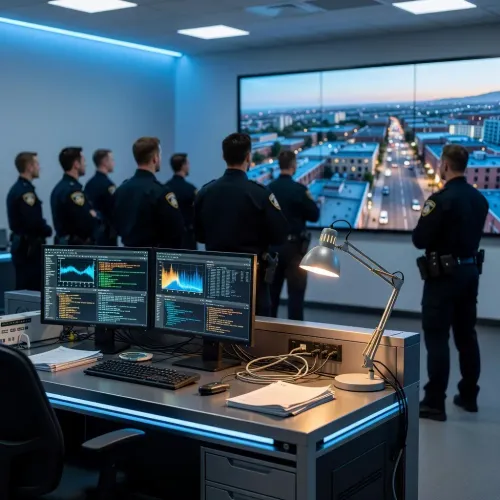
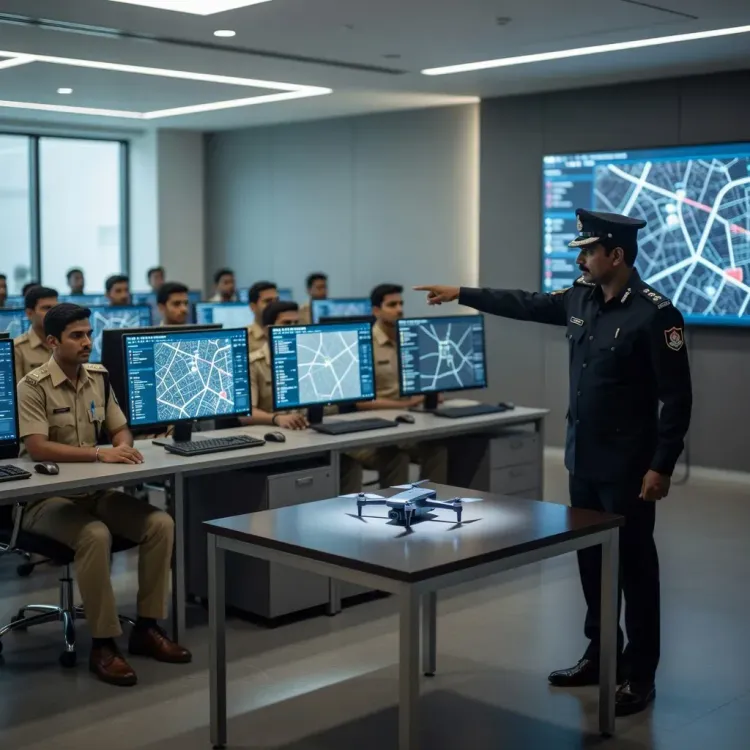
Chief Minister Yogi Adityanath has instructed newly recruited Uttar Pradesh sub-inspectors to ready themselves for a modernised training programme that integrates Cyber Security, Artificial Intelligence, and Drone Technology with traditional police instruction, backed by newly built advanced Training Centres.
Key Takeaways
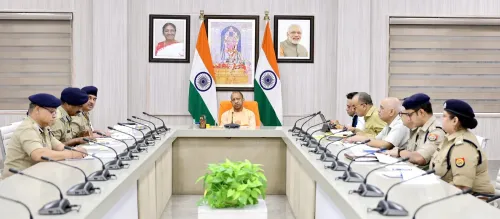
CM Yogi Adityanath addressed newly appointed sub-inspectors of Uttar Pradesh Police on 6 November 2026 .
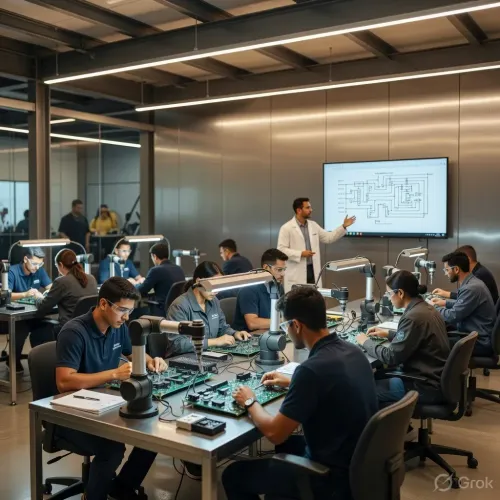
Recruits have been directed to prepare for training in Cyber Security, Artificial Intelligence, and Drone Technology alongside conventional policing.
The state government stated that modern Training Centres with advanced facilities have already been established.
The initiative extends Uttar Pradesh's post-2017 pattern of large-scale police recruitment combined with technology integration.
CM Yogi stressed a 'mental readiness' for the new training methodology — not just technical skill acquisition.
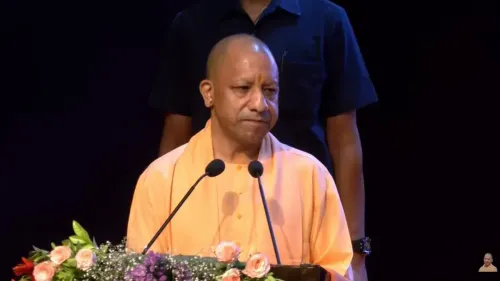
Uttar Pradesh's newly recruited sub-inspectors have been given a clear directive from the top: conventional policing is no longer enough. The Chief Minister's Office of Uttar Pradesh posted on X on 6 November 2026, quoting Chief Minister Yogi Adityanath addressing the fresh cohort — telling them to mentally prepare for a training regime that layers Cyber Security, Artificial Intelligence, and Drone Technology on top of traditional police instruction.
Speaking directly to the new officers, CM Yogi said, 'सभी नवनियुक्त सब-इंस्पेक्टर स्वयं को एक प्रभावी एवं जिम्मेदार भूमिका के लिए तैयार करें' — 'All newly appointed sub-inspectors should prepare themselves for an effective and responsible role.' He added that state-of-the-art training in Cyber Security, AI, and Drone Technology is already being rolled out alongside conventional instruction, and that modernised Training Centres equipped with advanced facilities have been established for this purpose.
A Decade of Police Reform Now Goes Digital
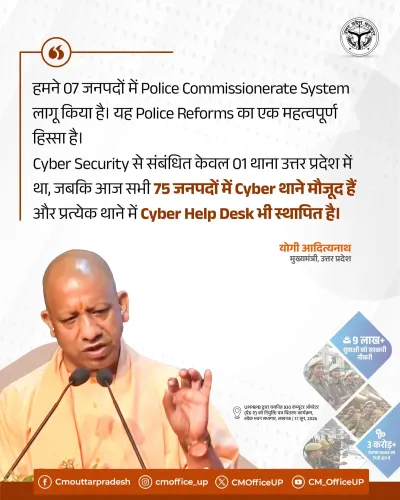
Since Yogi Adityanath first took office in 2017, Uttar Pradesh Police has seen successive waves of large-scale recruitment and incremental technology integration — most visibly through dedicated cyber-crime investigation cells. What Friday's statement signals is that technology is no longer a specialist sidecar to policing in the state; it is being baked into baseline training for every new officer from day one.
The emphasis on Drone Technology is especially notable. Drones have already reshaped crowd management, border surveillance, and crime-scene documentation across Indian state forces, and their inclusion in recruit curricula marks a step-change from optional upskilling to institutional standard.
What the New Training Framework Demands of Recruits
The Chief Minister's message was not merely administrative — it carried an expectation of mindset shift. 'Prepare yourselves mentally for this new training methodology,' he told the recruits, signalling that the challenge is as much psychological adaptation as technical acquisition. Officers entering a system long defined by field seniority and procedural hierarchy are now asked to engage with machine-learning tools and unmanned aerial systems on day one of their careers.
Uttar Pradesh, India's most populous state with over 240 million people, runs one of the country's largest police forces — making any systemic upgrade here consequential at national scale. Similar modernisation pushes have appeared in other large states, but UP's combination of scale, a politically high-profile law-and-order mandate, and successive recruitment tranches gives this iteration particular weight.
The specifics of curriculum timelines, the number of recruits in this cohort, and the exact locations of the new training centres remain to be confirmed through official policy documents. What is clear is the direction: in Lucknow, the era of the digital sub-inspector has formally begun.
Point of View
Not just rhetorically. The move also mirrors a wider national pattern where state governments are competing on 'smart policing' credentials. Whether implementation keeps pace with the announcement will be the real test; Uttar Pradesh's ability to execute at scale across a force serving 240 million people is the variable that will determine whether this becomes a genuine model or remains a well-framed aspiration.
NationPress
6 Nov 2026
Frequently Asked Questions
What new training is UP Police giving to sub-inspectors?
The Uttar Pradesh government is introducing advanced training in Cyber Security, Artificial Intelligence, and Drone Technology for newly recruited sub-inspectors, in addition to conventional police training, as directed by Chief Minister Yogi Adityanath.
Why is CM Yogi focusing on technology in UP Police training?
Since 2017, the Yogi Adityanath government has prioritised law-and-order reforms and technology upgrades for Uttar Pradesh Police, aiming to build a modern force capable of handling cyber crime, surveillance, and emerging security challenges.
Has Uttar Pradesh built new police training centres?
Chief Minister Yogi Adityanath stated on 6 November 2026 that modernised Training Centres equipped with advanced facilities have been established for the new training programme, though specific locations have not yet been officially confirmed.
How large is the Uttar Pradesh Police force?
Uttar Pradesh Police is one of India's largest state police forces, serving a population of over 240 million people, making any systemic training reform consequential at a national scale.
What did CM Yogi tell new UP sub-inspectors in November 2026?
CM Yogi told the newly appointed sub-inspectors to prepare themselves 'mentally' for a new training methodology that combines traditional policing with cutting-edge skills in Cyber Security, AI, and Drone Technology.