CM Yogi Orders Result-Oriented Overhaul of UP Police Training
Synopsis
Chief Minister Yogi Adityanath on 28 May 2026 chaired a high-level review of Uttar Pradesh Police training, directing a results-oriented, technology-driven overhaul covering cyber crime, forensics, communication skills, and humane conduct to make UP Police the country's best force.
Key Takeaways
CM Yogi Adityanath held a high-level review of Uttar Pradesh Police training on Thursday, 28 May 2026 .
He declared that modern policing must go beyond law and order to include technology proficiency, cyber crime awareness, forensic skills, and communication ability .
Training is to be made fully result-oriented, practical, technology-based, and contemporary in design.
Officers are to be trained in humane conduct and balanced decision-making under stress to improve citizen-police relations.
Quality, uniformity, and transparency across all training institutions were specifically mandated by the Chief Minister.
The stated goal is to position Uttar Pradesh Police as the best police force in India on efficiency, discipline, sensitivity, and public trust.
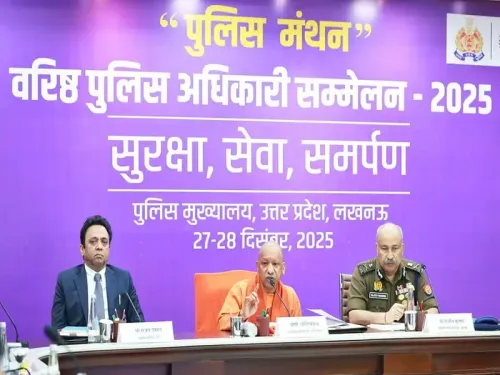
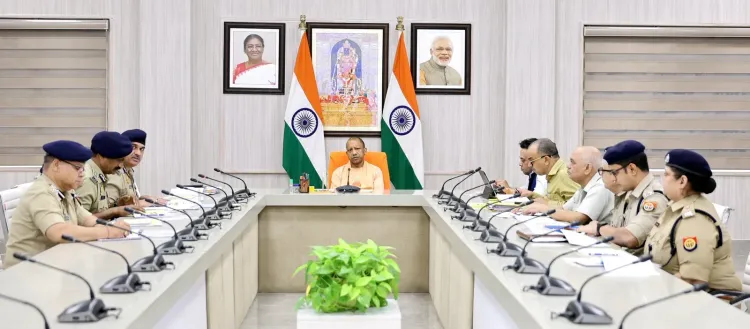
The Chief Minister's Office of Uttar Pradesh announced on Thursday, 28 May 2026 that Chief Minister Yogi Adityanath chaired a high-level review of the state's police training system, directing a comprehensive overhaul to make it results-oriented, technology-driven, and attuned to modern policing demands.
Context
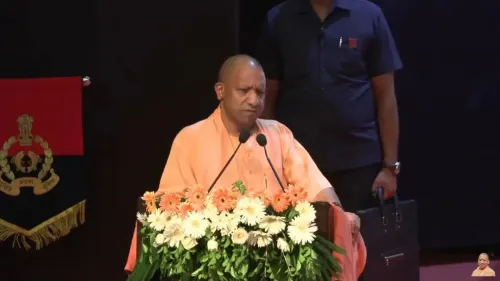
Addressing the review meeting, CM Yogi Adityanath stated that 'policing is no longer limited to law and order alone.' He emphasised that proficiency in modern technology, sensitive conduct, communication skills, understanding of cyber crimes, and forensic capability have become 'fundamental requirements of effective policing.' The Chief Minister directed that the training framework be made fully result-oriented, practical, technology-based, and contemporary in its approach.
The stated goal is to establish the Uttar Pradesh Police as the country's best police force on the parameters of efficiency, discipline, sensitivity, and public trust — dakshatā, anushāsan, samvedanshīlatā aur janvishwās [efficiency, discipline, sensitivity, and public trust].
Policy Backdrop
Since 2017, when the Yogi Adityanath government took office, Uttar Pradesh has pursued a sustained police modernisation agenda. This included new recruitment drives, the establishment of cyber cells in every district, and upgrades to forensic laboratory infrastructure across the state.
Subsequent years saw the state mandate result-oriented training modules and create dedicated cyber-crime investigation units to address the rapid rise in digital offences. Thursday's review meeting signals a fresh push to institutionalise these reforms within the training pipeline itself, rather than treating them as ad hoc additions.
Stakeholders and Impact
The directives directly affect the Uttar Pradesh Police force, one of the largest state police organisations in India, and the millions of residents across Uttar Pradesh who interact with it. CM Yogi specifically called for training in communication skills, humane behaviour, and balanced decision-making under stressful conditions — areas that bear directly on day-to-day citizen-police interactions.
The emphasis on quality, uniformity, and transparency in training also addresses long-standing concerns about inconsistent standards across the state's many training institutions. By anchoring reforms to measurable outcomes, the government aims to build a more accountable and publicly trusted force.
What's Next
The broader pattern of police professionalisation in Uttar Pradesh mirrors central government schemes for police modernisation while adapting them to the state's specific challenges, including cyber crime and the need for community-sensitive policing. Observers will watch for follow-up budget allocations for forensic infrastructure and any formal evaluation framework to measure changes in case disposal rates or public perception of the police.
With the directive now issued at the Chief Minister level, implementation pressure falls on the state's police training establishments to align their curricula with the new benchmarks — a process whose outcomes will shape public confidence in the force in the years ahead.
Point of View
Rather than leaving them as peripheral add-ons. The explicit focus on cyber crime, forensics, and sensitive conduct signals a recognition that public trust — not just crime statistics — is now a political metric for governance performance. This approach fits a broader pattern in BJP-governed states of framing police reform as a governance dividend rather than a security measure alone. The move also positions Uttar Pradesh ahead of a potential competitive benchmark moment, as states increasingly compare policing outcomes on national indices.
NationPress
20 Sept 2026
Frequently Asked Questions
What did CM Yogi Adityanath say about UP Police training?
CM Yogi Adityanath stated on 28 May 2026 that policing is no longer limited to law and order and directed that UP Police training be made result-oriented, technology-driven, and inclusive of cyber crime, forensics, and communication skills.
What changes are being made to Uttar Pradesh Police training?
The training system is being overhauled to emphasise modern technology, cyber crime understanding, forensic proficiency, humane conduct, and balanced decision-making under stress, with quality and transparency mandated across all institutions.
Why is UP Police training being reformed?
CM Yogi Adityanath wants to establish UP Police as the best police force in India on efficiency, discipline, sensitivity, and public trust, recognising that modern policing demands go well beyond traditional law-and-order functions.
What is the history of UP Police modernisation under Yogi Adityanath?
Since 2017, the Yogi Adityanath government has pursued police modernisation through new recruitment, district-level cyber cells, forensic lab upgrades, and result-oriented training mandates, with the 28 May 2026 review marking a fresh push to embed these reforms in training curricula.
How will UP Police training changes affect citizens?
Residents of Uttar Pradesh can expect police officers trained in better communication, humane behaviour, and sensitive conduct, which directly affects the quality of day-to-day citizen-police interactions across the state.