India's wind power capacity hits 59.20 GW, targets 100 GW by 2030
Synopsis
India's wind power capacity has more than doubled in 12 years to 59.20 GW, placing it 4th globally — yet the real ambition is a near-doubling again to 100 GW by 2030. With ₹6,853 crore in offshore funding committed and a 2026 Task Force tackling land and grid bottlenecks, the race is now against execution risk, not resource scarcity.
Key Takeaways
India's installed wind capacity has grown from 21 GW to 59.20 GW over 12 years , ranking the country 4th globally .
Wind energy contributes approximately 19.8% of India's total renewable energy capacity of 299.25 GW .
Government targets 100 GW of wind capacity by 2030 and 156 GW by 2036 . ₹6,853 crore in Viability Gap Funding has been committed for 1,000 MW of offshore wind projects off Gujarat and Tamil Nadu .
Rajasthan holds the highest wind potential at 284.2 GW (at 150 m), followed by Gujarat and Maharashtra .
A Task Force was set up in January 2026 to resolve land, transmission, and regulatory hurdles slowing deployment.
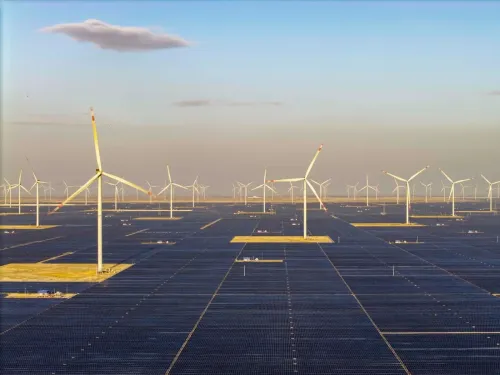
India's installed wind energy capacity has more than doubled over the past 12 years, rising from 21 GW to 59.20 GW, according to an official factsheet released on 18 November 2026. The milestone underscores the country's accelerating transition to cleaner energy, with the government now targeting 100 GW of wind capacity by 2030 and 156 GW by 2036.
India's Global Standing
India is currently ranked 4th globally in installed wind power capacity. Wind energy accounts for approximately 19.8% of the country's total installed renewable energy capacity of 299.25 GW, making it a cornerstone of the national clean energy mix. India's estimated gross wind power potential stands at 695.5 GW at 120 metres and 1,163.9 GW at 150 metres above ground level — a resource base that officials say provides a solid foundation for the 2030 and 2036 targets.
High-Potential States Leading the Way
Most of the assessed wind potential at 150 metres is concentrated in eight states. Rajasthan leads with 284.2 GW, followed by Gujarat at 180.8 GW, Maharashtra at 173.9 GW, Karnataka at 169.3 GW, Andhra Pradesh at 123.3 GW, Tamil Nadu at 95.1 GW, Madhya Pradesh at 55.4 GW, and Telangana at 54.7 GW. Together, these states hold the bulk of deployable wind resources that will drive future capacity additions.
To map these resources systematically, more than 900 wind-monitoring stations have been installed nationwide by the National Institute of Wind Energy (NIWE). Wind potential maps have been developed at hub heights of 50 m, 80 m, 100 m, 120 m, and 150 m.
Government Schemes and Financial Support
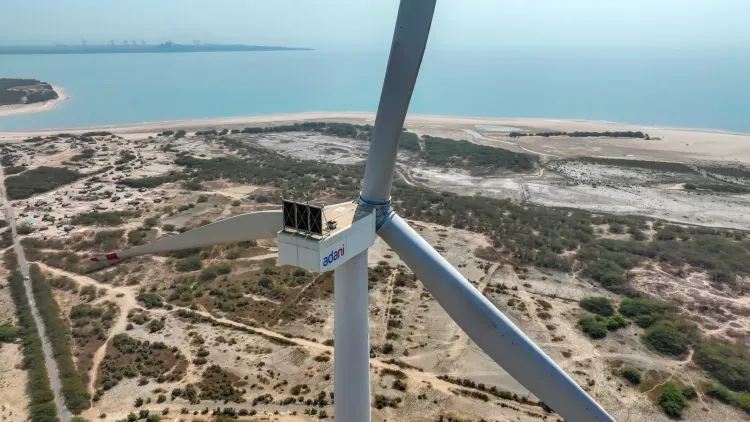
The government has committed ₹6,853 crore in Viability Gap Funding (VGF) for 1,000 MW of offshore wind projects, with 500 MW earmarked off the coast of Gujarat and 500 MW off Tamil Nadu. A 500 MW pilot project has also been launched under a Contracts for Difference (CfD) mechanism, designed to reduce price volatility and provide revenue certainty to renewable energy developers.
These financial instruments are supplemented by regulatory reforms including green energy open access rules, which allow industries to directly procure renewable power, and an Approved List of Models and Manufacturers (ALMM) to ensure equipment quality standards. Transparent bidding guidelines and late payment surcharge rules have been introduced to strengthen investor confidence.
Regulatory Push and What Comes Next
A dedicated Task Force was constituted in January 2026 to address regulatory, land acquisition, transmission, and implementation challenges that have historically slowed wind project rollouts. This comes amid broader grid modernisation efforts, which officials identify as critical to absorbing large volumes of variable renewable energy without compromising system stability.
Notably, this is the third consecutive year in which the government has issued a detailed wind energy factsheet, signalling sustained institutional focus on the sector. With offshore wind still at a nascent stage and onshore potential concentrated in a handful of states, execution speed — not resource availability — will determine whether the 100 GW by 2030 target holds.
Point of View
But the next doubling — from 59 GW to 100 GW in just four years — is a far steeper climb, especially with offshore wind still in its infancy. The ₹6,853 crore VGF for a mere 1,000 MW of offshore capacity signals intent, not scale. India's wind buildout has historically been hobbled by land acquisition delays, grid evacuation constraints, and curtailment risks — the same challenges the January 2026 Task Force was formed to address. The factsheet is strong on potential and targets; the accountability framework for hitting them remains underdeveloped.
NationPress
18 Nov 2026
Frequently Asked Questions
What is India's current installed wind energy capacity?
India's installed wind energy capacity stands at 59.20 GW as of November 2026 , more than double the 21 GW recorded 12 years ago. It accounts for approximately 19.8% of the country's total renewable energy capacity of 299.25 GW .
What are India's wind energy targets for 2030 and 2036?
The government has set a target of 100 GW of installed wind capacity by 2030 and 156 GW by 2036 . These targets are supported by offshore development programmes, financial incentives, and regulatory reforms.
Which states have the highest wind energy potential in India?
Rajasthan leads with an assessed potential of 284.2 GW at 150 metres, followed by Gujarat (180.8 GW), Maharashtra (173.9 GW), and Karnataka (169.3 GW). Together, eight high-resource states hold the majority of India's deployable wind potential.
What is the Viability Gap Funding for offshore wind in India?
The government has set up ₹6,853 crore in Viability Gap Funding (VGF) for 1,000 MW of offshore wind projects — 500 MW each off the coasts of Gujarat and Tamil Nadu . The funding is designed to bridge the cost gap and attract private investment into offshore wind development.
What steps has the government taken to address wind sector challenges?
A Task Force was constituted in January 2026 to tackle regulatory, land, transmission, and implementation bottlenecks. Additional measures include green energy open access rules, an Approved List of Models and Manufacturers (ALMM), transparent bidding guidelines, and a 500 MW pilot under a Contracts for Difference (CfD) mechanism to provide revenue certainty to developers.