India on track for 100 GW wind capacity by 2030: Pralhad Joshi at Windergy 2026
Synopsis
India added a record 6.05 GW of wind capacity in FY2026 and now sits at 59.20 GW — but reaching 100 GW by 2030 still requires more than doubling the current annual installation rate. Minister Pralhad Joshi's bullish declaration at Windergy India 2026 in Chennai, backed by new global MoUs and state-level commitments, reveals just how high the stakes — and the execution gap — really are.
Key Takeaways
India's installed wind energy capacity stands at 59.20 GW as of 30 September 2026 , per Union Minister Pralhad Joshi .
The country achieved its highest-ever annual wind installation of 6.05 GW in FY2026 ; FY2027 installations are projected to surpass that record.
The government targets 100 GW of wind capacity by 2030 , requiring roughly 40.80 GW of additional installations in under four years.
Key international agreements — IWTMA-BWE Global MoU , IWTMA-PTB LoI , and IWTMA-OECD collaboration — were signed at Windergy India 2026 in Chennai .
Country pavilions from Denmark , Germany , and Spain participated; over 400 exhibitors from more than 20 countries and 500 delegates attended.
Tamil Nadu Energy Minister C.T.R.
Nirmal Kumar highlighted the state's repowering policy as a model for advancing wind development.
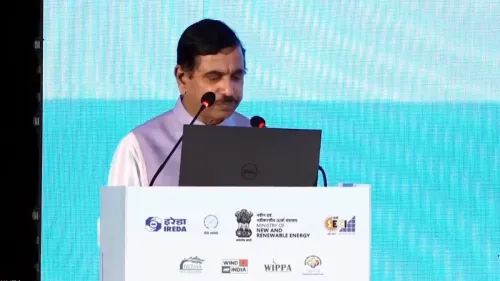
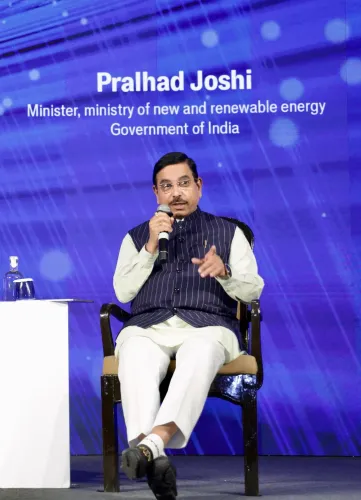
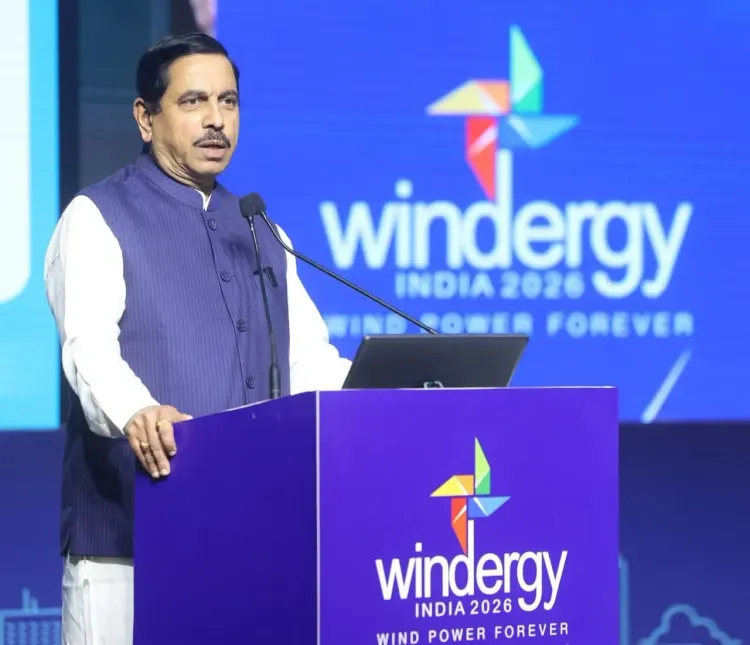
Union Minister for New and Renewable Energy Pralhad Joshi on Thursday, 8 October 2026 declared that India is firmly on course to cross 100 GW of installed wind energy capacity by 2030, citing a current base of 59.20 GW as of 30 September 2026. Speaking at the inauguration of the 8th edition of Windergy India 2026 in Chennai, the minister said the trajectory positions India for global leadership in wind energy production and exports.
Record Installations and Forward Momentum
Joshi highlighted that India's wind sector notched its highest-ever annual installation of 6.05 GW in FY2026, a milestone he described as proof of strong sectoral momentum. 'India's wind energy sector has demonstrated strong momentum, with the highest-ever annual installation of 6.05 GW achieved in FY2026. We are confident that annual wind energy installations will surpass this record in FY2027, marking another important milestone in India's wind energy journey,' the minister said.
He added that a robust project pipeline and a supportive policy environment make India well-placed to sustain and accelerate this growth into the next phase of wind energy development.
Tamil Nadu's Pivotal Role
Tamil Nadu Energy Minister C.T.R. Nirmal Kumar underscored the state's central role in India's wind energy story, pointing to proactive initiatives including a dedicated state repowering policy. Several state governments were recognised for their leadership in advancing wind capacity through land facilitation, timely regulatory clearances, and resolving Right-of-Way (RoW) issues that have historically slowed project commissioning.
Global Partnerships and Key Agreements
Windergy India 2026 served as a platform for significant international and domestic tie-ups. Key agreements announced included the IWTMA-BWE Global MoU, the IWTMA-PTB Letter of Intent (LoI), and an IWTMA-OECD collaboration — all aimed at driving technological advancement in the Indian wind sector. Country pavilions from Denmark, Germany, and Spain featured among the over 400 exhibitors from more than 20 countries, with 500 delegates attending the event.
Two reports — 'Energy Transition in Tamil Nadu' and 'Reimagining Contractual Mechanism for Indian Wind Sector' — were also released during the inaugural ceremony, signalling a push to address structural and contractual challenges in the sector.
What the Scale of Ambition Demands
Reaching 100 GW by 2030 from the current 59.20 GW requires adding roughly 40.80 GW in under four years — an average of over 10 GW annually, well above the FY2026 record of 6.05 GW. The gap underlines why international partnerships, state-level execution, and contractual reform are being pushed simultaneously rather than sequentially. Senior officials from the Centre and multiple state governments, along with wind energy association representatives and industry leaders, attended the event, reflecting the cross-tier coordination the ambition demands.
With FY2027 installations expected to surpass the FY2026 record and a growing pipeline of agreements with European wind-technology leaders, India's renewable energy trajectory will be closely watched in the months ahead.
Point of View
But the structural bottlenecks — land acquisition, RoW disputes, and contractual fragility — are precisely what the newly released reports acknowledge as unresolved. India's wind sector has momentum; what it still lacks is a proven mechanism to sustain 10-plus GW annual additions, and no amount of bilateral LoIs replaces that.
NationPress
8 Oct 2026
Frequently Asked Questions
What is India's current installed wind energy capacity?
India's installed wind energy capacity stands at 59.20 GW as of 30 September 2026, according to Union Minister Pralhad Joshi. This makes India one of the largest wind energy producers globally.
What is India's wind energy target for 2030?
India aims to cross 100 GW of installed wind energy capacity by 2030. Achieving this requires adding approximately 40.80 GW over the next four years, well above the record 6.05 GW installed in FY2026.
What is Windergy India 2026 and why is it significant?
Windergy India 2026 is the 8th edition of a major wind energy conference held in Chennai, bringing together over 400 exhibitors from more than 20 countries and 500 delegates. It is significant because key international agreements were signed and it serves as a platform for aligning government, industry, and global partners on India's renewable energy ambitions.
What major agreements were announced at Windergy India 2026?
Three key agreements were announced: the IWTMA-BWE Global MoU, the IWTMA-PTB Letter of Intent (LoI), and an IWTMA-OECD collaboration, all designed to accelerate technological advancement in India's wind sector.
What role does Tamil Nadu play in India's wind energy story?
Tamil Nadu is one of India's leading wind energy states, with Energy Minister C.T.R. Nirmal Kumar highlighting the state's repowering policy and proactive approach to clearances and land facilitation. The state was among those felicitated at Windergy India 2026 for leadership in wind energy development.