India-Canada naval engagement: INS Sahyadri, HMCS Regina in PASSEX drill
Synopsis
India and Canada are turning a diplomatic page — fast. From an inaugural Defence Dialogue to a live naval PASSEX between INS Sahyadri and HMCS Regina, and back-to-back Jaishankar-Anand meetings, both countries are building new institutional scaffolding for a relationship that had fractured sharply in 2023. The speed of re-engagement, covering maritime, defence, trade, and energy, signals strategic intent on both sides.
Key Takeaways
INS Sahyadri and HMCS Regina (Royal Canadian Navy) conducted a bilateral naval PASSEX on 15 November 2026 , featuring cross-deck landings and joint flight operations.
India and Canada held their inaugural Defence Dialogue earlier this month, co-chaired by Amit Telang and Scott Millar .
The dialogue covered capacity building, military-technical exchanges, and defence industrial collaboration .
Jaishankar met Canadian counterpart Anita Anand at the G20 Foreign Ministers' Meeting in Atlanta last month, discussing trade, critical minerals, defence, and energy.
Both sides are working towards a comprehensive bilateral trade agreement and deeper energy security cooperation.
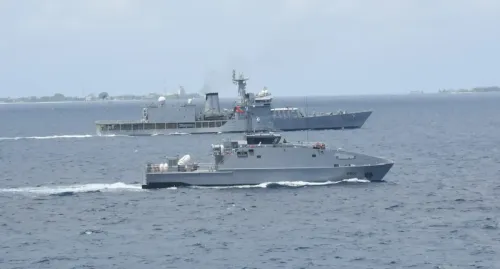
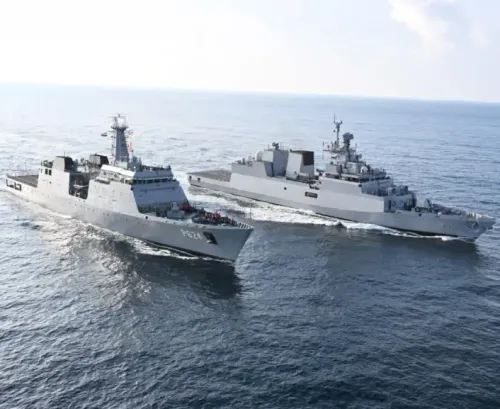
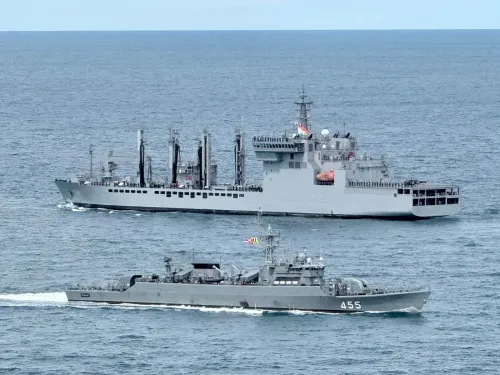
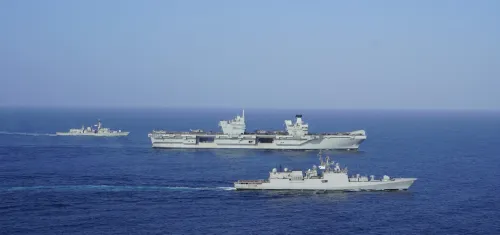
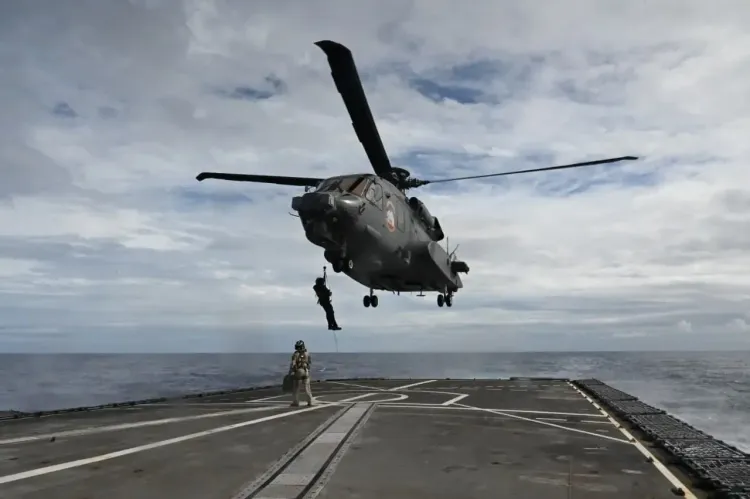
INS Sahyadri and the Royal Canadian Navy's HMCS Regina conducted a bilateral naval engagement on 15 November 2026, featuring cross-deck landings, vertical replenishment, and a Passage Exercise (PASSEX), the Indian Navy confirmed on Wednesday. The exercise underscores growing maritime cooperation between India and Canada as the two countries work to rebuild and deepen ties across defence, trade, and energy.
What the Naval Drill Involved
The engagement included coordinated ship handling, seamless communication, and joint flight operations between the two warships. 'INS Sahyadri participated in a bilateral naval engagement with HMCS Regina of the Royal Canadian Navy on 15 Nov 26. The engagement featured cross-deck landings, vertical replenishment and a Passage Exercise (PASSEX), involving coordinated ship handling, seamless communication and joint flight operations,' the Indian Navy said in a post on X.
PASSEX drills are short-duration exercises conducted when naval vessels of two countries are in proximity, designed to test interoperability and communication protocols in real-time conditions. This marks a visible operational step in a relationship that had hit a rough patch in recent years.
Inaugural Defence Dialogue Sets the Stage
The naval exercise follows India and Canada holding their inaugural Defence Dialogue earlier this month. The dialogue was co-chaired by Joint Secretary (International Cooperation) Amit Telang from India's Ministry of Defence and Assistant Deputy Minister (Policy) Scott Millar from Canada's Department of National Defence.
'Building on the momentum of high-level engagements, both sides explored avenues to strengthen defence cooperation in capacity building, military-technical exchanges and defence industrial collaboration, while exchanging views on regional and global issues,' the Defence Ministry stated. The inaugural nature of the dialogue signals a formal institutionalisation of defence ties that previously lacked a structured bilateral mechanism.
Jaishankar-Anand Meeting at G20 Atlanta
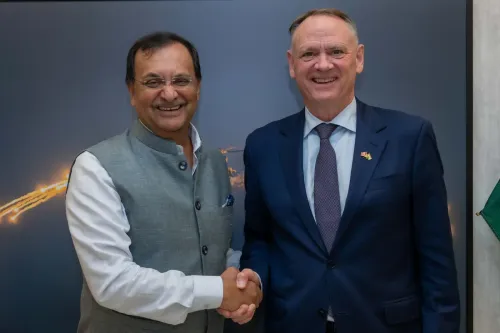
Last month, External Affairs Minister S. Jaishankar met Canadian counterpart Anita Anand on the sidelines of the G20 Foreign Ministers' Meeting in Atlanta, covering trade, critical minerals, defence, and energy. The two also discussed advancing a comprehensive trade agreement and the evolving geopolitical landscape.
Anand said in a post on X: 'Just weeks after our discussions in New Delhi, I met again with S Jaishankar on the margins of the G20 in Atlanta. We exchanged perspectives on the evolving geopolitical landscape and discussed the work ahead to advance a comprehensive trade agreement and deepen cooperation on regional security.'
She added: 'The global economy is being reshaped, and Canada and India have an important role to play in what comes next. With renewed momentum in our relationship, we have an opportunity to expand trade, strengthen energy security and build greater economic resilience.'
Broader Context: A Relationship Regaining Momentum
India-Canada ties had been under significant strain following diplomatic tensions in 2023 over the killing of Khalistan activist Hardeep Singh Nijjar in Canada, which led to a temporary expulsion of diplomats on both sides. The current flurry of engagements — from the inaugural Defence Dialogue to the naval PASSEX and the Jaishankar-Anand meetings — suggests both governments are actively working to stabilise and expand bilateral relations. Notably, this is the second Jaishankar-Anand meeting within weeks, reflecting urgency in re-engagement at the ministerial level.
What Comes Next
Both sides are expected to continue work on a comprehensive bilateral trade agreement, with critical minerals, energy security, and defence industrial collaboration identified as key pillars. The institutionalisation of a Defence Dialogue mechanism suggests further structured engagement — including potential joint exercises — may follow in the months ahead.
Point of View
A live naval exercise, and ministerial-level meetings within weeks of each other. The key question is whether this momentum survives domestic political pressures in Canada, where the Khalistan issue retains electoral salience. India's willingness to operationalise PASSEX and defence dialogues simultaneously suggests New Delhi is signalling that the relationship has strategic value beyond the bilateral turbulence — particularly as both countries navigate a reshaping global order and seek supply chain diversification.
NationPress
18 Nov 2026
Frequently Asked Questions
What was the India-Canada bilateral naval engagement on 15 November 2026?
It was a naval exercise between INS Sahyadri of the Indian Navy and HMCS Regina of the Royal Canadian Navy, featuring cross-deck landings, vertical replenishment, and a Passage Exercise (PASSEX). The drill was designed to enhance operational interoperability and communication between the two navies.
What is a PASSEX exercise?
A PASSEX, or Passage Exercise, is a short-duration naval drill conducted when warships of two countries are in proximity. It tests real-time interoperability, coordinated ship handling, and communication protocols between the participating navies.
What was discussed at India and Canada's inaugural Defence Dialogue?
The inaugural Defence Dialogue, held earlier in November 2026, covered capacity building, military-technical exchanges, and defence industrial collaboration. Both sides also exchanged views on regional and global issues; the dialogue was co-chaired by Amit Telang (India) and Scott Millar (Canada).
What did EAM Jaishankar and Canada's Anita Anand discuss at the G20 in Atlanta?
External Affairs Minister S. Jaishankar and Canadian Foreign Minister Anita Anand met on the sidelines of the G20 Foreign Ministers' Meeting in Atlanta, discussing trade, critical minerals, defence, energy, and the path towards a comprehensive bilateral trade agreement. It was their second meeting within weeks.
Why is India-Canada defence engagement significant in 2026?
India-Canada ties had suffered severe diplomatic strain following the 2023 Nijjar killing controversy. The current wave of engagements — naval exercises, an inaugural Defence Dialogue, and back-to-back ministerial meetings — signals both governments are actively rebuilding the relationship and seeking to anchor it in institutional frameworks covering trade, energy, and defence.