CM Samrat Choudhary Hails Modi's 12 Years of Middle-Class Reforms
Synopsis
Bihar Chief Minister Samrat Choudhary on June 15, 2026 credited PM Modi's twelve-year reform agenda — including GST and Atmanirbhar Bharat — with delivering new opportunity and self-reliance to India's middle class, joining a coordinated BJP campaign under #12YearsOfSakshamMiddleClass.
Key Takeaways
Bihar Chief Minister Samrat Choudhary posted on June 15, 2026 praising PM Modi's economic reforms over twelve years.
The post was tagged under #12YearsOfSakshamMiddleClass , indicating a coordinated BJP party campaign.
Key policies cited include the Goods and Services Tax (GST) launched in July 2017 and the Atmanirbhar Bharat Abhiyan launched in May 2020 .
The messaging targets middle-class households — salaried professionals, small traders, and self-employed individuals.
State-level amplification by BJP chief ministers mirrors a broader national communication pattern around reform anniversaries.
Follow-up budget or scheme announcements in Bihar during the 2026-27 fiscal cycle are being watched.
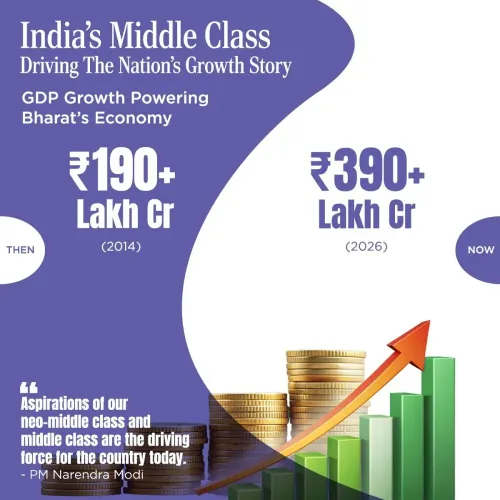
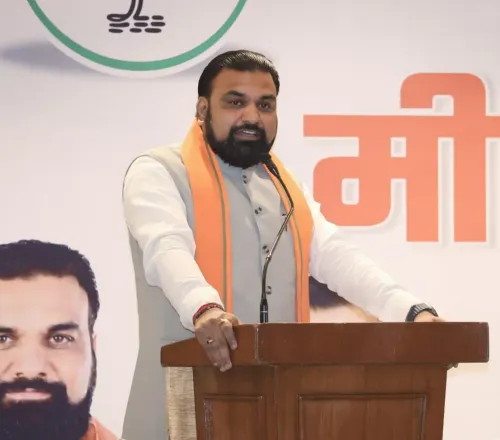
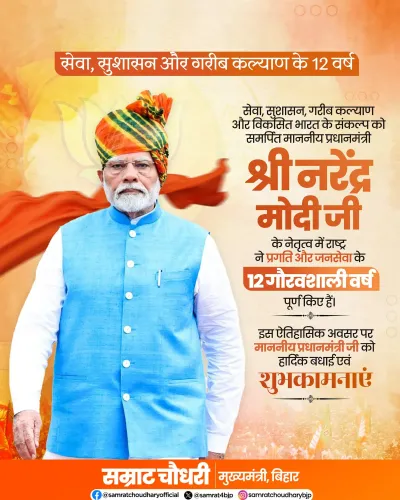
Bihar Chief Minister Samrat Choudhary on Monday, June 15, 2026, credited Prime Minister Narendra Modi's economic reform agenda with delivering new energy, opportunity, and self-reliance to India's middle class, marking what the BJP is framing as twelve years of empowerment under the #12YearsOfSakshamMiddleClass campaign.
Context
Posting in Hindi on X, Choudhary wrote: 'संकल्प से सिद्धि तक' ['From resolve to achievement'], anchoring his message in the BJP's broader narrative that the Modi government's governance model has structurally transformed the lives of salaried workers and small-business owners since 2014. The post accompanied a video and was tagged under the hashtag #12YearsOfSakshamMiddleClass, signalling a coordinated party-wide communication push around the anniversary of Modi's first term in office.
The phrase 'Sankalp se Siddhi' — resolve to achievement — has been a recurring motif in BJP messaging, used to link policy intent with on-ground outcomes for ordinary households.
Policy Backdrop
The central policy pillars invoked by Choudhary's post include the rollout of the Goods and Services Tax (GST) in July 2017, which unified India's fragmented indirect tax structure and was positioned as a relief measure for formal-economy participants, including the salaried middle class. The Atmanirbhar Bharat Abhiyan, launched in May 2020, further bundled stimulus and self-reliance messaging aimed at households and micro-enterprises weathering economic stress.
Together, these reforms form the backbone of the BJP's decade-long argument that tax rationalisation, digital public infrastructure, and formalisation of the economy have expanded disposable incomes and entrepreneurial access for middle-class Indians.
Stakeholders and Impact
Middle-class households — broadly defined as salaried professionals, small traders, and self-employed individuals — are the stated beneficiaries of the policy arc Choudhary highlighted. The BJP has consistently used this demographic as a political and rhetorical anchor, arguing that reforms in direct taxation, digital payments, and financial inclusion have reduced friction and expanded opportunity for this segment.
State-level leaders amplifying central government messaging, as Choudhary has done here, reflects a pattern seen across BJP-governed states, where chief ministers reinforce the national party's reform narrative ahead of anniversary and budget cycles. For Bihar, a state with a large aspirational workforce and significant migration to urban centres, the middle-class framing carries particular electoral resonance.
What's Next
The #12YearsOfSakshamMiddleClass campaign is likely to be followed by state-level events, budget references, or scheme announcements in Bihar and other NDA-governed states during the 2026-27 fiscal planning cycle. Observers will watch whether Choudhary's messaging translates into specific Bihar-focused policy announcements targeting middle-class housing, skilling, or tax relief — or remains part of the broader national communication exercise. The framing also sets the tone for how the BJP intends to position its economic record ahead of future electoral cycles.
Point of View
Reinforcing Modi as the architect of middle-class progress. This kind of coordinated amplification across BJP-governed states serves a dual purpose: it shores up the party's economic credibility with urban and semi-urban voters while keeping state leaders visibly aligned with the central command. The broader arc points to the BJP doubling down on middle-class identity politics as a durable electoral asset heading into future cycles.
NationPress
18 Sept 2026
Frequently Asked Questions
What is the #12YearsOfSakshamMiddleClass campaign about?
It is a BJP-led communication campaign marking twelve years of the Modi government, framing economic reforms such as GST and Atmanirbhar Bharat as having empowered India's middle class with greater opportunity and self-reliance.
What did Bihar CM Samrat Choudhary say about PM Modi's reforms?
Choudhary credited PM Modi's economic reforms and good governance with providing the middle class 'new energy, new opportunities, and a strong foundation for self-reliance,' posting in Hindi on June 15, 2026.
How has GST benefited the middle class in India?
The GST, launched in July 2017, unified India's indirect tax structure, reducing compliance complexity for small businesses and formal-economy workers, which the BJP argues has lowered costs and expanded opportunity for middle-class households.
What is Atmanirbhar Bharat Abhiyan and who does it target?
Launched in May 2020, Atmanirbhar Bharat Abhiyan is a government initiative bundling economic stimulus with a self-reliance framework, targeting households, micro-enterprises, and small businesses — a core constituency of India's middle class.
Why are BJP chief ministers posting about central government reforms?
BJP-governed states routinely amplify central government policy messaging, especially around reform anniversaries, to reinforce party unity and strengthen the national leadership's economic narrative ahead of budget and electoral cycles.