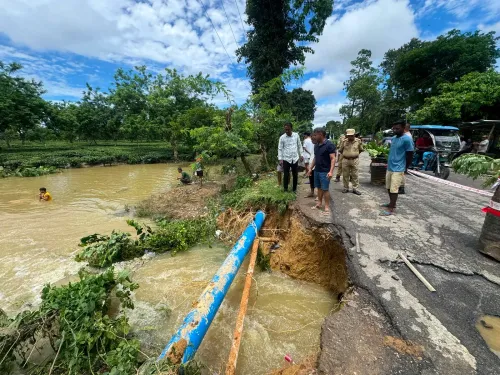
Assam CM Office: Dhubri, Kokrajhar on alert after GLOF
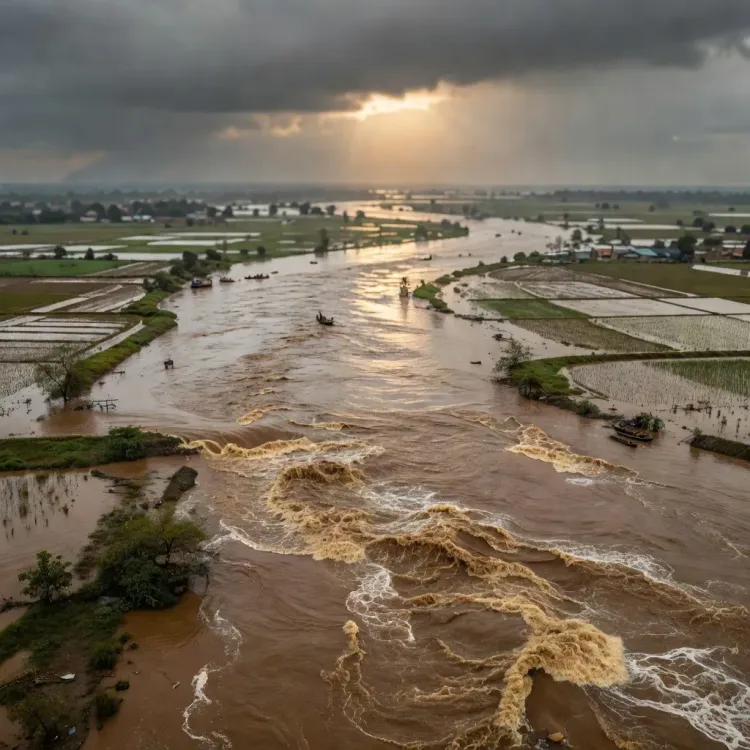
Synopsis
Water levels in Dhubri and Kokrajhar, Assam, are steady after a Glacial Lake Outburst Flood. The state has placed SDRF, NDRF, DDRF, Fire and Emergency Services teams, and Aapda Mitra volunteers on full readiness as district administrations maintain contact with riverside communities.
Key Takeaways
Dhubri and Kokrajhar districts are on high alert following a Glacial Lake Outburst Flood (GLOF) .
Water levels at both locations remain steady as of 30 October 2026 .
SDRF, NDRF, DDRF and Fire and Emergency Services teams are pre-positioned for rapid deployment.
Community-level Aapda Mitra volunteers, trained by the NDMA, are mobilised alongside formal agencies.
District officials are maintaining constant contact with riverside communities in the affected zones.
GLOFs originating in upstream Himalayan regions of Bhutan and Arunachal Pradesh pose an outsized and fast-moving threat to western Assam.
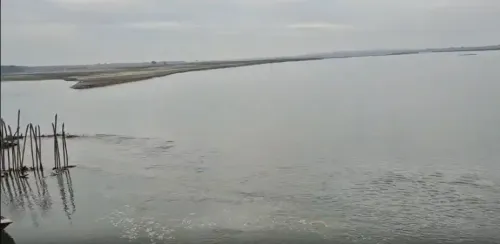
A glacial lake outburst flood has put two of Assam's most flood-vulnerable western districts on edge — and the state is not waiting to find out how bad it gets. The Chief Minister's Office of Assam confirmed on Friday, 30 October 2026 that water levels in Dhubri and Kokrajhar remain steady in the immediate aftermath of the Glacial Lake Outburst Flood (GLOF), with multi-agency response teams kept in full readiness along the riverbank.
Four response forces, one unified posture
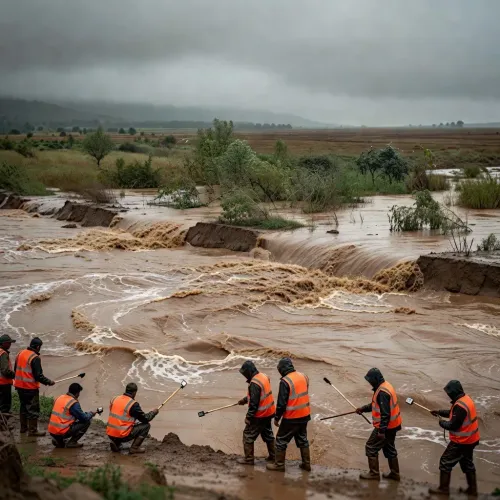
The state has mobilised a layered defensive line. The State Disaster Response Force (SDRF), the National Disaster Response Force (NDRF), District Disaster Response Force (DDRF), and Fire and Emergency Services teams have all been pre-positioned for rapid deployment. Crucially, community-level Aapda Mitra volunteers — trained under the National Disaster Management Authority for first-response scenarios — are also activated on the ground, extending the reach of formal agencies into the most exposed riverside localities.
District administrations have kept communication lines open with communities living along the riverbanks, a direct acknowledgement that the next few hours are the window that matters most after a GLOF pulse moves downstream.
Why Dhubri and Kokrajhar face an outsized threat
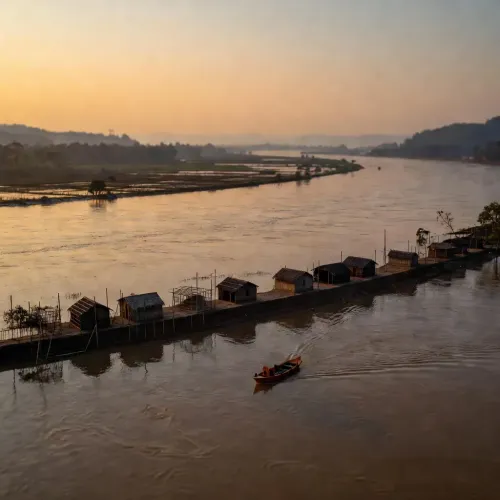
Dhubri, sitting at the western tip of the Brahmaputra floodplain, is among the first Assam districts to receive floodwaters arriving from upstream catchments in Bhutan and Arunachal Pradesh. Kokrajhar, in the Bodoland Territorial Region, faces compound vulnerability from both the Brahmaputra and its tributary network. GLOFs — sudden, high-velocity releases of water from glacial lakes breached by melt or seismic events in the upper Himalayas — can arrive faster and with greater destructive force than conventional monsoon floods, compressing the warning window for communities downstream.
Assam's flood-response architecture is anchored in the Disaster Management Act 2005, which mandates district-level authorities to maintain preparedness plans. The annual cadence of Brahmaputra valley flooding has sharpened those plans over decades — but a GLOF in late October, outside the traditional monsoon peak, is an anomalous stress test for that system.
Steady levels — but the watch continues
The phrase 'water levels remain steady' carries enormous weight in this context: it means the outburst pulse has not yet translated into a crisis surge at these two measuring points. But 'steady' is not 'safe.' Response teams remain on standby precisely because glacial outburst events can send secondary pulses, and upstream readings can shift rapidly without warning.
The Assam State Disaster Management Authority is expected to issue further trend updates as the situation develops. For the tens of thousands living on the banks of the Brahmaputra in these two districts, the next bulletin will be the one that matters.
Point of View
Revealing how climate-driven glacial instability in the eastern Himalayas is stretching the disaster management calendar year-round. The mobilisation of Aapda Mitra volunteers alongside NDRF and SDRF reflects a deliberate shift in India's disaster response doctrine toward community-embedded resilience, not just top-down agency deployment. For the Bodoland Territorial Region, flood vulnerability remains a persistent governance challenge layered onto a historically sensitive political geography. The state's emphasis on 'steady' water levels as the operative metric shows how fine the margin between normalcy and crisis is in transboundary flood scenarios — where the real threat can still be hours away.
NationPress
30 Oct 2026
Frequently Asked Questions
What is a Glacial Lake Outburst Flood (GLOF) and why does it affect Assam?
A GLOF occurs when a glacial lake in high-altitude Himalayan regions suddenly releases large volumes of water, often due to ice melting or a dam breach. These floodwaters travel rapidly downstream through river systems like the Brahmaputra, making districts such as Dhubri and Kokrajhar in Assam particularly vulnerable.
Is Assam safe from the GLOF as of 30 October 2026?
Water levels in Dhubri and Kokrajhar were reported as steady by the Chief Minister's Office of Assam on 30 October 2026. However, all major disaster response teams remain on standby, indicating the situation is being closely monitored and has not yet been declared safe.
What is Aapda Mitra and what role does it play in flood response?
Aapda Mitra is a community volunteer programme run under the National Disaster Management Authority (NDMA), which trains local volunteers in first-response skills for disaster situations. In the current alert, these volunteers are mobilised in flood-prone communities to supplement the formal response by SDRF, NDRF, and other agencies.
Which districts in Assam are affected by the October 2026 GLOF alert?
Dhubri and Kokrajhar are the two districts currently under high alert. Dhubri lies at the western end of the Brahmaputra floodplain, while Kokrajhar is part of the Bodoland Territorial Region — both are historically among Assam's most flood-affected areas.
What agencies are deployed in Assam's GLOF response?
The Assam government has deployed the State Disaster Response Force (SDRF), National Disaster Response Force (NDRF), District Disaster Response Force (DDRF), Fire and Emergency Services teams, and community-level Aapda Mitra volunteers in Dhubri and Kokrajhar.