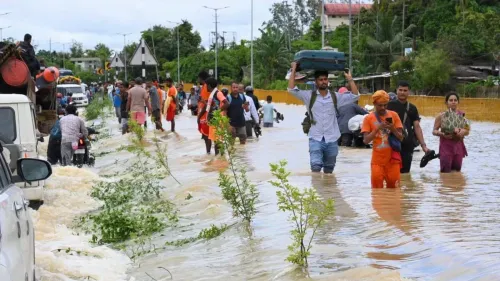
Assam floods 2025: CM Sarma directs all departments to stay on ground in Upper Assam
Synopsis
Three rivers have crossed the danger mark and five districts are submerged — yet the most significant signal from Assam's flood crisis is political: CM Sarma has publicly committed every minister, MP and MLA to stay on the ground until conditions normalise, a rare accountability move that will be tested by how quickly relief reaches affected farmers.
Key Takeaways
Assam CM Himanta Biswa Sarma on 20 July activated a 'whole-of-government' flood response across Upper Assam .
The Jaji , Dikhow and Dichang rivers have crossed the danger mark, flooding Jorhat , Sivasagar , Charaideo and Dibrugarh .
The NDRF is conducting active rescue and relief operations in coordination with district administrations.
Medical teams are deployed to prevent water-borne and vector-borne disease outbreaks; the Health Department is on highest alert.
All ministers, MPs and MLAs have been directed to remain on the ground until the flood situation normalises.
Helpline numbers have been activated for all affected districts.
Assam Chief Minister Himanta Biswa Sarma on Monday, 20 July said the state government has activated a 'whole-of-government' approach to contain the worsening flood crisis in Upper Assam, with protecting lives, rescuing stranded residents and delivering timely relief identified as the administration's overriding priorities.
Rivers Breach Danger Marks, Multiple Districts Hit
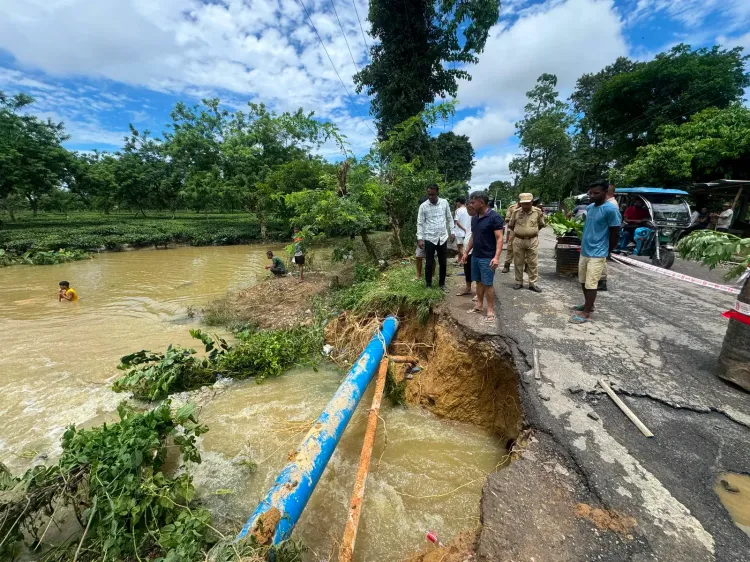
Heavy rainfall pushed the Jaji, Dikhow and Dichang rivers above the danger mark, triggering widespread inundation across Jorhat, Sivasagar, Charaideo, Dibrugarh and adjoining districts. Rising water levels have forced evacuations and disrupted normal life across the region, with farmers among the most severely affected.
CM Sarma Monitors Every Flood-Hit Constituency
Sarma said he is personally tracking conditions in every flood-affected Assembly constituency, including Titabar. 'I am personally monitoring the situation of the Titabar Assembly along with every flood-affected Assembly. Our representatives are staying alongside the people. Collective effort is our strongest weapon in tackling this crisis,' he said in a series of posts on X.
Ministers, Members of Parliament, Members of the Legislative Assembly and senior officials have been directed to remain on the ground until conditions normalise. Cabinet colleagues have been assigned specific districts to oversee relief operations, while district administrations coordinate rescue, evacuation and rehabilitation with disaster response agencies.
Embankments Reinforced, NDRF Teams Deployed
The government is reinforcing embankments at vulnerable stretches using sandbags, controlled piping and other flood-protection measures to limit damage to life and property. The National Disaster Response Force (NDRF), working alongside district administrations, is conducting active rescue operations and extending relief support to affected families.
This comes amid a pattern of annual flood devastation in Assam — the state has recorded significant flood events every monsoon season for decades, with the Brahmaputra river system and its tributaries routinely breaching banks under heavy rainfall. Notably, Upper Assam's geography makes it particularly vulnerable to flash flooding when multiple tributaries swell simultaneously.
Health Alerts and Helplines Activated
Medical teams have been deployed across all flood-hit areas to screen vulnerable groups, maintain uninterrupted medicine supplies and prevent outbreaks of water-borne and vector-borne diseases. The Health Department has been placed on the highest level of alert with instructions to maintain adequate stocks of essential medicines and medical supplies.
Helpline numbers have been activated for affected districts, with authorities urging residents to reach out in emergencies. 'The safety of people is our utmost priority. We are committed to ensuring that relief and rehabilitation reach every affected family without delay,' Sarma said, adding that all departments would remain on the ground until the situation improves.
What Happens Next
With water levels continuing to rise, the administration's immediate focus remains on shifting residents to safer locations and ensuring targeted assistance for flood-hit farmers. The pace of embankment reinforcement and the effectiveness of inter-agency coordination will be critical in determining how quickly the situation stabilises across the five affected districts.
Point of View
Where embankment breaches historically cause the deepest crop losses. With three rivers already above the danger mark and the monsoon far from its peak, the administration's coordination between NDRF, district machinery and the Health Department will face its sharpest test in the days ahead.
NationPress
20 Oct 2026
Frequently Asked Questions
Which districts in Assam are affected by the July 2025 floods?
The districts of Jorhat, Sivasagar, Charaideo, Dibrugarh and adjoining areas in Upper Assam are currently flood-affected. Heavy rainfall has pushed the Jaji, Dikhow and Dichang rivers above the danger mark, causing widespread inundation.
What is the 'whole-of-government' approach Assam has adopted for flood relief?
It refers to a coordinated response in which all government departments — including district administrations, the Health Department, NDRF and elected representatives — are simultaneously deployed on the ground. Ministers have been assigned specific districts, and MLAs and MPs have been directed to stay with affected communities until the situation normalises.
Is the NDRF active in Assam flood rescue operations?
Yes, the National Disaster Response Force is conducting active rescue operations across flood-hit districts in Upper Assam, working in coordination with district administrations to evacuate stranded residents and deliver relief to affected families.
What health measures has the Assam government taken during the floods?
Medical teams have been deployed across all flood-hit areas to screen vulnerable groups and prevent outbreaks of water-borne and vector-borne diseases. The Health Department has been placed on the highest alert and instructed to maintain adequate stocks of essential medicines and supplies.
How can flood-affected residents in Assam seek help?
The Assam government has activated helpline numbers for all affected districts. Residents facing emergencies have been urged by Chief Minister Sarma to contact local authorities through these helplines for rescue, evacuation or relief assistance.