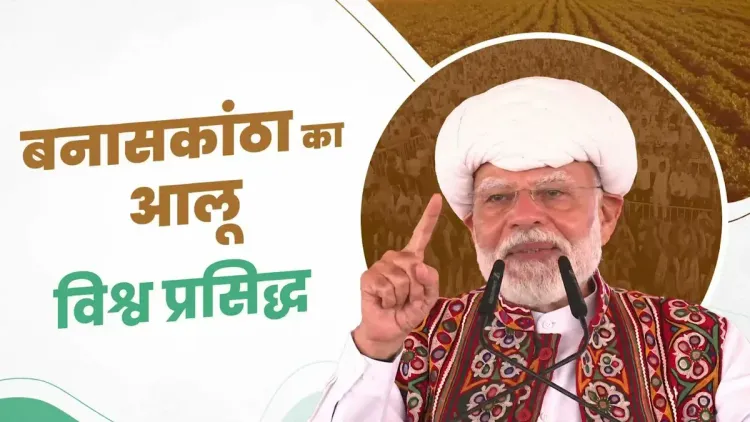
CM Bhupendra Patel Hails Banaskantha as Global Potato Hub
Synopsis
Gujarat CM Bhupendra Patel credited drip irrigation, modern technology, processing plants, and the Cluster Development Programme for transforming water-scarce Banaskantha into a globally recognised potato production hub, directly tagging PM Modi under the hashtag KisanKalyanSeRashtraKalyan.
Key Takeaways
Banaskantha , once plagued by electricity and water shortages, is now highlighted as a global leader in potato production.
Drip irrigation and modern agricultural technology are credited as the core drivers of the district's transformation.
New processing plants and the Cluster Development Programme are actively raising farmer incomes and market access in the region.
The Pradhan Mantri Krishi Sinchayee Yojana (PMKSY) , launched in 2015 , provided national-level backing for Gujarat's micro-irrigation push.
CM Patel tagged Prime Minister Narendra Modi , framing Banaskantha's success as part of a continuous BJP-era agricultural policy arc.
The hashtag #KisanKalyanSeRashtraKalyan ('Farmer Welfare to National Welfare') positions rural income growth as central to national development messaging.
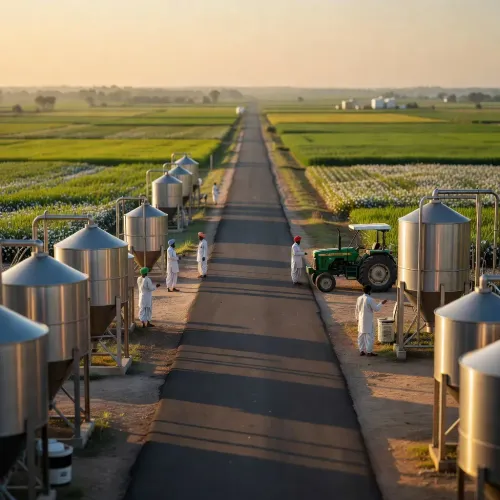
Once written off as a district strangled by power cuts and water scarcity, Banaskantha in northern Gujarat has rewritten its own story — emerging, district by district and crop by crop, into a globally recognised centre for potato production. Gujarat Chief Minister Bhupendra Patel marked this transformation on Friday, 30 October 2026, crediting modern technology, drip irrigation, new processing plants, and cluster development programmes for steadily lifting the incomes and capabilities of the district's potato farmers.
In his post, tagging Prime Minister Narendra Modi and carrying the hashtag #KisanKalyanSeRashtraKalyan ('From Farmer Welfare to National Welfare'), CM Patel wrote that Banaskantha — 'once battling crises of electricity and water' — today stands as 'the crown of potato production across the world', powered by modern techniques and drip irrigation. New processing plants and the Cluster Development Programme, he said, are continuously adding 'new strength to the income and capability of potato-growing farmers.'
From Water-Scarce Desert District to Drip-Irrigation Pioneer
Banaskantha's geography has always made farming precarious. Situated at the edge of the Rann of Kutch, the district historically depended on erratic rainfall and struggled with unreliable electricity supply — two constraints that kept yields low and farmer incomes fragile. The pivot began with the large-scale adoption of drip irrigation, which slashed water consumption while allowing precise nutrient delivery to crops. This allowed the sandy soils of Banaskantha to become, counterintuitively, ideal for high-quality potato cultivation.
The Pradhan Mantri Krishi Sinchayee Yojana (PMKSY), launched in 2015 by the central government, accelerated this shift by subsidising micro-irrigation infrastructure across India, with Gujarat among the front-running states in adoption. Gujarat's own state-level horticulture cluster initiatives in the 2010s layered additional support — linking farmers to cold-chain facilities, aggregation centres, and eventually processing units that could convert raw potato volumes into higher-value products.
Processing Plants and Cluster Programmes: The Income Multiplier
Raw crop production alone rarely transforms farmer livelihoods — it is value addition that changes the equation. The processing plants and Cluster Development Programme referenced by CM Patel are designed precisely to close this gap: instead of selling potatoes at the farm gate to middlemen, Banaskantha farmers are increasingly plugged into supply chains that serve food processors and exporters. The cluster model aggregates small and marginal farmers into collective units, giving them bargaining power, access to certified inputs, and direct linkages to markets that were previously out of reach.
This approach mirrors a broader national pattern in which irrigation efficiency gains are paired with infrastructure investment to shift farmers toward higher-value crop cycles — reducing the volatility that has historically punished agricultural households in semi-arid regions.
Modi Tag and the 'Farmer Welfare = National Welfare' Frame
CM Patel's direct tag of Prime Minister Modi is politically deliberate. Banaskantha's agricultural turnaround is presented as evidence of a policy continuum — from the irrigation schemes championed when Modi was Gujarat's Chief Minister, through to the PMKSY and agri-infrastructure programmes of his national tenure. The hashtag #KisanKalyanSeRashtraKalyan ('Farmer Welfare leads to National Welfare') frames individual farmer income growth as a building block of national prosperity — a messaging architecture the BJP has consistently deployed ahead of rural-focused political cycles.
With Banaskantha's farmers now part of a globally competitive supply chain, the district's transformation offers one of Gujarat's sharpest illustrations of what drip irrigation plus processing infrastructure can do to an arid-belt economy — and CM Patel is ensuring that story is told at scale.
Point of View
He anchors the district's success to a policy lineage that predates his own tenure as CM, reinforcing continuity. The 'KisanKalyan to RashtraKalyan' framing is not incidental — it is the party's standard template for translating agrarian welfare into electoral narrative. The signal to watch is whether these cluster and processing investments in Banaskantha generate verifiable income data ahead of the next Gujarat rural election cycle.
NationPress
30 Oct 2026
Frequently Asked Questions
Why is Banaskantha famous for potato production in India?
Banaskantha district in northern Gujarat has emerged as one of India's top potato-producing regions due to large-scale adoption of drip irrigation, which overcame the district's historic water scarcity, combined with state-supported horticulture clusters and cold-chain infrastructure.
What is the Cluster Development Programme for farmers in Gujarat?
The Cluster Development Programme aggregates small and marginal farmers into collective units that share infrastructure, inputs, and market linkages — giving them better bargaining power and access to processing and export supply chains, boosting income beyond farm-gate prices.
What is the Pradhan Mantri Krishi Sinchayee Yojana and how does it help Gujarat?
Pradhan Mantri Krishi Sinchayee Yojana (PMKSY), launched in 2015, subsidises micro-irrigation systems including drip and sprinkler setups across India. Gujarat has been among its leading adopters, using the scheme to transform water-scarce districts like Banaskantha into productive agricultural zones.
What did Gujarat CM Bhupendra Patel say about Banaskantha farmers on 30 October 2026?
CM Bhupendra Patel stated that Banaskantha, once struggling with electricity and water crises, has become the 'crown of potato production worldwide' through drip irrigation and modern technology, with new processing plants and cluster programmes steadily strengthening farmer incomes.
How has drip irrigation changed farming in Banaskantha district?
Drip irrigation drastically reduced water consumption in Banaskantha's semi-arid terrain, making high-quality potato cultivation viable at scale. Combined with processing infrastructure, it shifted farmers from low-margin subsistence output toward value-added supply chains linked to processors and exporters.