Chhattisgarh CMO Backs PM-KISAN as Farmers' Lifeline
Synopsis
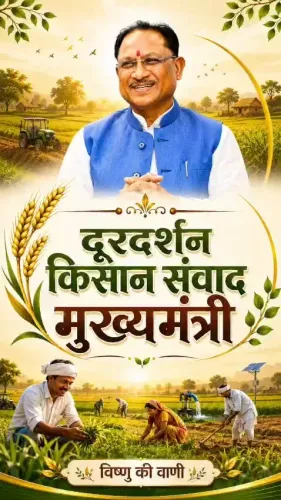
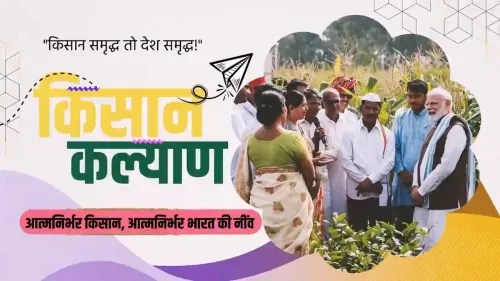
The Chhattisgarh Chief Minister's Office declared farmer welfare its highest priority on 30 October 2026, spotlighting PM Kisan Samman Nidhi's ₹6,000 annual transfer as a financial anchor for crores of small landholding families and citing continuous growth in the state's agriculture budget.
Key Takeaways
The Chhattisgarh Chief Minister's Office publicly reaffirmed farmer welfare as the state's 'highest priority' on 30 October 2026 .
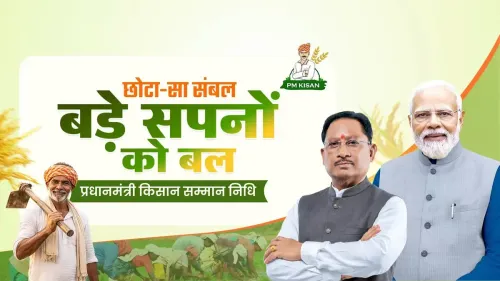
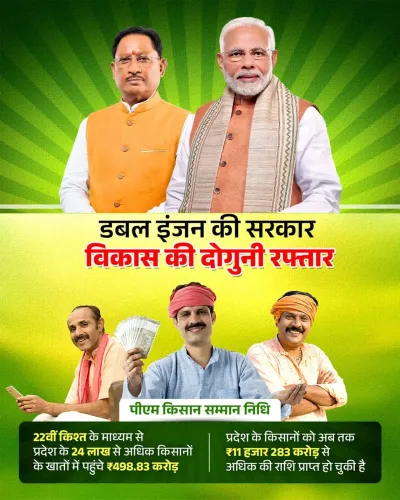
PM Kisan Samman Nidhi , launched in February 2019 , provides ₹6,000 per year in three instalments of ₹2,000 directly to eligible landholding farmer families.
The CMO credited the scheme with providing aarthik sambal (financial stability) to crores of small farmers across India.
The state claims a continuous upward trend in its agriculture budget, consistent with a pattern of cooperative federalism between state and central governments.
Chhattisgarh 's predominantly rural and tribal farming population makes it one of PM-KISAN's most significant delivery states.
No specific budget figures were cited in the post; exact numbers remain to be confirmed in future state budget documents.
Farmer welfare sits at the top of every government's political ledger, and Chhattisgarh's Chief Minister's Office made that arithmetic explicit on Friday, 30 October 2026, reaffirming that the state's agricultural budget is on a steady upward trajectory and that the central PM Kisan Samman Nidhi scheme has become inseparable from the daily economic reality of crores of small farmers.
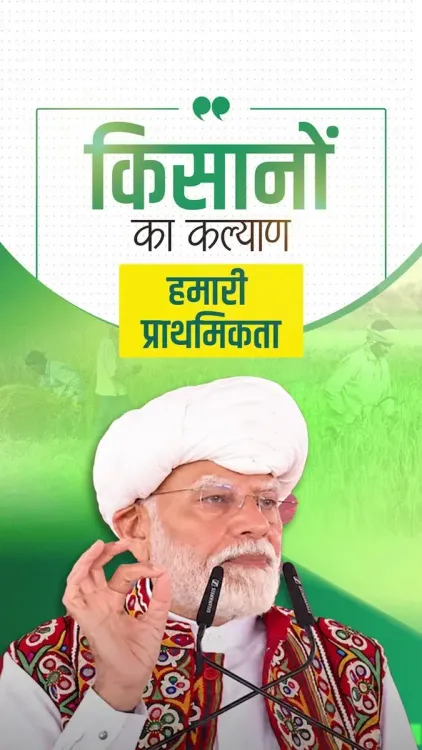
The post, shared in Hindi, states: 'Kisanon ka kalyan aur sashaktikaran hamari sarvochch prathamikta hai' — 'The welfare and empowerment of farmers is our highest priority.' It credits Prime Minister Narendra Modi's flagship income-support scheme for providing financial stability to millions of small landholding families across the country.
What PM-KISAN actually puts in a farmer's hand
Launched nationwide in February 2019 as a central sector scheme, PM Kisan Samman Nidhi transfers ₹6,000 per year directly into the bank accounts of eligible landholding farmer families, paid in three equal instalments of ₹2,000 each. The design is deliberately lean — no middlemen, no physical vouchers, just a direct bank transfer. For a marginal farmer whose cash income is seasonal and thin, each instalment can cover seed costs or a utility bill when it matters most.
Chhattisgarh, a predominantly rural state in central India with a significant tribal farming population, sits squarely in the scheme's target demographic. Small and marginal landholders dominate the state's agrarian landscape, making every PM-KISAN payment cycle a consequential moment for household budgets across thousands of villages.
State budget and cooperative federalism in agriculture
The CMO's post points to a broader and well-established pattern: state governments across India regularly pair central scheme endorsements with signals about their own agricultural spending. The logic is cooperative federalism in action — central transfers provide a floor, while state budgets layer on irrigation investment, input subsidies, and extension services. The Chhattisgarh government's claim of 'continuous increases' in its agriculture budget follows that playbook, even if precise figures were not cited in the post.
What that means on the ground is that a farmer in Chhattisgarh is, in theory, the beneficiary of two distinct fiscal commitments: the ₹6,000 annual central transfer and whatever the state adds through its own programmes. The convergence of both is what the CMO is signalling — not a new announcement, but a restatement of political direction ahead of the next budget cycle.
The political weight of farmer welfare messaging
Agriculture is one of India's most politically charged policy arenas. Governments at every level know that farmer distress can move votes dramatically. By publicly anchoring itself to PM-KISAN and framing it as 'an integral part of crores of small farmers' lives', the Chhattisgarh CMO is doing something precise: associating state governance with a visible, tangible central welfare delivery — and, by extension, with the political credibility of Prime Minister Modi.
The language of 'empowerment' and 'economic support' — aarthik sambal — signals that the messaging is aimed squarely at the rural voter, for whom a direct bank transfer is among the most legible acts of governance.
The next test will be whether Chhattisgarh's upcoming budget documents put hard numbers behind the promise of a rising agriculture outlay. Until then, the message is clear: the state government intends to be seen, and judged, on how well it serves the farmer.
Point of View
However, means the post is a declaration of intent rather than a report of achievement. Sustained credibility will depend on whether the next state budget translates this rhetoric into verifiable, quantified agricultural spending increases.
NationPress
30 Oct 2026
Frequently Asked Questions
What is PM Kisan Samman Nidhi and how much do farmers get?
PM Kisan Samman Nidhi is a central government scheme that provides ₹6,000 per year to eligible landholding farmer families, paid in three instalments of ₹2,000 each directly into their bank accounts. It was launched nationwide in February 2019.
Why is Chhattisgarh highlighting PM-KISAN in October 2026?
The Chhattisgarh Chief Minister's Office reaffirmed the state's commitment to farmer welfare and credited PM-KISAN for providing economic support to crores of small farmers, a message aligned with the state's agricultural policy priorities ahead of the next budget cycle.
Who is eligible for PM-KISAN benefits in Chhattisgarh?
Small and marginal landholding farmer families registered under the scheme are eligible. Chhattisgarh has a large rural and tribal farming population that falls within this category.
Has Chhattisgarh increased its agriculture budget recently?
The Chief Minister's Office has stated that the agriculture budget is seeing continuous increases, though specific figures or years were not mentioned in the post and have not been independently verified.
What does cooperative federalism mean for Indian farmers?
In agriculture, cooperative federalism means that central government schemes like PM-KISAN set a financial floor through direct transfers, while state governments supplement them with their own spending on irrigation, subsidies, and agricultural extension services — a combined approach the Chhattisgarh government says it is following.