CM Sai's Office Marks 12 Years of Farmer Welfare Schemes
Synopsis
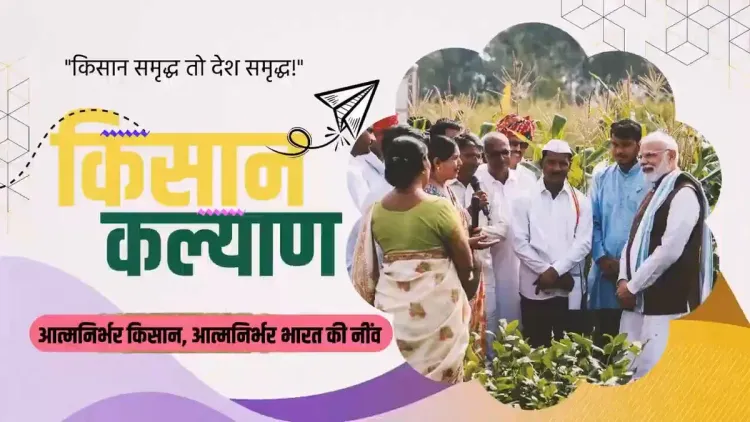
The Chhattisgarh CMO marked 12 years of BJP-led farmer welfare on 11 June 2026, citing PM-KISAN, Kisan Credit Card and crop insurance as tools driving rural self-reliance under the 'double engine government' framework.
Key Takeaways
The Chhattisgarh CMO posted on 11 June 2026 under #12YearsOfKisanSamriddhi , marking over a decade of central farmer welfare schemes.
PM-KISAN provides Rs 6,000 per year in direct income support to eligible landholding farmers via direct benefit transfer, launched in February 2019 .
The Kisan Credit Card scheme was expanded with saturation drives from 2018 , extending subsidised credit access to farm households.
Pradhan Mantri Fasal Bima Yojana , introduced in 2016 , replaced earlier crop insurance frameworks with revised premium and coverage norms.
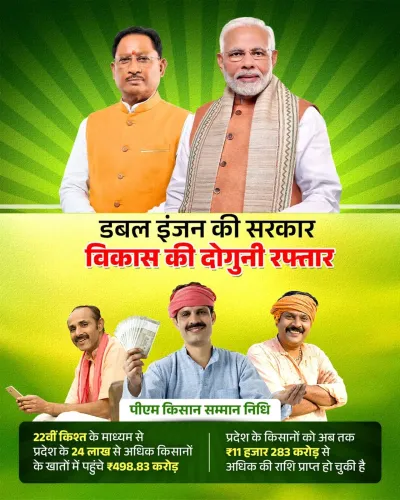
The post frames farmer prosperity as a joint achievement of the BJP-led Centre and Chhattisgarh state government — the 'double engine' model.
State-level utilisation data and future Union Budget allocations will be key indicators of on-ground scheme impact.
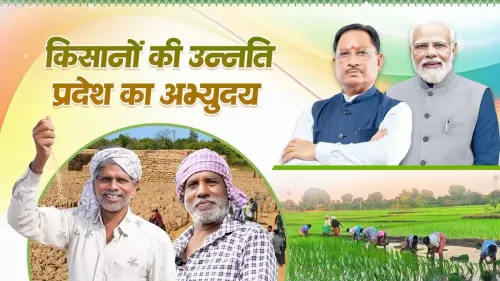
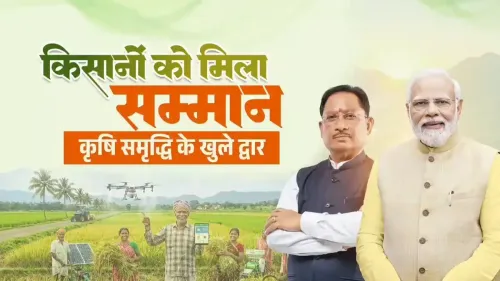
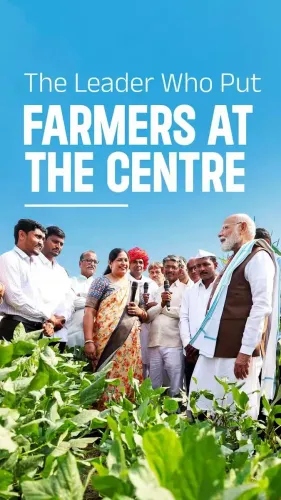
The Chief Minister's Office of Chhattisgarh on Thursday, 11 June 2026, posted a message crediting Prime Minister Narendra Modi's leadership for making India's farmers economically self-reliant over the past 12 years, highlighting flagship central schemes as the backbone of rural prosperity.
Context
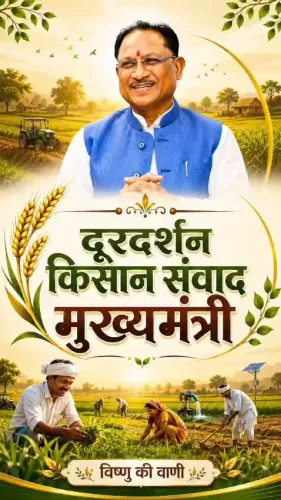
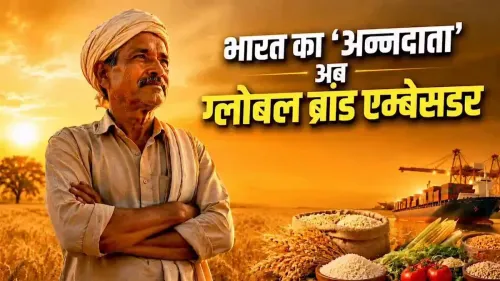
The post, tagged with #12YearsOfKisanSamriddhi, states: 'Kisanon ki samriddhi, double engine sarkar ka sankalp' ('Farmer prosperity is the resolve of the double-engine government'). It asserts that farmers — referred to as annadata (providers of food) — are becoming Atmanirbhar (self-reliant) under PM Modi's leadership. The message was shared by the official handle of Chief Minister Vishnu Deo Sai's office, tagging PMO India and the Union Ministry of Agriculture.
The phrase 'double engine government' refers to the BJP holding power simultaneously at the Centre and in Chhattisgarh, a framing the party uses to signal coordinated policy delivery. The post positions farmer welfare as a shared achievement of both governments.
Policy Backdrop
Three central schemes are specifically cited. The Pradhan Mantri Kisan Samman Nidhi (PM-KISAN), launched in February 2019, provides direct income support of Rs 6,000 per year to eligible landholding farmers through direct benefit transfer. The Kisan Credit Card (KCC) scheme, expanded with saturation drives from 2018 onwards, extends subsidised credit to agricultural households.
The Pradhan Mantri Fasal Bima Yojana (PMFBY), introduced in 2016 to replace earlier crop insurance frameworks, provides risk coverage against natural calamities with revised premium structures. Together, the post frames these three instruments as a 'protective shield' (suraksha kavach) for the farming community.
The post's reference to 12 years aligns with the period since the BJP-led central government took office in 2014, situating current farmer welfare outcomes within a longer policy arc aimed at Viksit Bharat (Developed India).
Stakeholders and Impact
Chhattisgarh has a predominantly agrarian economy, with a large share of its rural population dependent on paddy and minor forest produce. Small and marginal farmers — the primary beneficiaries of PM-KISAN and PMFBY — constitute the bulk of the state's agricultural workforce. State-level implementation of these central schemes determines how effectively funds and insurance coverage reach the last mile.
The CMO's coordinated tagging of @PMOIndia and @AgriGoI signals an intent to amplify the message at the national level, consistent with a broader pattern of BJP-governed states echoing central government narratives on agricultural policy milestones.
What's Next
Analysts and farmer advocacy groups will watch for Chhattisgarh-specific utilisation data — including the number of PM-KISAN beneficiaries, KCC accounts activated, and PMFBY claims settled in the state — to assess whether the policy messaging translates into measurable ground-level outcomes. Any fresh allocations or scheme modifications in the next Union Budget will also shape how the 'double engine' narrative evolves in the run-up to state and national electoral cycles.
The post underscores how agricultural welfare schemes have become a central pillar of political communication for BJP-ruled states, with farmer self-reliance increasingly framed as a marker of the Viksit Bharat vision's progress.
Point of View
Using a scheme anniversary to reinforce the 'double engine government' brand ahead of future electoral cycles. By anchoring the narrative to three well-known central schemes — PM-KISAN, KCC, and PMFBY — the communication sidesteps state-specific performance data and instead draws legitimacy from national policy design. The '12 years' framing is politically deliberate, tying farmer welfare outcomes directly to the Modi government's tenure since 2014. Whether this messaging translates into electoral capital will depend on how farmers in Chhattisgarh actually assess their income security and access to credit on the ground.
NationPress
26 Oct 2026
Frequently Asked Questions
What is the PM-KISAN scheme and how much money do farmers get?
PM-KISAN (Pradhan Mantri Kisan Samman Nidhi) provides eligible landholding farmers with Rs 6,000 per year in three equal instalments of Rs 2,000, transferred directly to their bank accounts. It was launched in February 2019 .
What does 'double engine government' mean in Indian politics?
'Double engine government' is a BJP phrase describing states where the same party governs both at the Centre and at the state level, implying better policy coordination and faster scheme delivery.
What is Pradhan Mantri Fasal Bima Yojana?
PMFBY is a central crop insurance scheme launched in 2016 that provides farmers with financial coverage against losses from natural calamities, pests, and diseases, with revised and lower premium rates compared to earlier schemes.
Who is the Chief Minister of Chhattisgarh in 2026?
Vishnu Deo Sai is the Chief Minister of Chhattisgarh. He is a BJP leader and the official CMO handle posts on behalf of his office.
What is the Kisan Credit Card scheme?
The Kisan Credit Card (KCC) is a government-backed credit facility that allows farmers to access short-term loans for agricultural needs at subsidised interest rates. Coverage was significantly expanded from 2018 onwards through saturation drives.