Joshi Cites World Bank Data on India's Poverty Decline
Synopsis
Union Minister Pralhad Joshi has highlighted a World Bank finding that India's extreme poverty has dropped from 27.6% to 2.6% and inequality has reached a historic low, attributing the shift to PM Modi's inclusive growth and welfare delivery agenda.
Key Takeaways
The World Bank has recognised that inequality in India has reached a historic low .
Extreme poverty in India is cited as having fallen sharply from 27.6% to 2.6% .
Union Minister Pralhad Joshi credited the gains to PM Narendra Modi 's welfare and inclusive growth agenda.
Key delivery vehicles cited in the policy lineage include PM Jan Dhan Yojana (2014) and PM Ujjwala Yojana (2016) .
The findings are positioned within the government's Viksit Bharat vision of a fully developed India by 2047 .
Independent verification will come from upcoming NITI Aayog MPI and Economic Survey updates.
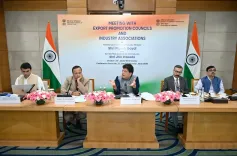
A number that rarely moves this fast has moved: the World Bank now recognises that extreme poverty in India has fallen from 27.6% to 2.6% — and that inequality has hit a historic low. Union Minister Pralhad Joshi on Friday, 30 October 2026 shared the findings on X, calling the shift 'a significant economic milestone for India' and crediting the welfare and economic agenda of Prime Minister Narendra Modi.
Joshi's post frames the figures as vindication of a governance model built on direct-benefit delivery, financial inclusion and economic empowerment. 'Sustained efforts towards inclusive growth, effective welfare delivery and economic empowerment have transformed millions of lives,' he wrote, invoking the government's flagship vision of a prosperous and self-reliant #ViksitBharat — the official roadmap for India to become a developed nation by 2047.Welfare architecture that drove the numbers
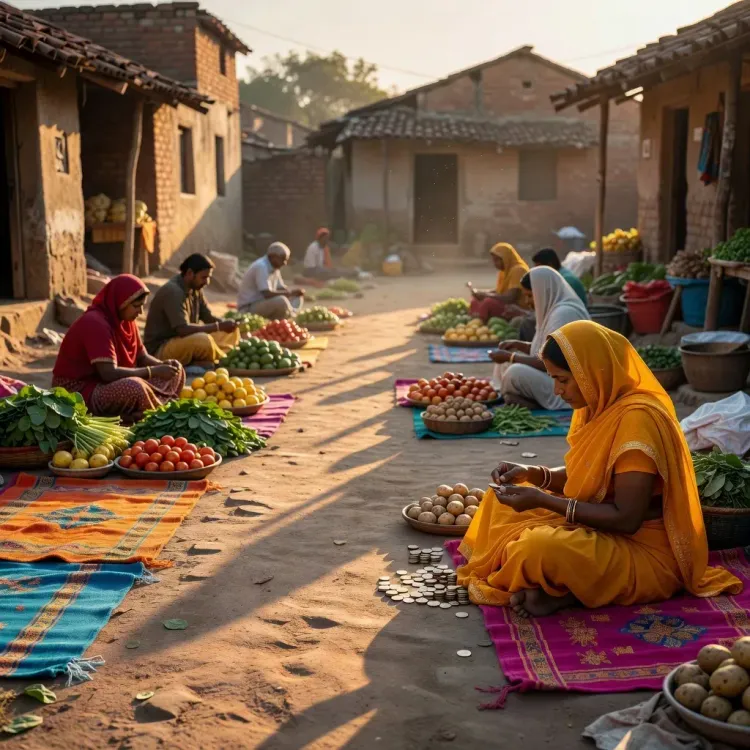
The policy scaffolding behind these poverty metrics traces back more than a decade. PM Jan Dhan Yojana, launched in 2014, pulled hundreds of millions of unbanked households into the formal financial system, enabling direct cash transfers at scale. PM Ujjwala Yojana, introduced in 2016, extended clean cooking fuel to low-income rural families — a deprivation that the Multidimensional Poverty Index counts heavily against a household's welfare score.
Together, these Aadhaar-linked delivery pipelines reduced leakage and reached beneficiaries who had historically fallen through the cracks of older welfare architectures. NITI Aayog began tracking this trajectory through its own Multidimensional Poverty Index reports from 2021 onward, layering health, education and living-standard indicators on top of income-based measures — and consistently recording declines across states.
Inequality at a historic low — what that means
The inequality finding carries its own weight. India's growth story has long attracted the counterargument that rising GDP primarily enriches urban, educated, upper-income cohorts while leaving rural and informal workers behind. A World Bank assessment that inequality has reached a historic low cuts directly against that critique — suggesting that the gains have been distributed more broadly than the headline growth numbers alone imply.
The Viksit Bharat framing that Joshi deploys is not merely rhetorical. It anchors every major welfare and infrastructure scheme to a single measurable endpoint: a fully developed India by the centenary of independence. Poverty and inequality metrics are among the most scrutinised benchmarks on that road.
What the data watchers will want next
The next granular look at these trends will come from the upcoming NITI Aayog MPI update and the relevant chapter in the next Economic Survey, both of which will be parsed closely to verify the trajectory Joshi highlights. Parliamentary winter session could also surface questions drilling into the precise World Bank methodology and the base years used to calculate the poverty shift. The figures, if they hold up to that scrutiny, would represent one of the sharpest poverty-reduction arcs any large economy has recorded in a single generation.
For now, the political signal is clear: the BJP's development narrative has a World Bank data point behind it — and the government intends to press that advantage.
Point of View
Ujjwala, Aadhaar-linked transfers — as structural poverty-reduction tools rather than fiscal handouts, and a World Bank stamp on a near-elimination of extreme poverty gives that argument its most credible external endorsement yet. Releasing this data point in the run-up to potential legislative sessions is tactically significant: it pre-empts opposition narratives on inequality and sets the terms of the economic debate. The 'historic low' on inequality is arguably the more consequential claim — it challenges the persistent 'growth-without-distribution' critique that has dogged India's economic narrative for years. Analysts will watch whether the next NITI Aayog MPI and Economic Survey corroborate the World Bank framing or introduce methodological caveats that complicate the picture.
NationPress
30 Oct 2026
Frequently Asked Questions
What did the World Bank say about poverty in India in 2026?
The World Bank recognised that extreme poverty in India has declined from 27.6% to 2.6% and that inequality has reached a historic low , as highlighted by Union Minister Pralhad Joshi on 30 October 2026 .
Why has poverty decreased in India according to the government?
The government attributes the decline to sustained welfare delivery through schemes like PM Jan Dhan Yojana and PM Ujjwala Yojana , Aadhaar-linked direct benefit transfers and broader economic empowerment initiatives under PM Narendra Modi .
What is Viksit Bharat and how does it relate to poverty reduction?
Viksit Bharat is India's official vision of becoming a fully developed nation by 2047 , the centenary of independence. Poverty and inequality metrics are among the key benchmarks tracked against this goal.
Who is Pralhad Joshi and what ministry does he head?
Pralhad Joshi is the Union Minister of Consumer Affairs, Food and Public Distribution and New and Renewable Energy, and a senior BJP leader from Karnataka .
How does NITI Aayog measure poverty in India?
NITI Aayog publishes a Multidimensional Poverty Index since 2021 that tracks deprivations across health, education and living standards — going beyond income alone to give a fuller picture of household welfare.