CM Sai Hails PM-KISAN as ₹18,000 Cr Reaches 10 Cr Farmers

Synopsis
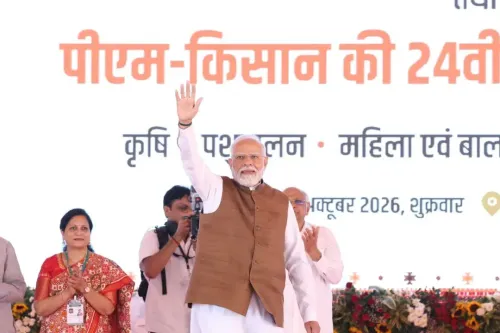
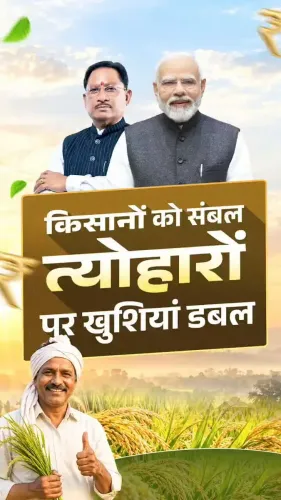
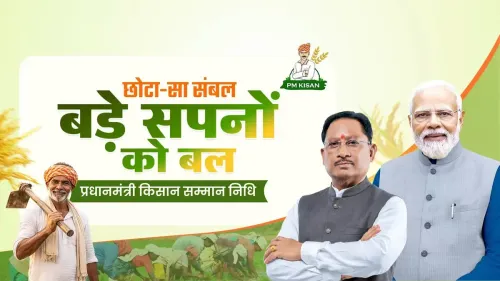
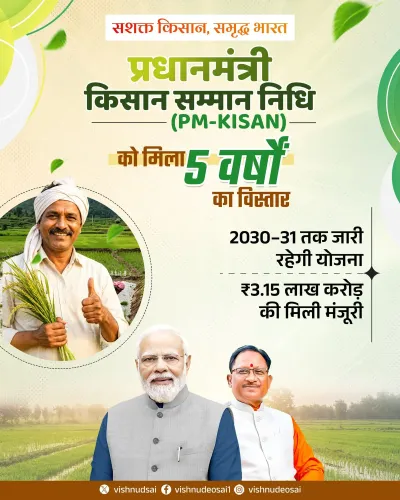
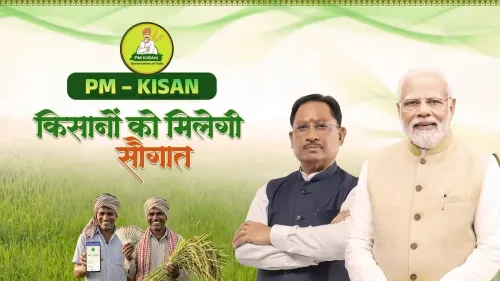
Chhattisgarh CM Vishnu Deo Sai quoted PM Modi to mark the release of over ₹18,000 crore to around 10 crore farmers under PM-KISAN, highlighting that small farmers — over 85% of all farming households — are now central to agricultural policy.
Key Takeaways
Chhattisgarh CM Vishnu Deo Sai posted on X on 30 October 2026 , quoting PM Narendra Modi on the PM-KISAN disbursement.
Over ₹18,000 crore was transferred to the accounts of approximately 10 crore small and marginal farmers in a single day.
PM Kisan Samman Nidhi provides ₹6,000 per year in three installments directly to eligible farmer families, launched in February 2019 .
More than 85 per cent of Indian farming households are smallholders — the primary target group the scheme was designed to serve.
The post frames the scheme as a historic correction, contrasting it with earlier policies that CM Sai argues overlooked small farmers.
Over 10 crore small farmers woke up on Friday, 30 October 2026 with a direct deposit in their bank accounts — ₹18,000 crore disbursed in a single day under the PM Kisan Samman Nidhi scheme. Chhattisgarh Chief Minister Vishnu Deo Sai amplified the moment on X, quoting Prime Minister Narendra Modi and framing the transfer as proof that India's smallest farmers have finally found a government that listens.
In the post, CM Sai quoted PM Modi directly: 'कभी इन छोटे किसानों की जरूरतों को नहीं समझा गया, कभी उन्हें पूछा नहीं गया' — 'The needs of these small farmers were never understood, they were never consulted' — before arguing that the present government changed that equation. The pointed historical contrast was deliberate: a reminder that 85 per cent of India's farming households are smallholders who were largely bypassed by older credit and input-subsidy frameworks designed for larger landowners.
What PM-KISAN delivers — and why the 85% figure matters
Launched in February 2019 as a central sector scheme, PM Kisan Samman Nidhi provides ₹6,000 per year in three equal installments, transferred directly into the bank accounts of eligible small and marginal farmer families — no middlemen, no leakage. The scheme was a deliberate pivot away from an older subsidy architecture that rewarded input use and access to institutional credit, advantages that disproportionately benefited larger, better-connected landholders.
The 85-per-cent statistic is the sharpest number in the post. More than eight in ten Indian farm households operate on small or marginal holdings, yet for decades agricultural policy was built around a different, wealthier minority. Direct Benefit Transfer was the workaround — bypass legacy systems, deposit money directly, verify through Aadhaar-seeded accounts. PM-KISAN became the flagship proof-of-concept for that model at agricultural scale.
Chhattisgarh's stake in every installment
For Chhattisgarh — a state where agriculture sustains a large share of the rural population and where CM Sai's BJP government came to power in late 2023 — each PM-KISAN disbursement carries both economic and political weight. State governments play a role in maintaining beneficiary databases, weeding out ineligible claimants, and ensuring Aadhaar-bank linkages are clean. A smooth, large-scale transfer is therefore also a measure of administrative machinery, not just central generosity.
CM Sai's decision to quote the Prime Minister verbatim — tagging @narendramodi and hashtagging #PMKisanSammanNidhi — places Chhattisgarh visibly within the national narrative of farm welfare, a positioning that matters as the state continues to implement the scheme at the ground level.
When nearly a tenth of a billion people receive money on the same day, the transaction is not just fiscal — it is a statement about who the state believes it governs for. The question that follows every installment is the same: does the transfer translate into lasting income security, or does it remain a vital but insufficient floor? The next disbursement cycle will carry that answer one step further.
Point of View
Making abstract agricultural welfare concrete and countable. By quoting PM Modi directly and anchoring the narrative in the 85-per-cent smallholder statistic, CM Sai reinforces a BJP policy identity built around visible, verifiable transfers rather than subsidy regimes that historically rewarded better-connected farmers. For Chhattisgarh specifically, each clean disbursement doubles as a demonstration of state-level administrative capability under the current government. The broader arc points toward DBT becoming the default template for welfare delivery — the question for analysts is whether income-support transfers alone can address structural issues like land fragmentation, credit access, and price volatility that still define life for India's smallholders.
NationPress
30 Oct 2026
Frequently Asked Questions
What is PM Kisan Samman Nidhi and how much money does a farmer get?
PM Kisan Samman Nidhi is a central government scheme that provides ₹6,000 per year in three equal installments of ₹2,000 each, transferred directly into the bank accounts of eligible small and marginal farmer families. It was launched in February 2019.
How many farmers received PM-KISAN money in October 2026?
According to a post by Chhattisgarh CM Vishnu Deo Sai quoting PM Narendra Modi, around 10 crore farmers received over ₹18,000 crore on 30 October 2026 under the scheme.
Why did CM Vishnu Deo Sai post about PM-KISAN?
CM Sai shared the disbursement milestone to highlight the central government's focus on small and marginal farmers, who make up over 85 per cent of India's farming households and were, the post argues, underserved by earlier agricultural policies.
Who is eligible for PM Kisan Samman Nidhi?
Eligible beneficiaries are landholding small and marginal farmer families across India. Applicants must have their bank accounts seeded with Aadhaar and be registered on the PM-KISAN portal; certain categories such as institutional landholders and income-tax payers are excluded.
What is the significance of the 85 per cent figure mentioned in the PM-KISAN post?
The figure refers to the share of Indian farming households that operate small or marginal land holdings. The post argues that older agricultural subsidy and credit frameworks disproportionately benefited larger landholders, while PM-KISAN was designed specifically to reach this majority.