Vaishnaw Signals India's Push Past Assembly Into Core Components
Synopsis
Union Minister Ashwini Vaishnaw has signalled India's manufacturing push is graduating from final assembly to homegrown components and materials — the harder, higher-value tier that determines real supply-chain sovereignty. The post aligns with the PLI and Make in India policy arc.
Key Takeaways
Ashwini Vaishnaw posted on 6 November 2026 that 'Made in India' must move beyond assembly into homegrown components and materials.
The Make in India initiative launched in September 2014 set India's original manufacturing-hub ambition.
The Production Linked Incentive (PLI) scheme, introduced from 2020 , provides cash incentives tied to incremental domestic production in electronics and components.
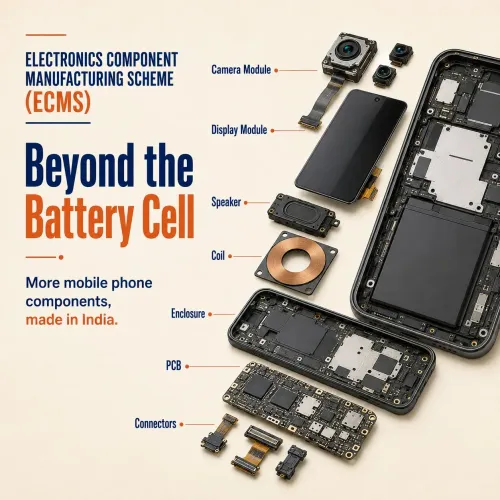
India's electronics sector has grown assembly operations rapidly but remained import-dependent for core components, chips, and specialty materials.
Progress on PLI outlays for semiconductors and electronic components is expected to be tracked in forthcoming budget and ministry reviews.
Vaishnaw holds the Electronics and Information Technology portfolio alongside Railways and Information & Broadcasting since 2021 .
India's manufacturing story is entering a harder, more ambitious chapter — and Union Minister Ashwini Vaishnaw wants the world to know it. On Friday, 6 November 2026, the minister posted a pointed message signalling that the 'Made in India' mandate is no longer satisfied by putting products together — it demands homegrown components and raw materials too.
From Screwdriver to Supply Chain
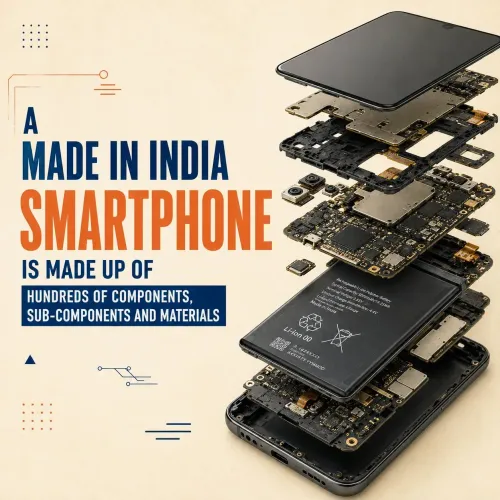
The distinction matters enormously. For years, critics of India's manufacturing boom noted a quiet contradiction: devices stamped 'Made in India' still depended heavily on imported circuit boards, chips, display panels, and specialty materials — most of them sourced from China or Taiwan. Assembly jobs came onshore; the real value stayed offshore. Vaishnaw's post draws a direct line in the sand: that gap is now the target.
The Make in India initiative, launched in September 2014, set the original ambition — transform India into a global manufacturing hub. The Production Linked Incentive (PLI) scheme, rolled out from 2020 onward across electronics, mobiles, and components, sharpened that ambition with hard cash incentives tied to incremental domestic production. Together, they laid the runway. The minister's message signals the aircraft is now expected to fly further — into upstream components and materials.
Why Components Are the Real Prize
Electronics assembly is capital-light and labour-intensive — good for jobs, but thin on strategic depth. Components and materials are where margins live, where patents cluster, and where supply-chain resilience is actually built. Countries that control component production — semiconductors, passive components, specialty chemicals — wield outsized leverage in global trade. India's shift toward that tier is precisely what PLI tranches for semiconductors and electronic components have been designed to catalyse, with forthcoming budget reviews expected to track progress on those outlays.
Vaishnaw, who has held the Electronics and Information Technology portfolio since 2021 alongside Railways and Information & Broadcasting, has consistently pushed the narrative that India must graduate from assembler to innovator. This post, brief as it is, carries the weight of that entire policy trajectory.
The Road India Is Actually On
The broader pattern across successive administrations has been consistent: successive rounds of policy have targeted sectors where assembly scaled quickly but upstream capability lagged dangerously. The honest reckoning is that moving into components is slower, capital-heavier, and technically harder than assembly — it requires skilled engineering workforces, stable power, precision logistics, and patient capital. India is building all of these simultaneously, which is why the minister's framing — 'moving beyond assembly' — reads less like a celebration and more like a battle order.
The next concrete test will come in forthcoming budget documents and ministry reviews, where PLI disbursement data for semiconductor and component manufacturing will reveal how much of the ambition has translated into factory floors.
Point of View
Not a ceremonial update — it frames the next phase of India's industrial strategy as a shift from quantity of assembly to quality of domestic value addition. This aligns with a broader government push to reduce import exposure in strategic sectors, particularly electronics, where dependence on East Asian supply chains has been a persistent vulnerability. The message arrives as PLI schemes for semiconductors and components face scrutiny over actual disbursements versus targets, suggesting the minister is shaping the narrative ahead of accountability reviews. If domestic component production genuinely scales, it would mark the most consequential upgrade to India's manufacturing depth in a generation.
NationPress
6 Nov 2026
Frequently Asked Questions
What did Ashwini Vaishnaw say about Made in India in November 2026?
Vaishnaw posted that Made in India is moving beyond assembly to homegrown components and materials, signalling a shift toward deeper domestic manufacturing value addition.
What is the difference between assembly and component manufacturing in India?
Assembly involves putting together imported parts into finished products, while component manufacturing produces the core parts — chips, circuit boards, materials — domestically, which carries higher value and strategic importance.
What is the PLI scheme and how does it relate to this?
The Production Linked Incentive scheme, launched from 2020, offers financial incentives to manufacturers who increase domestic production in sectors like electronics and components, directly supporting India's push to build upstream supply chains.
What is Make in India and when was it launched?
Make in India is a flagship government initiative launched in September 2014 to attract investment and transform India into a global manufacturing hub across multiple sectors.
Why is moving to components important for India's economy?
Components and materials represent higher margins, more patents, and greater supply-chain resilience than assembly. Controlling component production reduces import dependence — particularly on China and Taiwan — and strengthens India's strategic position in global electronics trade.