UN probe into PoK urged as Pakistani army crackdown kills 32+
Synopsis
A MEMRI report and the IHRF have documented over 32 civilian deaths, mass arrests, internet blackouts, and sedition charges against protesters in PoK — and are now calling for a UN-led fact-finding mission. The findings directly undermine Pakistan's long-held Kashmir narrative, exposing the territory it administers as a site of systematic repression.
Key Takeaways
More than 32 people were killed in PoK between 8 and 16 June , according to the International Human Rights Foundation (IHRF) ; separate media reports cite 27 deaths in Rawalakot alone.
The JKJAAC , a coalition demanding subsidised essentials and electoral reforms, was banned by Pakistani authorities under anti-terror provisions .
Pakistani authorities suspended internet and mobile networks, deployed paramilitary troops, and arrested more than 100 activists and leaders .
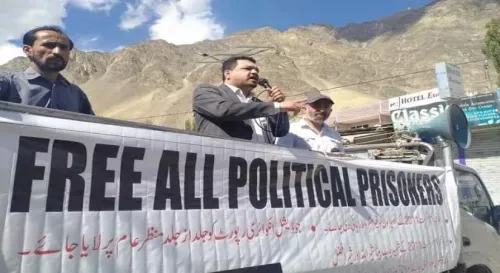
Sit-ins drawing more than 70,000 people continued at Eidgah Ground, Rawalakot into the third week of June.
Researcher Fatima El Hashimi and the IHRF have called for a UN-led independent fact-finding mission into army excesses, civilian deaths, and arbitrary arrests in PoK.
The IHRF also demands accountability for the alleged extrajudicial killing of activist Shahzeb Habib .
The escalating unrest in Pakistan-occupied Kashmir (PoK) has drawn urgent calls for an independent international investigation into the Pakistani army's use of force, civilian deaths, arbitrary arrests, and systematic human rights violations in the territory. A detailed report by the US-based Middle East Media Research Institute (MEMRI), published on 28 June, argues that conditions on the ground constitute a compelling case for a fact-finding mission by the United Nations and other international bodies.
Origins of the Unrest
The current wave of protests in PoK traces back to 2023, when demonstrations erupted over steep electricity tariffs and chronic flour shortages. The Jammu Kashmir Joint Awami Action Committee (JKJAAC) — a broad coalition of traders, lawyers, transporters, students, and civil society groups — crystallised public anger into a 38-point charter of demands. These demands include subsidised rates for essential commodities, electoral reforms, and the abolition of 12 assembly seats reserved for Kashmiri refugees living outside the region, which local residents argue dilute their political representation.
The economic dimension runs deep. PoK contributes substantially to Pakistan's hydropower generation, yet residents reportedly pay electricity tariffs above production costs — a disparity critics say reflects Islamabad's extractive relationship with the territory, while consumers and officials elsewhere in Pakistan enjoy preferential rates.
Crackdown and Casualties
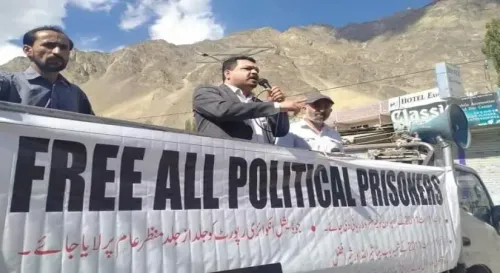
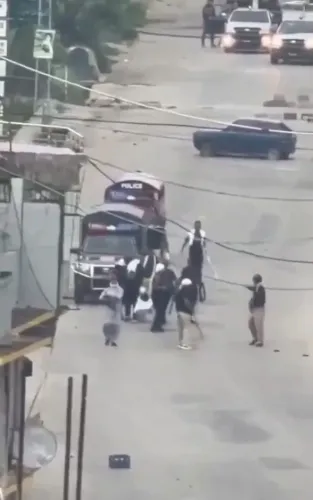
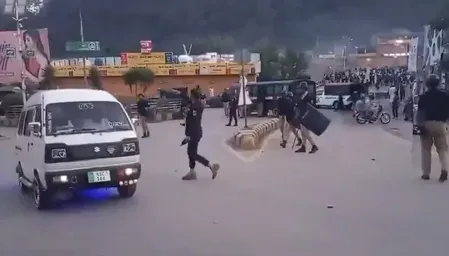
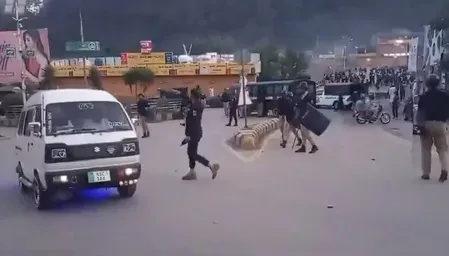
The protests have triggered a severe state response. Clashes erupted in Rawalakot, with multiple media reports claiming 27 people were killed and more than 200 others injured. The International Human Rights Foundation (IHRF) put the death toll higher, stating that more than 32 people were killed between 8 and 16 June alone. The IHRF documented the deployment of federal paramilitary troops, mass arbitrary arrests of over 100 activists and leaders, a complete suspension of internet and mobile networks, and travel restrictions barring outsiders from entering the region.
Journalist Sohrab Barkat was among those detained, arrested under Pakistan's Prevention of Electronic Crimes Act. Pakistani authorities also banned the JKJAAC under anti-terror provisions, filed sedition cases against prominent figures, and targeted the committee's leadership — a sequence the IHRF described as part of a systemic pattern of rights violations, not an isolated episode.
What Researchers and Rights Bodies Said
Fatima El Hashimi, a Moroccan researcher and journalist cited in the MEMRI report, drew a sharp parallel with Pakistan's broader security playbook. “The language used against JKJAAC follows the familiar script of Pakistan's security establishment: first delegitimise the grievance, then criminalise the protester, then justify force as law and order,” she wrote. “A movement demanding cheaper electricity, wheat relief, local rights and political representation is now being pushed into the frame of sedition, terrorism, and anti-national activity.”
El Hashimi also challenged Pakistan's long-standing Kashmir narrative directly: “The events in PoJK since 2023 provide evidence that challenges Pakistan's claim on factual grounds. Residents of the territory have protested against the administration that Islamabad controls. That administration has responded with force, communications blackouts, and anti-terrorism designations applied to civilian protest groups.”
The IHRF, in its 16 June statement, condemned the crackdown as “a disproportionate and unlawful violation of the right to freedom of association,” adding that branding a civil society body as ‘terrorist’ on vague grounds while sealing the region from outside scrutiny was legally indefensible.
Scale of Protests and Recurring Violence
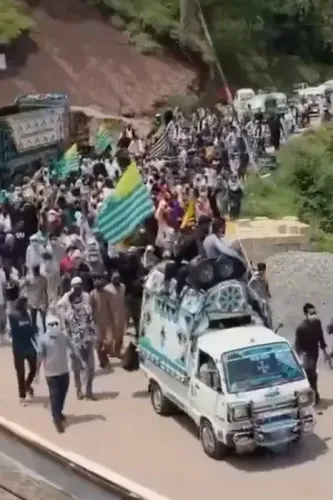
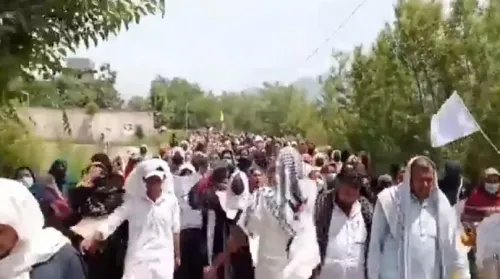
Despite the crackdown, large-scale sit-ins continued into the third week of June. Gatherings of more than 70,000 people were reported at Eidgah Ground in Rawalakot, with protesters raising slogans including “Pak Forces Out” and demanding an end to what they called occupation. The IHRF also documented a recurring pattern of deadly crackdowns on earlier JAAC protests, citing violence in May 2024 and October 2025 that claimed multiple lives — underscoring that the current unrest is not an aberration but the latest chapter in a longer cycle of suppression.
Calls for International Action
Both the MEMRI report and the IHRF have issued specific demands. El Hashimi called for “an independent fact-finding mission by the UN and other international organisations to investigate the Pakistani army's excesses, civilian deaths, arbitrary arrests, and human rights violations in PoJK.” The IHRF urged Pakistani authorities to immediately halt the use of deadly force, lift the internet shutdown, release all arbitrarily detained individuals, and revoke the ban on JAAC. It also called for accountability for those responsible for the alleged extrajudicial killing of activist Shahzeb Habib. Whether the international community responds — or treats PoK as a bilateral matter between India and Pakistan — will be a defining test of global human rights frameworks in the months ahead.
Point of View
Criminalise, isolate. What is different this time is the scale: 70,000-strong gatherings, a documented death toll above 32, and a named international researcher explicitly calling out the contradiction between Pakistan's UN-level Kashmir advocacy and its on-ground conduct. The IHRF's documentation of recurring deadly crackdowns in 2024 and 2025 makes the 'isolated incident' defence untenable. The harder question is whether the UN and Western governments — who routinely invoke Kashmir as a bilateral dispute — will treat this as a human rights emergency or continue to subordinate it to geopolitical calculations about Pakistan's role in regional stability.
NationPress
27 Sept 2026
Frequently Asked Questions
Why is there unrest in Pakistan-occupied Kashmir (PoK)?
The unrest began in 2023 over high electricity tariffs and flour shortages, and has since expanded into a broader movement. The JKJAAC, a coalition of traders, lawyers, and civil society groups, has put forward a 38-point charter demanding subsidised essentials, electoral reforms, and the abolition of assembly seats reserved for Kashmiri refugees living outside the region.
How many people have been killed in the PoK crackdown?
The IHRF documented more than 32 deaths between 8 and 16 June, while multiple media reports cited 27 people killed in clashes in Rawalakot. Over 200 others were reportedly injured across the region.
What actions have Pakistani authorities taken against protesters?
Pakistani authorities banned the JKJAAC under anti-terror provisions, filed sedition cases against its leaders, suspended internet and mobile networks across PoK, deployed federal paramilitary troops, and arrested more than 100 activists and leaders. Journalist Sohrab Barkat was also detained under Pakistan's Prevention of Electronic Crimes Act.
Who is calling for a UN investigation into PoK?
Researcher and journalist Fatima El Hashimi, writing in a MEMRI report, and the International Human Rights Foundation (IHRF) have both called for an independent UN-led fact-finding mission. They argue the documented civilian deaths, arbitrary arrests, and communications blackouts constitute a compelling case for international scrutiny.
Is this the first time such a crackdown has occurred in PoK?
No. The IHRF documented a recurring pattern of deadly crackdowns on JAAC protests, including violence in May 2024 and October 2025 that claimed multiple lives. Rights bodies describe the current crackdown as part of a systemic pattern of human rights violations rather than an isolated incident.