PoK protests 2026: 70,000 chant 'Pak Forces Out', challenging Pakistan's Kashmir claim
Synopsis
Over 70,000 people in Pakistan-occupied Kashmir chanted 'Pak Forces Out' at Rawalakot's Eidgah Ground, with Amnesty International and the International Human Rights Foundation documenting 32+ civilian deaths, internet shutdowns, and mass arrests. The civic movement that began over electricity bills in 2023 has become an open call for independence — directly undermining Pakistan's eight-decade claim to speak for Kashmiri Muslims.
Key Takeaways
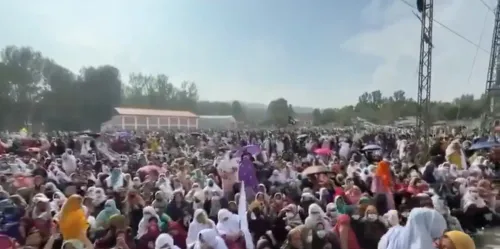
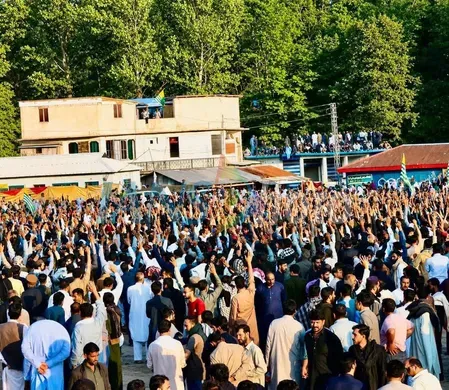
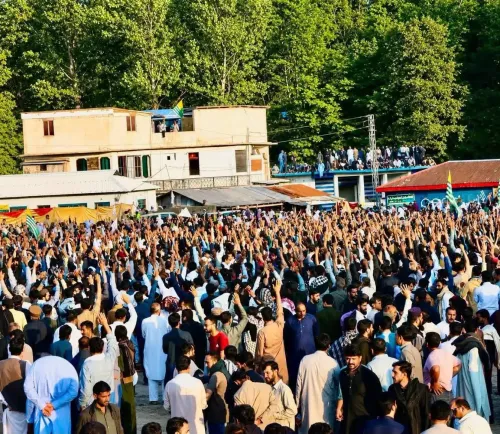
Crowds exceeding 70,000 gathered at Rawalakot's Eidgah Ground in PoK , chanting 'Pak Forces Out' and 'We want freedom'.
The International Human Rights Foundation documented more than 32 civilian deaths between 8 June and 16 June 2026 ; wounded reportedly number between 200 and 300 .
Amnesty International recorded internet shutdowns, mass arbitrary arrests, and anti-terrorism laws applied against the JAAC , which Pakistan has designated a 'terrorist organisation' .
The JAAC's 38-point charter covers subsidised essentials, electoral reforms, and abolition of 12 reserved assembly seats seen as diluting local political voice.
PoK contributes significantly to Pakistan's hydropower output yet its residents pay electricity tariffs above production costs, while mainland Pakistan consumers receive preferential rates.
On the Indian side, Jammu and Kashmir held Legislative Assembly elections in 2024 and inaugurated the Chenab Bridge — the world's highest railway bridge — in June 2025 .
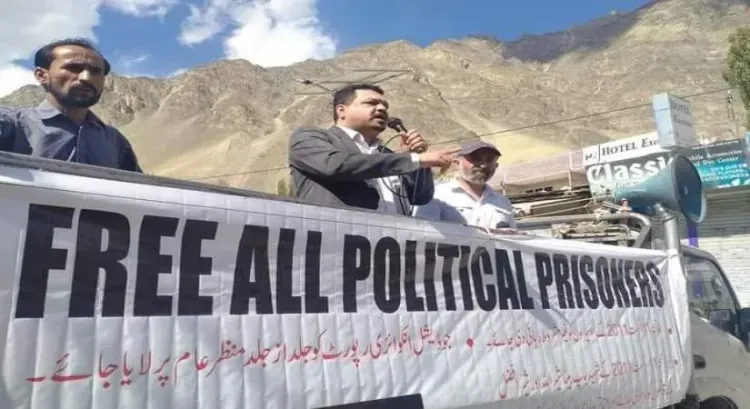
A massive wave of protests in Pakistan-occupied Kashmir (PoK) has delivered a direct challenge to Pakistan's decades-old narrative of championing Kashmiri Muslim rights, with crowds exceeding 70,000 at Rawalakot's Eidgah Ground chanting 'Pak Forces Out' and 'We want freedom' — an open call for independence from Islamabad's control. The unrest, which reportedly left more than 32 civilians dead between 8 June and 16 June 2026, has drawn international scrutiny and exposed a widening chasm between the occupied territory's population and the Pakistani state.
How the Protests Began
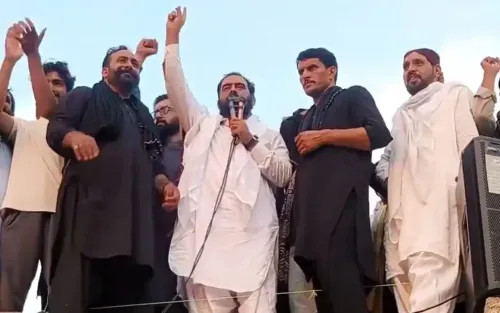
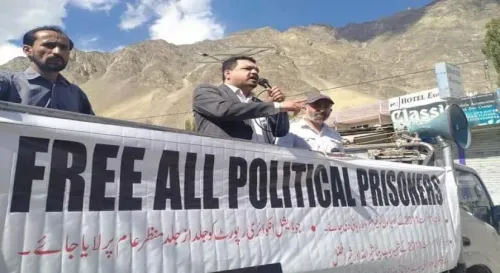
The current agitation traces its roots to 2023, when residents of PoK began organising against steep electricity tariffs and acute flour shortages. The Joint Awami Action Committee (JAAC) — a broad coalition of traders, lawyers, transporters, students, and civil society groups — emerged as the primary vehicle for these demands. The JAAC subsequently formalised a 38-point charter of demands, encompassing subsidised essentials, local electoral reforms, and the abolition of 12 reserved assembly seats that locals reportedly view as diluting their political voice.
What began as a civic grievance movement has, according to reports, transformed into an explicit push for independence from Pakistani control — a significant escalation that analysts say reflects years of accumulated resentment.
State Response: Crackdown and Casualties
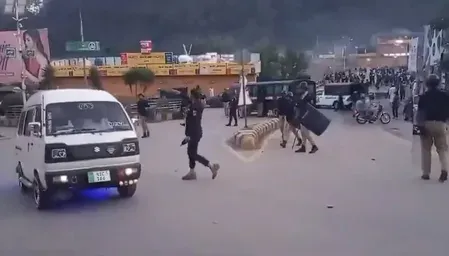
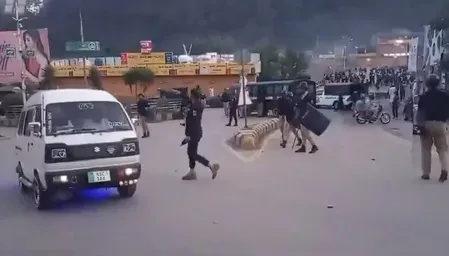
Pakistani paramilitary forces reportedly opened fire on protesters in Muzaffarabad and Rawalakot last month. The International Human Rights Foundation documented more than 32 civilian deaths between 8 June and 16 June 2026, while protest groups and local media have claimed the total number of wounded ranges between 200 and 300. Amnesty International documented internet shutdowns, mass arbitrary arrests, and the application of anti-terrorism laws against the JAAC — a grassroots civic coalition that Islamabad has since formally designated a 'terrorist organisation'.
Experts argue that the decision to ban the JAAC and deploy lethal force reflects a broader military-driven strategy to suppress the growing unrest, rather than address its structural causes.
The Structural Economic Grievance
A report by Eurasia Review underscored a central contradiction at the heart of PoK's economic relationship with Pakistan: the territory contributes significantly to Pakistan's hydropower output, yet its residents pay electricity tariffs well above production costs. Consumers in mainland Pakistan, by contrast, benefit from preferential rates. Critics argue this arrangement amounts to resource extraction — the occupied territory generating power for the Pakistani state while receiving inadequate compensation in return.
The demonstrators — traders, students, lawyers, and women — were demanding affordable electricity and wheat subsidies, according to the same report. The economic dimension has lent the protest movement broad cross-sectional support that purely political movements have historically struggled to achieve in the region.
The Contrast With Jammu and Kashmir
The unrest in PoK stands in sharp relief against developments on the Indian side of the Line of Control. In the Indian Union Territory of Jammu and Kashmir, Legislative Assembly elections were held in 2024, and sustained infrastructure investment has continued — including the inauguration of the Chenab Bridge in June 2025, the world's highest railway bridge, linking the region to the national rail network, according to the report.
For nearly eight decades, Pakistan has invoked the 'Two-Nation Theory' as the moral and political basis for its position on Kashmir. The scale and nature of the current protests in PoK — with crowds explicitly rejecting Pakistani authority — represents, according to analysts cited in the Eurasia Review report, a stark rebuttal to that long-held claim.
What Happens Next
Thousands of protesters in Rawalakot have declared that the time has come to free the occupied region from Islamabad's control. Experts point out that the regional administration in PoK remains 'toothless' and entirely subservient to Islamabad, leaving the local population with no credible institutional channel to address their grievances. With communications disrupted and protests being suppressed, international human rights organisations are likely to increase scrutiny of the situation in the weeks ahead.
Point of View
And paramilitary forces open fire on traders and students, the contradiction is no longer deniable. What is strategically significant is the trajectory: a 2023 tariff protest has become a 2026 independence movement. Islamabad's response — communications blackouts, lethal force, anti-terror labels — mirrors the very playbook it accuses New Delhi of running in Jammu and Kashmir. The international community, which has long treated Pakistan as a legitimate interlocutor on Kashmir, will find it increasingly difficult to do so while Amnesty International is documenting mass arrests of the territory's own civil society.
NationPress
2 Oct 2026
Frequently Asked Questions
What triggered the 2026 protests in Pakistan-occupied Kashmir?
The protests stem from a movement that began in 2023 over electricity tariffs and flour shortages in PoK. The JAAC, a coalition of traders, lawyers, students, and civil society groups, organised demonstrations that have since escalated into an open demand for independence from Pakistani control, following a violent crackdown by paramilitary forces.
How many people were killed in the PoK crackdown?
The International Human Rights Foundation reported more than 32 civilian deaths between 8 June and 16 June 2026, after Pakistani paramilitary forces opened fire on protesters in Muzaffarabad and Rawalakot. Local media and protest groups claim the number of wounded ranges between 200 and 300.
Why has Pakistan designated the JAAC a terrorist organisation?
Pakistan formally labelled the Joint Awami Action Committee (JAAC) a 'terrorist organisation' as protests intensified. Experts argue this designation, alongside internet shutdowns and mass arrests documented by Amnesty International, reflects a military-driven strategy to suppress the unrest rather than address its underlying economic and political causes.
What is the economic grievance at the heart of the PoK protests?
PoK contributes significantly to Pakistan's hydropower output, yet its residents pay electricity tariffs well above production costs. Consumers in mainland Pakistan receive preferential rates, a disparity that critics describe as resource extraction — the occupied territory generating power for the state while receiving inadequate compensation.
How does the situation in PoK compare with Jammu and Kashmir on the Indian side?
In the Indian Union Territory of Jammu and Kashmir, Legislative Assembly elections were held in 2024 and the Chenab Bridge — the world's highest railway bridge — was inaugurated in June 2025, linking the region to the national rail network. In PoK, by contrast, civic protests have been met with paramilitary force, communications blackouts, and anti-terrorism designations against grassroots groups.