PoK protests: Governance dispute deepens into legitimacy crisis
Synopsis
What started as electricity and wheat price protests in PoK in 2023 has, by June 2026, become the region's most sustained civil resistance in decades — with 70,000+ at a single sit-in, chants of 'Pakistani forces out', and Islamabad responding with terrorism bans, sedition charges, and reported food blockades. The killing of a JAAC member galvanised, not silenced, the movement.
Key Takeaways
Protests in Pakistan-occupied Kashmir (PoK) have escalated from governance grievances into a legitimacy crisis , according to an India Narrative analysis.
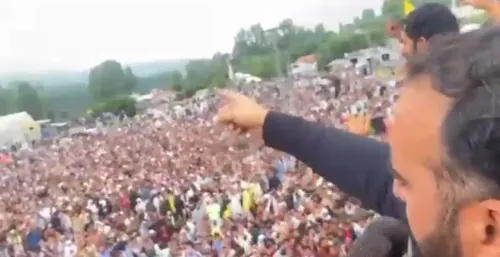
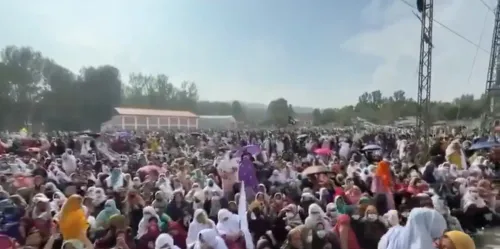
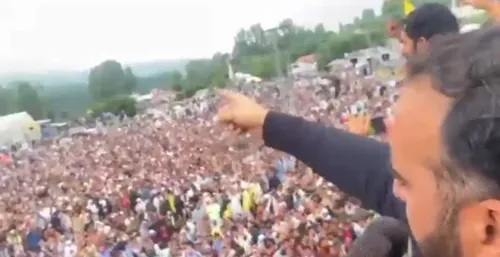
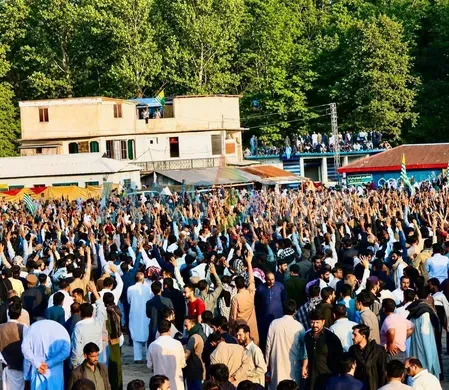
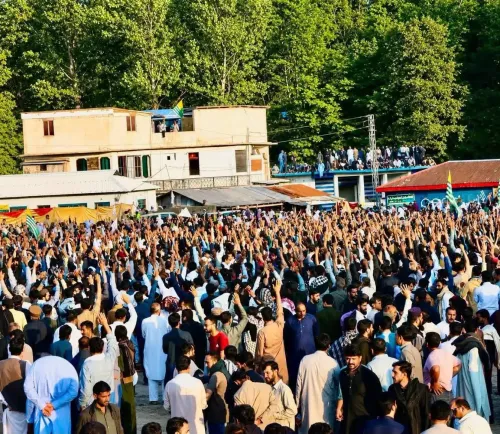
Organisers claimed over 70,000 people joined sit-ins at Rawalakot's Eidgah Ground , with schoolchildren aged 10–12 , women, and families participating.
The JAAC deadline expired on 23 June 2026 without resolution; the group was banned under anti-terrorism laws on 5 June 2026 .
Shahzaib Habib , a JAAC member, was killed on 5 June 2026 , triggering wider mobilisation rather than deterrence.
Authorities reportedly enforced an internet blackout and restricted food supply convoys into PoK from 14 June 2026 .
Protest chants now include 'Pakistani forces out' and appeals to the United Nations , signalling a shift from service demands to a challenge of administrative legitimacy.
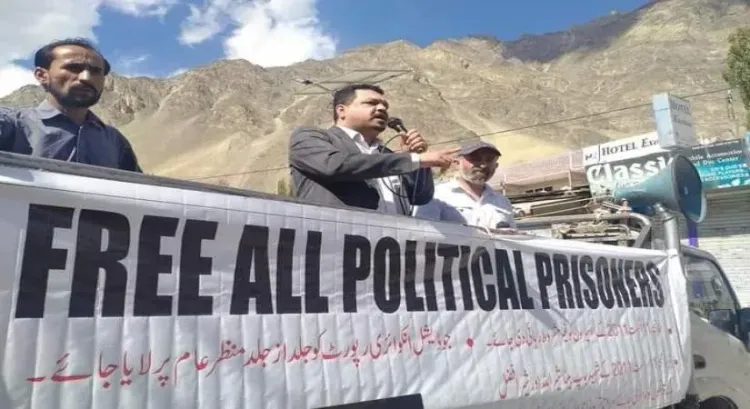
The protests in Pakistan-occupied Kashmir (PoK) have evolved well beyond a governance dispute, increasingly taking the shape of a full-blown legitimacy crisis — one that Islamabad appears ill-equipped to contain. A key marker of this shift is the widening circle of participation: schoolchildren aged 10 to 12, women, and entire families have joined sustained sit-ins at Rawalakot's Eidgah Ground, transforming what was once organised civil society agitation into a mass public movement.
Scale and Spread of the Protests
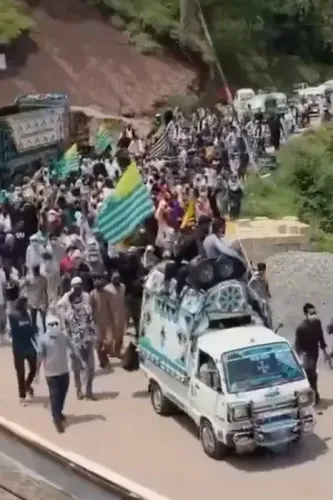
Organisers claimed more than 70,000 people joined demonstrations in Rawalakot alone, with protests simultaneously unfolding across multiple towns and villages in the region. The breadth of participation — cutting across age, gender, and social background — marks a decisive departure from the movement's earlier, more targeted character. Appeals to the United Nations and chants of 'Pakistani forces out' have signalled that the agitation is now contesting administrative legitimacy itself, not merely expressing dissatisfaction with service delivery.
From Subsidy Demands to Constitutional Challenge
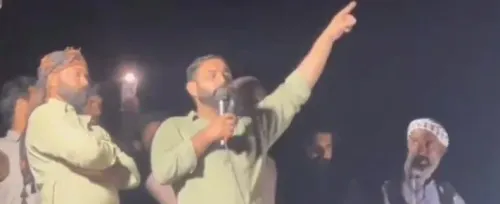
According to an analysis by India Narrative, a deadline issued by the Joint Awami Action Committee (JAAC) — PoK's principal civil resistance body — expired on 23 June 2026 without resolution, forcing a question Islamabad has long preferred to sidestep: when does persistent governance failure become a crisis of legitimacy? What began in 2023 as organised grievances over electricity tariffs and wheat prices has, within three years, grown into the most sustained civil resistance the region has witnessed in decades.
'The trajectory — from subsidy demands to constitutional challenges, from localised sit-ins to a twenty-day lockdown paralysing the administrative capital — reflects a deeper structural fracture,' the analysis noted. The movement has, in effect, reframed its core demand from better governance under Pakistani authority to a fundamental contest over whether that authority is consensual at all.
Islamabad's Response: Coercion Over Dialogue
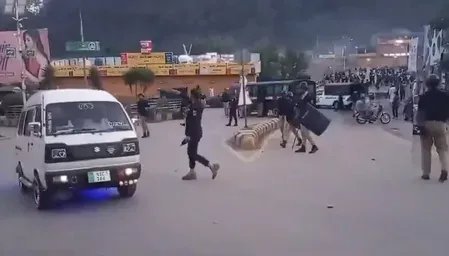
Pakistan's response has drawn sharp scrutiny. On 5 June 2026, authorities banned the JAAC under anti-terrorism laws and filed sedition charges against its leaders. An internet blackout was enforced, and food supply convoys into PoK were reportedly restricted from 14 June 2026 onwards. The analysis argued that these measures go far beyond a response to consumer grievances — they are instruments typically deployed when a state has exhausted persuasive and administrative options and is resorting to coercion as a primary tool rather than a last resort.
The killing of JAAC member Shahzaib Habib on 5 June 2026 proved to be a turning point. Rather than deterring further protest, his death became a catalyst for wider mobilisation — a precise inversion, the analysis observed, of the intended coercive calculus. 'Legitimacy crisis arrives analytically when coercive pressure generates solidarity rather than submission,' it stated.
The Deeper Contest
What residents of Rawalakot and Muzaffarabad are articulating in June 2026, according to the analysis, is a contest over whether administrative authority can be considered legitimate — not merely effective or coercive, but genuinely consensual. Pakistan's alternating responses — subsidy packages on one hand, anti-terrorism designations on the other — have not addressed this underlying contest. Critics argue they have, in fact, accelerated it.
With the JAAC deadline passed and no resolution in sight, the trajectory of the movement will likely depend on whether Islamabad shifts toward dialogue or deepens its coercive posture in the weeks ahead.
Point of View
Which closes off the only political channel through which a negotiated de-escalation was possible. Pakistan faces a structural bind: conceding to JAAC's demands risks setting a precedent for other restive regions, while continued repression is visibly accelerating the legitimacy deficit the analysis describes. What mainstream coverage underplays is the constitutional dimension — protesters are no longer asking for better administration, they are contesting the right of Pakistani authorities to administer at all. That is a qualitatively different problem, and one that subsidies cannot solve.
NationPress
25 Sept 2026
Frequently Asked Questions
What is the JAAC and why is it central to the PoK protests?
The Joint Awami Action Committee (JAAC) is the principal civil resistance body leading protests in Pakistan-occupied Kashmir. It organised the sustained sit-ins over electricity tariffs and wheat prices that began in 2023, and its deadline to Pakistani authorities expired on 23 June 2026 without resolution. Pakistan banned the JAAC under anti-terrorism laws on 5 June 2026 and filed sedition charges against its leaders.
How have the PoK protests changed since 2023?
What began in 2023 as localised grievances over electricity tariffs and wheat subsidies has, by June 2026, evolved into the most sustained civil resistance in the region in decades. Demands have shifted from subsidy corrections to constitutional challenges, and protest chants now include 'Pakistani forces out' and appeals to the United Nations, signalling a contest over administrative legitimacy itself.
What was the significance of Shahzaib Habib's killing?
Shahzaib Habib, a JAAC member, was killed on 5 June 2026. Rather than deterring protesters, his death became a catalyst for wider mobilisation — drawing schoolchildren, women, and entire families into the sit-ins. Analysts describe this as an inversion of the intended coercive effect, a marker of a legitimacy crisis.
How has Pakistan responded to the PoK protests?
Pakistan's response has included banning JAAC under anti-terrorism laws, filing sedition charges against its leaders, enforcing an internet blackout, and reportedly restricting food supply convoys into PoK from 14 June 2026. Critics argue these measures reflect coercion deployed as a primary tool rather than a last resort.
What do the protesters in PoK want?
While the movement originated over electricity tariffs and wheat prices, protesters in Rawalakot and Muzaffarabad are now articulating a broader demand: that Pakistani administrative authority be genuinely consensual, not merely coercive. Chants of 'Pakistani forces out' and appeals to the UN reflect a challenge to the legitimacy of Pakistani governance in the region, not just its quality.