PoK crackdown may ignite nationwide unrest in Pakistan, say Indian intelligence inputs

Synopsis
India's intelligence agencies are watching a slow-motion crisis unfold across the border: Pakistan's brutal crackdown on PoK protesters — over 20 dead, 450+ detained, mobile networks cut — has not quelled the unrest. If anything, it has internationalised it. With bounties on protest leaders, sedition charges flying, and global demonstrations outside Pakistani missions, Indian assessments suggest Islamabad may have already lost control of the narrative.
Key Takeaways
Indian intelligence agencies have assessed that Pakistan's crackdown in PoK is likely to trigger unrest across Pakistan.
The JAAC reports over 450 detained and more than 20 killed since the crackdown began.
Mobile services have been cut in Neelum Valley , Mirpur , Poonch , Rawalkot , and Muzaffarabad .
Pakistan's Interior Department has offered Pakistani Rs 1 million for information on four key JAAC members.
The JAAC was banned on 6 June under anti-terrorism legislation — a move officials call a misstep.
Army Chief Field Marshal Asim Munir is described as exposed, with divisions deepening within Pakistan's establishment.
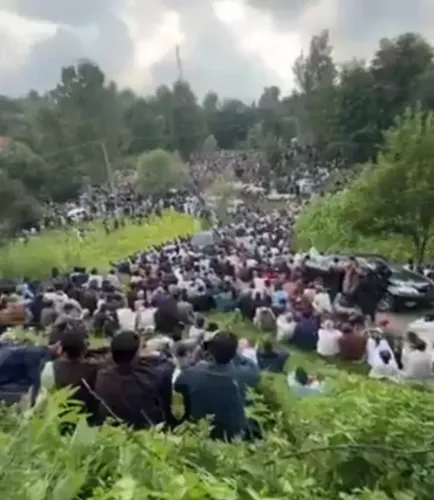
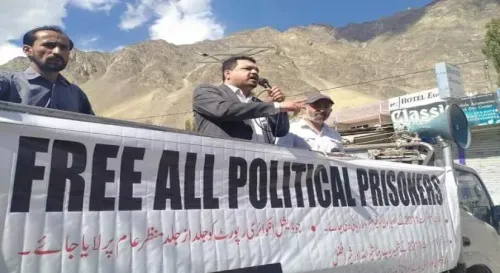
Indian intelligence agencies have assessed that Pakistan's brutal crackdown on protesters in Pakistan-occupied Kashmir (PoK) is likely to trigger widespread unrest across the country, with officials warning that Islamabad is staring at a crisis it may be ill-equipped to contain. The assessment, shared by multiple officials on 10 June, comes as the Joint Awami Action Committee (JAAC) — the primary body leading the protests — claims that over 450 people have been detained and more than 20 killed since the crackdown began.
Scale of the Crackdown
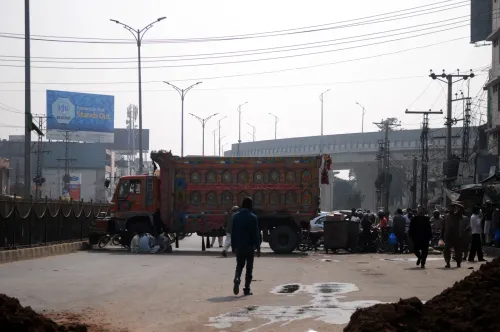
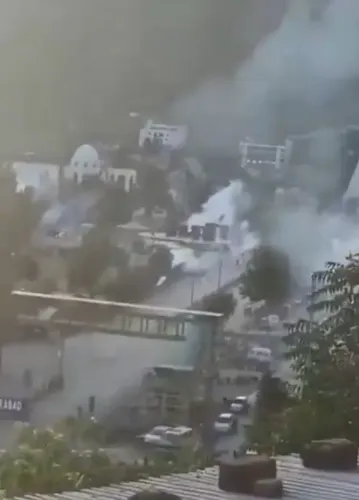
Pakistani security forces, acting on orders from Islamabad, have deployed brute force to suppress the protests. Mobile services have been severed across several areas, including Neelum Valley, Mirpur, Poonch, Rawalkot, and Muzaffarabad. According to officials, residents of PoK are reportedly being denied basic necessities including water and food, deepening the humanitarian dimension of the crisis.
Bounties, Sedition Charges, and Targeted Prosecutions
Pakistan's Interior Department has reportedly offered Pakistani Rs 1 million for information leading to the arrest of four key JAAC members — a move officials describe as extraordinary given Pakistan's severe fiscal constraints and a stalled annual budget process. The budget deadlock is reportedly centred on disagreements over military spending, which civilian leaders consider disproportionate to the country's economic condition.
The primary targets of the state's legal offensive are Shaukat Nawaz Mir and Khawaja Mehran Arshad, both prominent faces of the protest movement. The Senior Superintendent of Police, Muzaffarabad, has been directed to probe Mir on sedition and anti-state charges. Officials say the establishment's goal is to secure convictions and thereby sideline the two leaders from protest sites. Police have also been ordered to expedite investigations into speeches, electronic communications, and writings by protesters, and to file formal challans in court at the earliest.
Global Protests and Social Media Pressure
The crackdown has drawn international attention, with protests already reported outside several Pakistani diplomatic missions around the world. Indian intelligence officials say a sharp rise in coordinated social media campaigns in support of PoK protesters points to an organised effort to internationalise the issue — one that Islamabad has been unable to suppress. Officials noted that the digital and global dimensions of the agitation are beyond the establishment's conventional containment tools.
Roots of the Unrest
Pakistan watchers say tensions in PoK have been building for months. Earlier negotiations between the government and JAAC reportedly broke down after the establishment failed to honour commitments made during those talks. What began as demands for basic development and civic amenities has since escalated: the JAAC is now pressing for autonomy and an end to Islamabad's direct rule over PoK.
Notably, the decision on 6 June to ban the JAAC under anti-terrorism legislation is being described by officials as a significant misstep — one that has effectively criminalised a civil rights movement. Critics within Pakistan's own political class are reportedly questioning the use of force, with warnings that solidarity protests could soon emerge on the streets of Islamabad and Karachi.
Army Chief in the Crosshairs
Officials say that Pakistani Army Chief Field Marshal Asim Munir stands particularly exposed amid these developments. The intelligence assessment suggests that divisions within Pakistan's establishment — between the military and civilian political actors — are deepening, and that the crackdown has failed to present a unified state response. With economic grievances already widespread across Pakistan, officials warn that the PoK unrest carries the potential to act as a flashpoint for broader national instability.
As of 10 June, intelligence inputs indicate that the agitation is unlikely to remain confined to PoK and could spread to other parts of Pakistan in the coming weeks.
Point of View
Bounties, sedition charges — is a familiar one, but the context has changed. The JAAC is not a fringe movement; it represents a population with legitimate development grievances that the state has repeatedly promised and failed to address. Banning a civil rights body under anti-terrorism law is less a containment strategy than an admission of political failure. The more significant signal in India's intelligence assessment is the internal fracture: when civilian politicians publicly question the military's conduct, the establishment's unified front is already cracking. Islamabad's real crisis is not the protests — it is the erosion of the state's legitimacy on multiple fronts simultaneously.
NationPress
26 Oct 2026
Frequently Asked Questions
What is the JAAC and why is it protesting in PoK?
The Joint Awami Action Committee (JAAC) is the primary civil society body leading protests in Pakistan-occupied Kashmir. It originally mobilised around demands for basic development — access to water, food, and civic amenities — but has since escalated its demands to include regional autonomy and an end to Islamabad's direct rule, after the government reportedly failed to honour earlier commitments.
How many people have been killed or detained in the PoK crackdown?
According to the JAAC, more than 20 people have been killed and over 450 detained since Pakistani security forces began their crackdown. Mobile services have been cut across several areas including Neelum Valley, Mirpur, Poonch, Rawalkot, and Muzaffarabad.
Why did Pakistan ban the JAAC under anti-terrorism law?
Pakistan's government invoked anti-terrorism legislation to ban the JAAC on 6 June. Indian officials and Pakistan watchers describe this as a misstep, arguing that criminalising a civil rights movement demanding basic development is likely to intensify domestic and international backlash rather than contain it.
What is India's intelligence assessment of the situation in PoK?
Indian intelligence agencies assess that Pakistan's crackdown, while temporarily suppressing protests, is unlikely to contain the unrest. Officials believe the agitation will spread beyond PoK to other parts of Pakistan, driven by economic grievances, coordinated social media campaigns, and growing global protests outside Pakistani diplomatic missions.
Who are Shaukat Nawaz Mir and Khawaja Mehran Arshad?
Shaukat Nawaz Mir and Khawaja Mehran Arshad are the two most prominent leaders of the PoK protest movement. The Senior Superintendent of Police in Muzaffarabad has been directed to probe Mir on sedition and anti-state charges, and officials say the state's aim is to secure convictions to sideline both leaders from protest activity.