PoK protests escalate: Agencies warn of major humanitarian crisis

Synopsis
Indian and international agencies are sounding the alarm over PoK, where the JAAC-led protest movement has spread from Muzaffarabad to Rawalakot and security forces stand accused of killing civilians — including 19 children. Officials allege Pakistan's army chief Field Marshal Asim Munir has privately ruled out genuine negotiations and is preparing a forcible crackdown, raising fears of an unprecedented human rights crisis.
Key Takeaways
Indian and international agencies have warned of a potential humanitarian crisis in Pakistan-occupied Kashmir (PoK) .
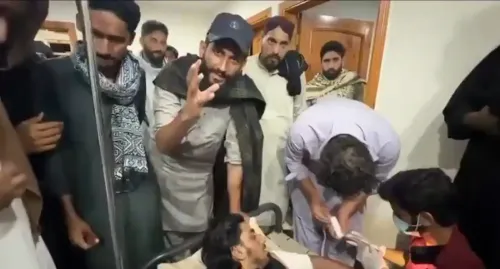
Reported casualties include 19 children and seven pregnant women , according to officials.
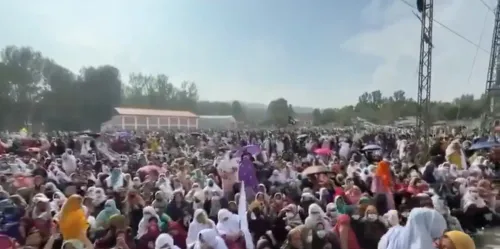
The JAAC -led protest movement has expanded from Muzaffarabad to Rawalakot .
An Intelligence Bureau official alleged that Field Marshal Asim Munir held multiple emergency meetings in the past 48 hours and has opted for forcible suppression over negotiations.
The Pakistani establishment is reportedly cutting power and water supplies to civilian households to pressure residents against supporting the protests.
Pakistan's designation of the JAAC as a terrorist organisation is seen as providing legal cover for a potential crackdown, mirroring its approach in Balochistan .
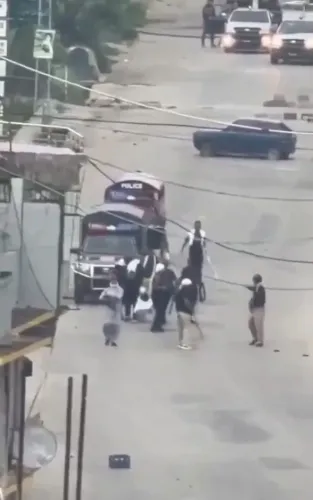
Indian and international agencies have warned of a looming humanitarian crisis in Pakistan-occupied Kashmir (PoK), where ongoing protests have already been accompanied by reported killings — including, according to officials, 19 children and seven pregnant women — and where security forces stand accused of deploying excessive force. Officials caution that without urgent intervention, the situation could spiral into large-scale human rights violations on an unprecedented scale.
How the Protests Spread
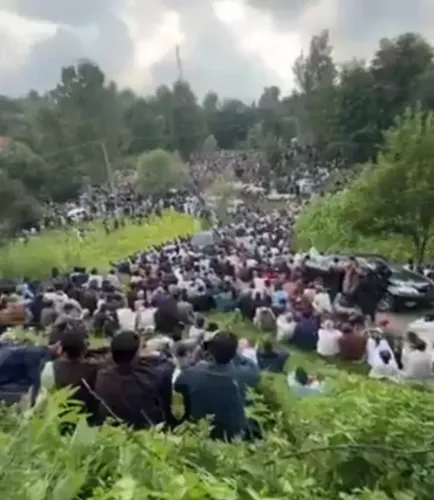
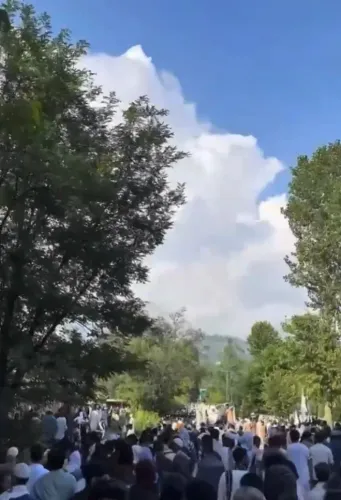
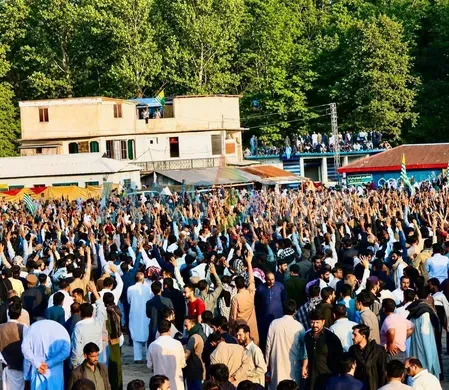
What began in Muzaffarabad has steadily expanded across PoK. The movement, led by the Joint Awami Action Committee (JAAC), has now reached Rawalakot, where large crowds and vehicle convoys have assembled, awaiting further direction from the organisation's leadership. According to officials, the JAAC has shown no signs of backing down, and its decision to sustain the protests is rooted in a history of failed negotiations and unkept promises by Pakistani authorities.
Pakistan Army's Reported Strategy
While the Prime Minister of PoK has reportedly been instructed to hold direct talks with the JAAC, officials familiar with the matter say this is largely a time-buying exercise. An Intelligence Bureau official said that 'something more sinister is being planned under the leadership of Pakistan's army chief, Field Marshal Asim Munir.' According to the official, Munir has held several emergency meetings with senior military brass over the past 48 hours, pressing commanders on why the protests had not been contained.
Officials allege that Munir has effectively pre-determined that order will be restored through force rather than political engagement. 'More protests would only mean more atrocities is the message that Munir wants to send out,' one official said. For him, according to these accounts, this has become an 'ego battle' in which he will not permit the establishment to honour any negotiated commitments.
Collective Punishment and Civilian Impact
Beyond physical force, the Pakistani establishment is reportedly disconnecting power and water supplies to scores of households across PoK — a measure analysts describe as collective punishment designed to pressure residents into demanding that the JAAC stand down. The tactic, officials say, is intended to turn the civilian population against the protest movement by making basic amenities contingent on its cessation.
The JAAC's Position and the Terrorist Designation
The JAAC has maintained that any dialogue must be preceded by the lifting of the ban on the organisation. The Pakistani establishment, however, is unlikely to concede this demand, having classified the JAAC as a terrorist organisation — a designation that, analysts argue, provides legal and political cover for the use of lethal force. Observers note that this approach mirrors Pakistan's posture in Balochistan, where groups such as the Balochistan Liberation Army carry similar designations.
Security experts warn that such classifications allow Islamabad to frame violent crackdowns as counterterrorism operations, complicating scrutiny by international human rights bodies. As the standoff deepens, agencies fear that violations will mount to a scale not previously witnessed in the region.
Point of View
The PoK Prime Minister's negotiating mandate is not a peace overture but a stage-managed delay. What is missing from mainstream coverage is the civilian infrastructure angle: cutting power and water is a form of collective punishment that rarely draws the same international attention as direct violence, yet it may be the mechanism that breaks the protest movement before any dramatic crackdown becomes necessary.
NationPress
28 Oct 2026
Frequently Asked Questions
What is the humanitarian crisis warning in PoK about?
Indian and international agencies have warned that Pakistan-occupied Kashmir faces a potential humanitarian crisis following reported killings of protesters — including 19 children and seven pregnant women — and the alleged use of excessive force by security forces. Officials say the situation could escalate into large-scale human rights violations if no urgent action is taken.
Who is leading the protests in PoK and what are their demands?
The protests are led by the Joint Awami Action Committee (JAAC), which originated in Muzaffarabad and has since spread to Rawalakot. The JAAC has stated it will not enter any dialogue unless Pakistani authorities first lift the ban on the organisation, a demand Islamabad is unlikely to accept.
What is Pakistan's army chief Asim Munir's alleged role?
According to officials cited in reports, Field Marshal Asim Munir has held multiple emergency meetings with senior military commanders in the past 48 hours and has reportedly decided that order will be restored through force rather than political negotiations. Officials allege he views the standoff as a personal 'ego battle' and will not allow the establishment to honour any negotiated agreement.
How is the Pakistani establishment reportedly targeting civilians?
Beyond direct force, the Pakistani establishment is reportedly disconnecting power and water supplies to households across PoK to pressure residents into demanding that the JAAC end its protests. Analysts describe this as a form of collective punishment aimed at turning the civilian population against the movement.
Why does Pakistan's terrorist designation of the JAAC matter?
Classifying the JAAC as a terrorist organisation gives Pakistani authorities legal and political justification to use lethal force against its members while framing the crackdown as a counterterrorism operation. Security experts warn this makes it harder for international human rights bodies to challenge Pakistan's actions, as Islamabad can argue it is protecting national security — the same approach it has used in Balochistan.