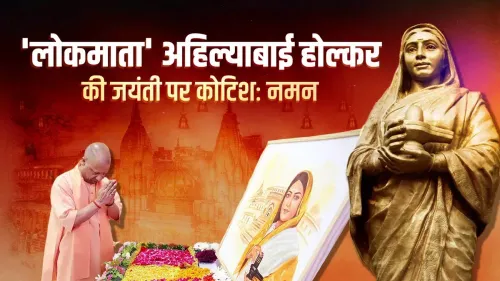
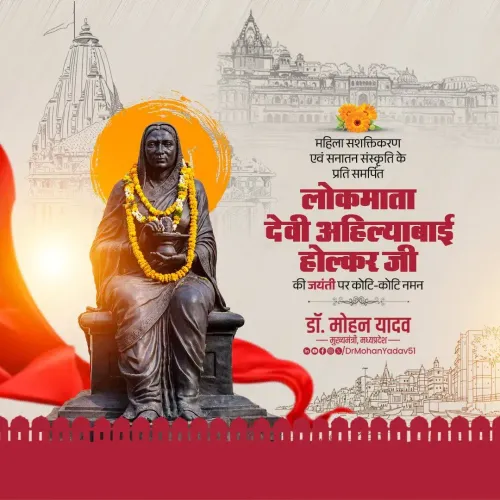
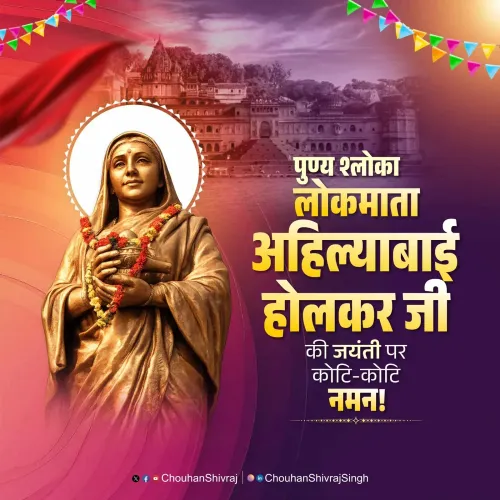
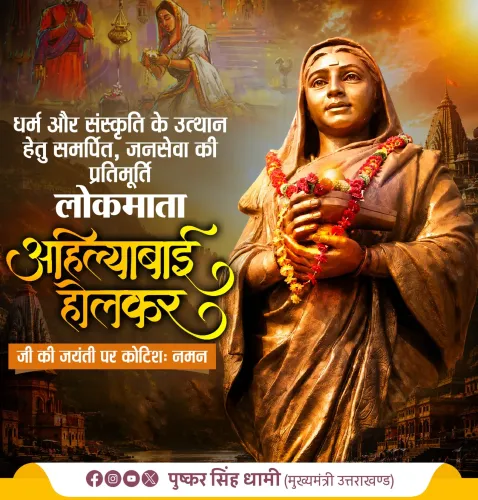
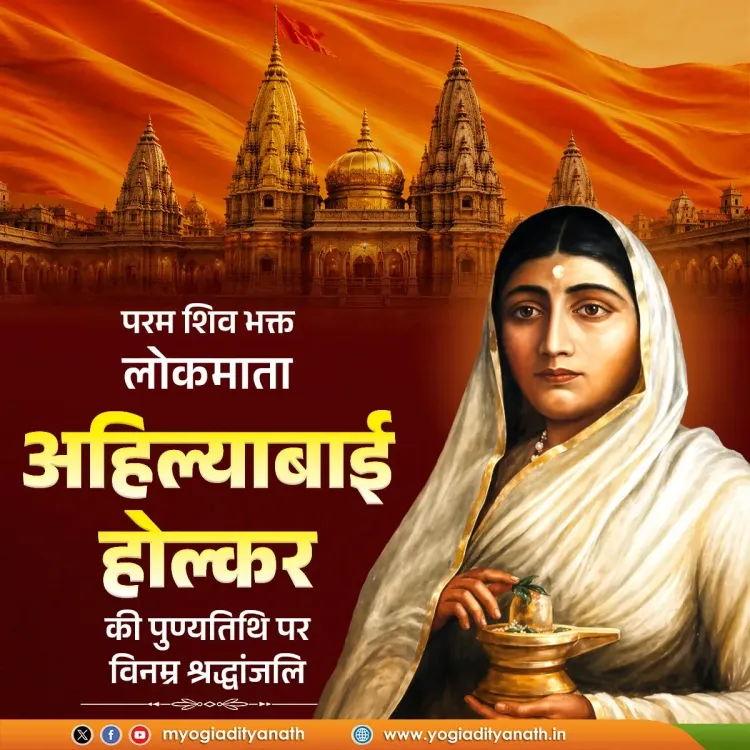
CM Yogi Pays Tribute to Ahilyabai Holkar on Her Death Anniversary
Synopsis
Uttar Pradesh Chief Minister Yogi Adityanath marked the death anniversary of 18th-century Holkar ruler Devi Ahilyabai Holkar, praising her as a symbol of women's power, justice, and dharma-driven governance, and invoking her legacy of temple restoration and public welfare as enduring national inspiration.
Key Takeaways
CM Yogi Adityanath paid tribute to Devi Ahilyabai Holkar on her death anniversary on 13 August 2026 .
He described her as a living embodiment of women's power, justice, policy acumen, and public welfare.
Ahilyabai Holkar was an 18th-century ruler of the Holkar dynasty in Malwa , known for temple construction, judicial reforms, and welfare administration.
She commissioned restoration of temples at major pilgrimage sites including Varanasi, Dwarka, and Somnath .
CM Yogi framed her legacy explicitly within the vocabulary of 'cultural nationalism,' connecting her statecraft to contemporary BJP political values.
Such commemorative tributes to pre-colonial Hindu rulers are a recurring feature of BJP leaders' public communication.
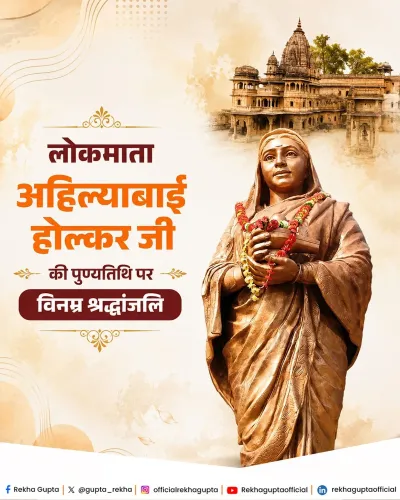
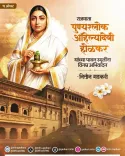
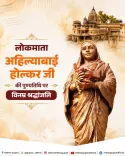
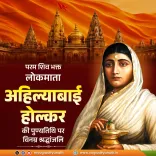
A queen who built temples across a fractured subcontinent, reformed courts, and governed with a code rooted in dharma — Devi Ahilyabai Holkar died more than two centuries ago, yet her legacy draws tributes from India's highest offices to this day. On her death anniversary, Uttar Pradesh Chief Minister Yogi Adityanath offered his homage on Thursday, 13 August 2026, calling her a living symbol of women's power, justice, and public welfare.
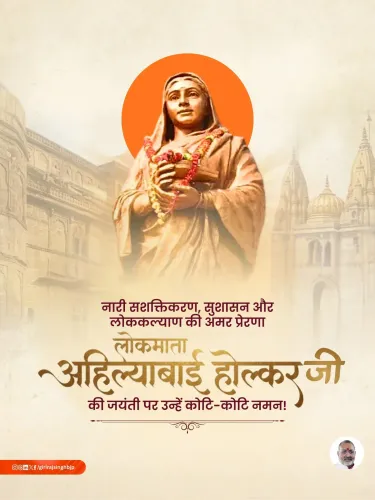
In his post, CM Yogi described Ahilyabai as 'नारी शक्ति, न्यायप्रियता, नीति-निपुणता और लोक-कल्याण की जीवंत प्रतिमूर्ति' — 'a living embodiment of women's power, a love of justice, policy acumen, and public welfare.' He credited her with establishing new dimensions of prosperity, social harmony, and religious renaissance across the nation, calling it an unparalleled hoisting of the banner of 'cultural nationalism.' He added that she made justice a policy, service a spiritual practice, and good governance a value — and that every decision she took was inspired by dharma and the spirit of service.
Who Was Ahilyabai Holkar?
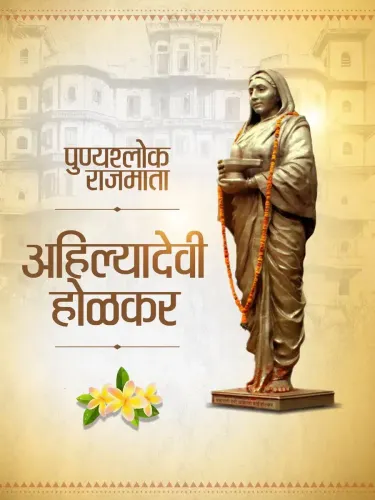
Devi Ahilyabai Holkar ruled the Holkar dynasty in Malwa during the 18th century and is remembered as one of India's most consequential pre-colonial administrators. She commissioned the restoration and construction of temples at major pilgrimage sites across the subcontinent — from Varanasi to Dwarka to Somnath — at a time when many had fallen into disrepair or ruin. Her judicial reforms were notable: she is said to have held open courts and dispensed justice personally, making herself directly accessible to her subjects. Beyond temple patronage, she invested in roads, rest houses, and water infrastructure across her territory, earning her the honorific Lokamata — 'Mother of the People.' Her reign is widely cited as a model of welfare-oriented governance anchored in personal piety and administrative rigour.BJP's Pattern of Historical Commemoration
CM Yogi's tribute fits a consistent pattern among BJP leaders of invoking pre-colonial Hindu rulers and administrators to draw a through-line between classical ideals of dharma-based governance and the party's contemporary political vision. Figures associated with temple patronage, social stability, and strong personal ethics are regularly commemorated on their birth and death anniversaries by state and central leaders alike. By framing Ahilyabai's legacy explicitly around 'cultural nationalism,' CM Yogi connects an 18th-century queen's statecraft to a 21st-century political vocabulary — presenting her not merely as a historical figure but as a continuing source of ideological inspiration. Ahilyabai Holkar's example, the Chief Minister argued, remains a preranapunj — a beacon of inspiration — for all Indians. That is a standard the tribute intends to keep lit.Point of View
The tribute also serves a dual political purpose: reinforcing the party's outreach to women voters while projecting ideological continuity with classical Hindu governance ideals. This pattern of historical commemoration has become a structured part of BJP's political calendar, converting anniversaries into ideological statements. The Ahilyabai tribute, coming from a sitting chief minister, carries additional weight as a signal of the values UP's government claims to embody.
NationPress
13 Aug 2026
Frequently Asked Questions
Who was Devi Ahilyabai Holkar?
Devi Ahilyabai Holkar was an 18th-century ruler of the Holkar dynasty in Malwa, celebrated for her temple construction across major pilgrimage sites, open judicial courts, and welfare-focused administration. She is honoured with the title Lokamata, meaning 'Mother of the People.'
Why did CM Yogi Adityanath pay tribute to Ahilyabai Holkar?
CM Yogi Adityanath paid tribute on her death anniversary, describing her as a symbol of women's power, justice, and dharma-driven governance. He also framed her legacy within the concept of 'cultural nationalism.'
What is Ahilyabai Holkar's connection to temples?
Ahilyabai Holkar commissioned the restoration and construction of Hindu temples at major pilgrimage sites across India, including Varanasi, Dwarka, and Somnath, at a time when many had fallen into disrepair.
What does 'Lokamata' mean in reference to Ahilyabai Holkar?
'Lokamata' translates as 'Mother of the People' and is an honorific given to Ahilyabai Holkar in recognition of her public welfare work, including roads, rest houses, water infrastructure, and accessible justice.
Why do BJP leaders frequently tribute pre-colonial Hindu rulers?
BJP leaders regularly invoke pre-colonial Hindu rulers associated with temple patronage and dharma-based governance to draw a connection between classical Indian statecraft and the party's contemporary political and cultural vision.