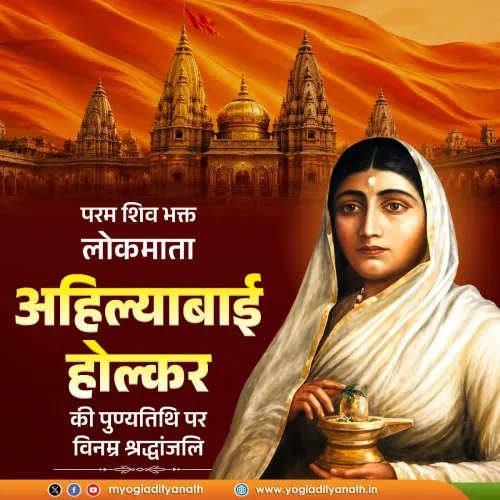
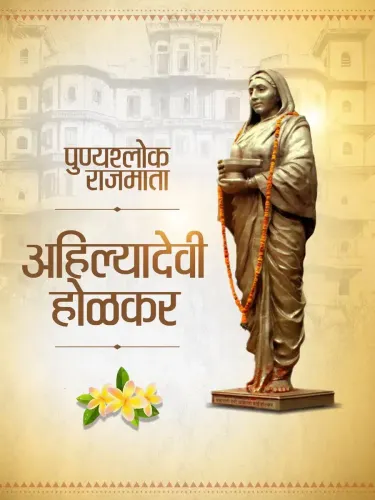
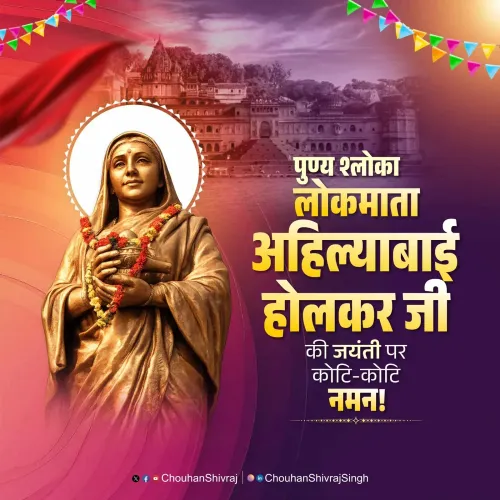
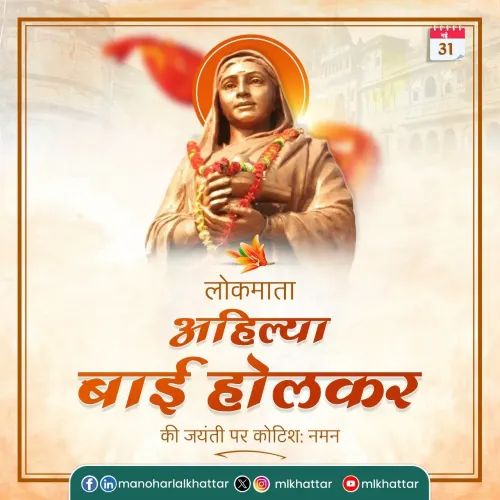
CM Dhami pays tribute to Ahilyabai Holkar on her birth anniversary
Synopsis
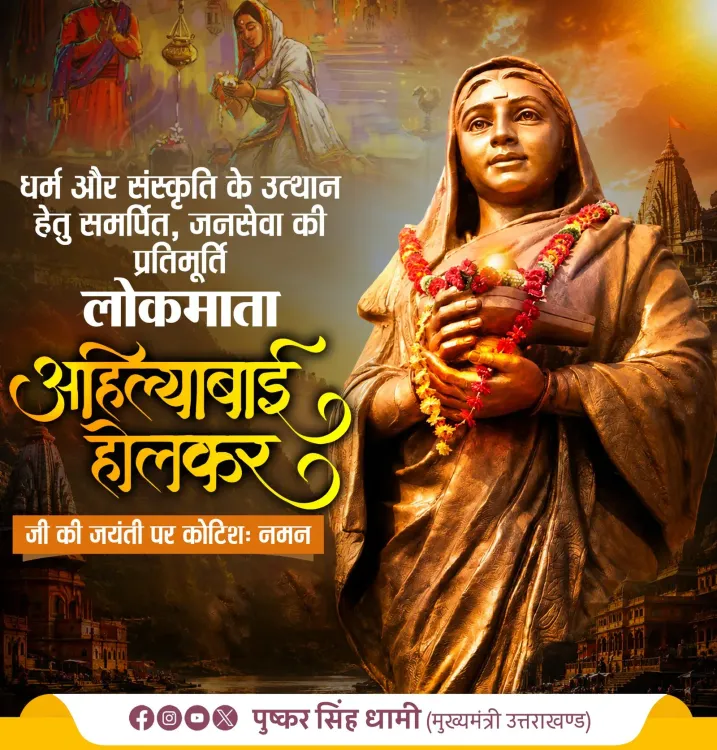
Uttarakhand Chief Minister Pushkar Singh Dhami on 31 May 2026 paid tribute to 18th-century Malwa ruler Ahilyabai Holkar on her birth anniversary, calling her a towering symbol of women's empowerment and a life devoted to the upliftment of Indian culture and religion.
Key Takeaways
CM Pushkar Singh Dhami posted a tribute to Ahilyabai Holkar on her birth anniversary on 31 May 2026 .
He described her as a 'great warrior-woman, skilled administrator, and towering embodiment of women's empowerment.' Ahilyabai Holkar ruled the Malwa kingdom from 1767 to 1795 , commissioning temples and public works across India.
Annual tributes to her are part of a wider pattern of BJP -led governments commemorating pre-colonial Hindu rulers.
The tribute aligns with Uttarakhand 's state-level emphasis on cultural heritage and women's participation in public life.
Future commemorations may be linked to heritage projects or women's empowerment schemes in the state.
Uttarakhand Chief Minister Pushkar Singh Dhami on Sunday, 31 May 2026, paid tribute to 18th-century Malwa ruler and administrator Ahilyabai Holkar on her birth anniversary, hailing her as a symbol of women's empowerment and devoted service to Indian culture and religion.
Context
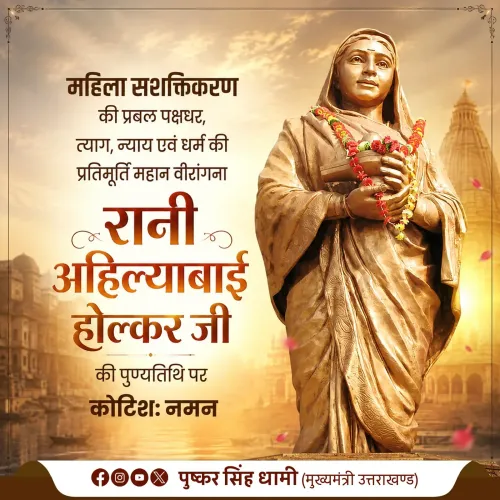
In his post, CM Dhami described Ahilyabai Holkar as a 'mahaan veerangana, kushal prashask, nari sashaktikaran ki virat pratimoorti' — 'a great warrior-woman, skilled administrator, and towering embodiment of women's empowerment' — and offered her his deepest respects on the occasion of her birth anniversary, known as jayanti. He further noted that her life, 'dedicated to the upliftment of dharma and culture, is a source of inspiration for all of us.'
The tribute was shared publicly on 31 May 2026 and forms part of the annual cycle of official commemorations that political leaders across India observe for Ahilyabai Holkar, who is widely regarded as one of the most consequential rulers of pre-colonial India.
Policy Backdrop
Ahilyabai Holkar ruled the Malwa kingdom from 1767 to 1795, overseeing a period of administrative reform, extensive construction of temples and public infrastructure across the subcontinent, and active promotion of trade and civic welfare. She is credited with commissioning or restoring temples at Varanasi, Dwarka, Gaya, and dozens of other pilgrimage sites, making her a revered figure in both cultural and religious memory.
Central and state governments have marked her birth anniversary with official events and tributes since at least the early 2000s. BJP-led governments have particularly emphasised her legacy as an icon of indigenous governance, temple restoration, and women's leadership — themes that align with broader policy priorities around heritage conservation and women's participation in public life.
Stakeholders and Impact
Tributes of this kind resonate with cultural heritage groups, women's organisations, and communities with historical ties to the Holkar legacy, particularly in Madhya Pradesh and Maharashtra. For Uttarakhand, a state whose BJP government has consistently emphasised themes of cultural heritage and Sanatan traditions, the statement reinforces that positioning at the state level.
Educators and curriculum planners have also taken note of growing official interest in pre-colonial women rulers, with figures like Ahilyabai Holkar increasingly featuring in school syllabi and government-commissioned publications on Indian history.
What's Next
Annual commemorations around Ahilyabai Holkar's birth anniversary have, in previous years, served as occasions for state governments to announce heritage projects, scholarship schemes in her name, or curriculum updates recognising pre-colonial Indian administrators. As Uttarakhand continues to position itself as a state committed to cultural heritage — home to pilgrimage corridors such as the Char Dham circuit — tributes like this one may foreshadow future policy announcements tied to women's empowerment or temple conservation programmes.
Point of View
The statement draws a symbolic line between historical precedent and contemporary policy priorities around women's empowerment. For Uttarakhand — a state whose political identity is closely tied to pilgrimage, heritage, and Sanatan culture — such commemorations serve a dual function: affirming ideological alignment and keeping cultural-heritage themes salient between electoral cycles. Whether this leads to tangible policy action, such as a scholarship or heritage scheme in her name, will be the measure of its significance beyond symbolism.
NationPress
17 Oct 2026
Frequently Asked Questions
Who was Ahilyabai Holkar?
Ahilyabai Holkar was an 18th-century ruler of the Malwa kingdom who governed from 1767 to 1795. She is celebrated for administrative reforms, construction of temples and public works across India, and her role in promoting trade and civic welfare.
When is Ahilyabai Holkar's birth anniversary?
Ahilyabai Holkar's birth anniversary, or jayanti, falls on 31 May. In 2026, CM Pushkar Singh Dhami was among the leaders who paid public tribute on this date.
Why did CM Dhami pay tribute to Ahilyabai Holkar?
CM Dhami paid tribute on her birth anniversary, describing her as a symbol of women's empowerment and a life devoted to Indian culture and religion. Such tributes are part of an annual tradition observed by political leaders across India.
What is Ahilyabai Holkar's connection to women's empowerment?
Ahilyabai Holkar is regarded as one of the most effective pre-colonial women rulers in Indian history. Her governance of Malwa, her commissioning of temples and public infrastructure, and her administrative acumen have made her a recurring symbol in discussions of women's leadership and empowerment.
How does Uttarakhand government commemorate historical figures like Ahilyabai Holkar?
The Uttarakhand government, led by the BJP, regularly issues public tributes to cultural and historical icons as part of its emphasis on heritage conservation and Indian cultural identity. These commemorations sometimes precede or accompany policy announcements related to heritage or women's welfare.