PoK on edge as JAAC calls June 9 lockdown over 38 unmet demands
Synopsis
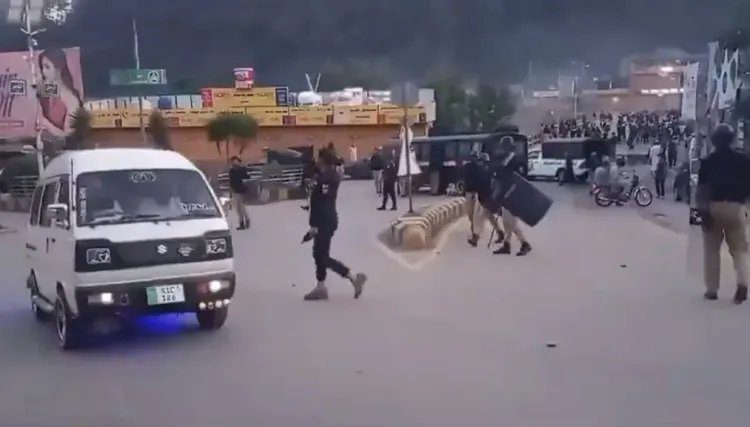
PoK is heading into its most serious confrontation with Islamabad in recent memory. The JAAC has called a June 9 lockdown over 38 unmet demands, Pakistani forces have already killed a JAAC leader, the group has been banned, and internet services have been cut — a pattern that critics say mirrors the state's playbook of suppressing legitimate dissent rather than addressing it.
Key Takeaways
The Joint Awami Action Committee (JAAC) has called a major lockdown protest in Pakistan-occupied Kashmir (PoK) for 9 June over 38 unmet demands .
JAAC executive member Shahzaib Habib was killed after Pakistani security forces allegedly opened fire near Khaigla Burma Bridge in Rawalakot .
Pakistani authorities have banned the JAAC , suspended telecom and internet services, and deployed Pakistan Federal Police and Pakistan Rangers to Muzaffarabad.
The 38-point charter covers flour subsidies, tax withdrawal, job reservations for Kashmiris, and cancellation of the PoK Bank's merger with the State Bank of Pakistan .
The Muzaffarabad Agreement of October last year has reportedly not been implemented, fuelling the current standoff.
At least nine unarmed civilians were killed and hundreds injured in earlier crackdowns, according to a JK-JAAC statement.
Pakistan-occupied Kashmir (PoK) is teetering on the edge of widespread civil unrest as the Joint Awami Action Committee (JAAC) has announced a major lockdown protest for 9 June over 38 unmet demands, according to reports. The call comes amid a sharp crackdown by Pakistani authorities, including the banning of the JAAC, internet blackouts, and the killing of a JAAC leader by security forces.
What Triggered the Protest Call
Frustration in PoK has been building for months over electricity shortages, runaway inflation, unemployment, resource exploitation, and political marginalisation. The Muzaffarabad Agreement of October last year — which was meant to address key grievances — has reportedly not been implemented in full. Critics have also pointed to the 12 'refugee' seats used by Islamabad to retain control over the region, the autonomy-curtailing 13th Amendment, and what they describe as a widening gap between Pakistan's public narrative about PoK and the repressive ground reality.
According to a report by Idrees Aftab for the Centre for Peace Studies, 'In so-called Azad Jammu and Kashmir (AJK), the situation is now turning increasingly serious. On 9th June, a lockdown protest call has been announced by the Joint Awami Action Committee (JAAC), accusing the Pakistani government of repeatedly betraying the aspirations of the people of the region.'
Key Demands and Planned Agitation
The JAAC's 38-point charter, unveiled in October last year by the Jammu Kashmir Joint Awami Action Committee (JK-JAAC) — a coalition of traders, lawyers, and civil society groups — covers a broad range of socio-economic and governance grievances. According to a report in the Middle East Media Research Institute (MEMRI), the demands include restoration of a flour subsidy, control of inflation, withdrawal of unjust taxes, reservation of jobs for Kashmiris in Pakistan's federal government, cancellation of the PoK Bank's merger with the State Bank of Pakistan, abolition of toll plazas, a ban on timber smuggling, and construction of student hostels across various towns.
The committee has warned of shutter-down strikes, wheel-jam demonstrations, a long march, and an indefinite sit-in if its demands are not addressed. The JAAC has also urged residents to stockpile essential supplies for at least a month in preparation for a prolonged shutdown, and has announced that no political election rallies will be permitted in the region until authorities agree to their demands.
Violence, Crackdown and Communication Blackout
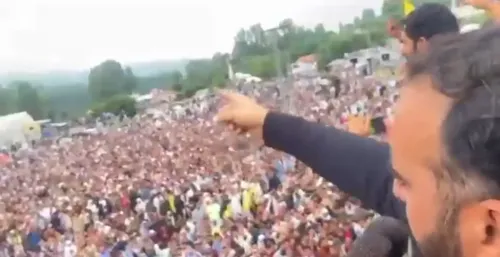
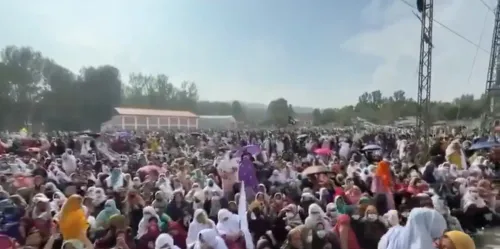
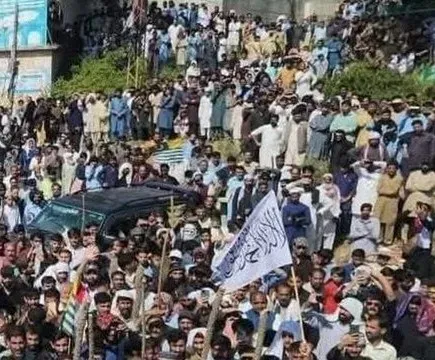
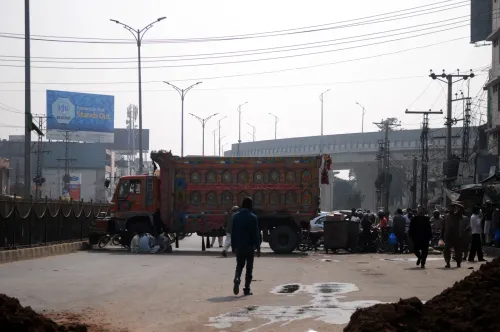
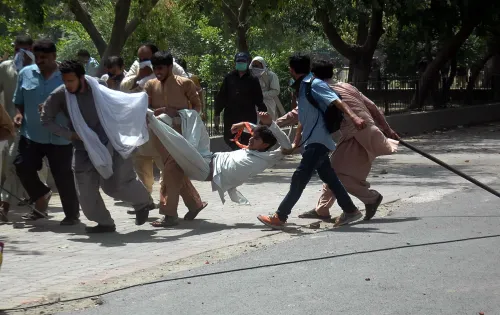
Tensions escalated sharply after Pakistani security forces allegedly opened fire on protesters near Khaigla Burma Bridge in Rawalakot, resulting in the death of JAAC executive member Shahzaib Habib and the injury of several others, according to the Centre for Peace Studies report. Protests have reportedly already begun in various parts of PoK ahead of the planned shutdown, reflecting deepening public anger.
Pakistani authorities have since banned the JAAC, declaring it a proscribed organisation and accusing it of involvement in terrorism, acting in a manner 'prejudicial to peace and security' of the state, and 'creating anarchy in the state by intimidating public, promoting hatred and creating a sense of insecurity in society.' Telecom and internet services in PoK have been suspended, and additional contingents of the Pakistan Federal Police and Pakistan Rangers have been deployed to Muzaffarabad ahead of the protest.
Civilian Casualties and International Appeal
JK-JAAC Core Committee member Sardar Umar Nazir Kashmiri has issued an appeal to international media and global human rights organisations, calling for immediate attention to the ongoing crisis. 'Since September 29, a peaceful public movement has been met with state repression, human rights violations, restrictions on civil liberties, and the killing of innocent civilians,' he said.
The JK-JAAC stated in a release in October last year that state forces and non-local personnel had carried out indiscriminate firing, killing at least nine unarmed civilians and injuring hundreds more. Since 28 September, the Pakistan government has reportedly enforced a complete communication blackout across PoK, suspending mobile networks, internet, and landline connections, effectively cutting off millions from the outside world.
What Comes Next
With the 9 June shutdown approaching and Pakistani authorities deploying additional security forces rather than engaging with JAAC's demands, the risk of a larger and more sustained wave of unrest appears significant. The situation in PoK will be closely watched by regional observers and human rights groups in the days ahead.
Point of View
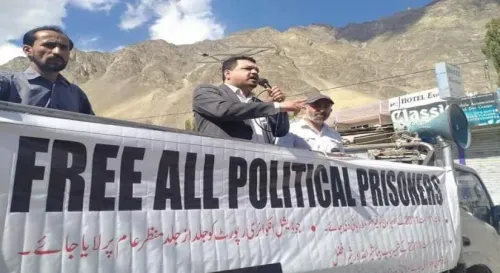
The state responds with force and a communication blackout, and the cycle of repression deepens rather than resolves the underlying crisis. Banning the JAAC and labelling it a terrorist organisation does not address flour subsidies or electricity shortages — it simply removes the pressure valve. What is striking is how closely this mirrors Islamabad's handling of earlier protests in Gilgit-Baltistan and Balochistan: deploy rangers, cut the internet, declare the movement seditious. The Muzaffarabad Agreement's non-implementation is particularly telling — it suggests the Pakistani state made commitments it never intended to honour, and the people of PoK are now drawing that conclusion themselves.
NationPress
23 Oct 2026
Frequently Asked Questions
Why has the JAAC called a lockdown protest in PoK on June 9?
The JAAC has called a lockdown protest on 9 June over 38 unmet demands related to governance, basic rights, and socio-economic grievances, including electricity shortages, inflation, unemployment, and political marginalisation. The group accuses the Pakistani government of repeatedly failing to honour its commitments, including the Muzaffarabad Agreement of October last year.
What are the key demands in the JAAC's 38-point charter?
The charter demands include restoration of a flour subsidy, withdrawal of unjust taxes, reservation of federal government jobs for Kashmiris, cancellation of the PoK Bank's merger with the State Bank of Pakistan, abolition of toll plazas, and a ban on timber smuggling, among other governance and socio-economic reforms.
Who is Shahzaib Habib and what happened to him?
Shahzaib Habib was an executive member of the JAAC who was killed after Pakistani security forces allegedly opened fire on protesters near Khaigla Burma Bridge in Rawalakot, according to a Centre for Peace Studies report. Several others were injured in the same incident.
How has Pakistan responded to the JAAC protests?
Pakistani authorities have banned the JAAC, declaring it a proscribed organisation linked to terrorism. They have also suspended telecom and internet services in PoK and deployed additional Pakistan Federal Police and Pakistan Rangers to Muzaffarabad ahead of the June 9 protest.
What is the broader human rights situation in PoK?
According to a JK-JAAC statement from October last year, at least nine unarmed civilians were killed and hundreds injured in earlier crackdowns. The Pakistan government also enforced a communication blackout from 28 September, cutting off mobile, internet, and landline services across PoK. JK-JAAC Core Committee member Sardar Umar Nazir Kashmiri has appealed to international media and human rights organisations to intervene.