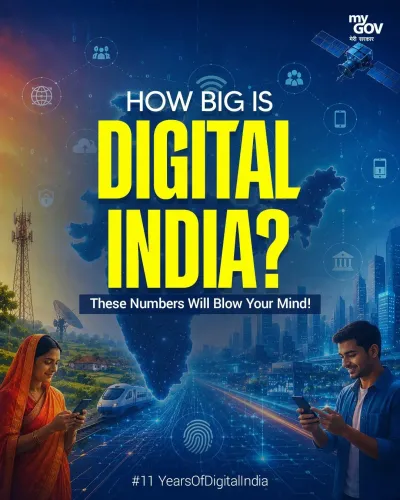
Mandaviya Marks 11 Years of Digital India, Hails Modi's Vision
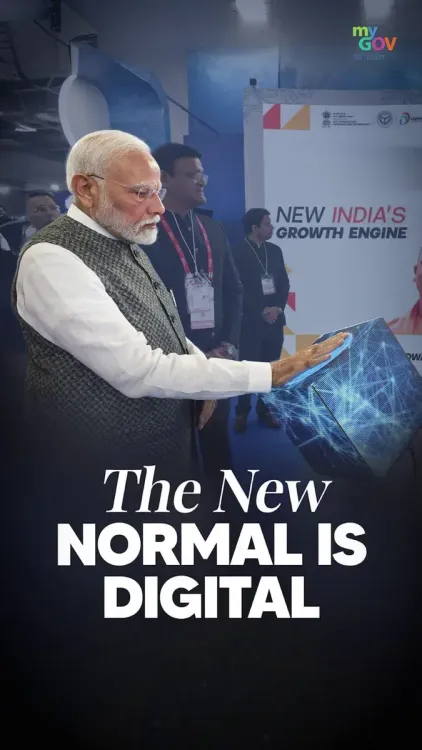
Synopsis
Union Minister Mansukh Mandaviya marked 11 years of the Digital India programme on 1 July 2026, crediting PM Narendra Modi with transforming India into a global technology leader and empowering over a billion citizens through digital public infrastructure.
Key Takeaways
Union Minister Mansukh Mandaviya posted on 1 July 2026 to mark 11 years of the Digital India programme .
The Digital India initiative was launched on 1 July 2015 by Prime Minister Narendra Modi .
The programme built on the earlier National e-Governance Plan of 2006 and has expanded to cover digital infrastructure, literacy, and paperless governance.
Key outputs linked to the programme include Aadhaar -based authentication and the Unified Payments Interface (UPI) .
Rural and semi-urban populations have been the primary target beneficiaries of the initiative's connectivity and literacy drives.
Future focus areas include AI-enabled governance pilots and fresh Union Budget allocations for digital infrastructure.
Union Labour and Sports Minister Mansukh Mandaviya on Wednesday, 1 July 2026 celebrated the 11th anniversary of the Digital India programme, crediting Prime Minister Narendra Modi with steering the country from bridging the digital divide to becoming a global technology powerhouse.
Context
Mandaviya's post, shared on the occasion of #11YearsOfDigitalIndia, declared that the programme has 'empowered over a billion lives' under PM Modi's leadership. The message frames India as a nation that has not merely adopted digital tools but now leads the global digital revolution.
The Digital India programme was formally launched on 1 July 2015 by Prime Minister Narendra Modi with the stated goal of creating a digitally empowered society and a knowledge economy. The anniversary on 1 July 2026 marks a full decade and one year since that launch.
Policy Backdrop
The programme built upon the earlier National e-Governance Plan approved in 2006, scaling up ambitions considerably to encompass digital infrastructure, online governance services, and mass digital literacy. Over successive phases, the initiative expanded to cover broadband connectivity in rural areas, paperless governance, and mobile-first delivery of public services.
Digital India has served as the overarching framework under which several of India's most prominent digital public infrastructure achievements have been developed, including Aadhaar-based authentication and the Unified Payments Interface (UPI). These systems have collectively expanded access to government services and formal financial networks for large sections of the population, particularly in rural and semi-urban areas.
The broader national strategy has consistently linked technology adoption with inclusive growth and administrative efficiency, positioning India as a model for developing economies seeking to leapfrog traditional infrastructure constraints through digital means.
Stakeholders and Impact
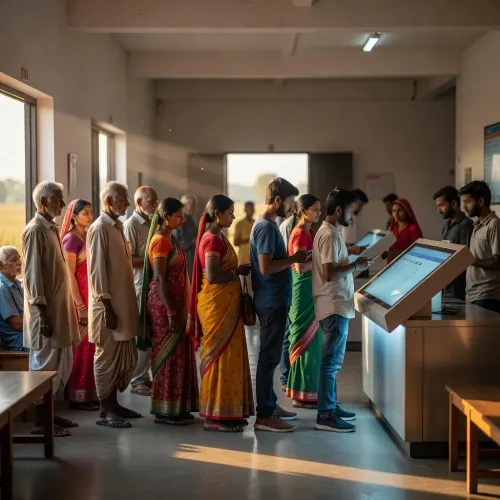
Indian citizens, especially rural populations with historically limited access to banking, government services, and connectivity, have been the primary intended beneficiaries of the programme. Digital literacy drives under the initiative aimed at equipping first-time internet users with skills to navigate e-governance portals and digital payment systems.
The programme's architecture has also created a platform for India's technology sector, enabling startups and large enterprises alike to build services atop government-backed digital infrastructure. This has contributed to India's emergence as a significant player in global fintech and govtech conversations.
What's Next
Policy watchers will look to upcoming Union Budget allocations for digital infrastructure to gauge the government's continued commitment to scaling the programme's reach. Pilots in AI-enabled governance and parliamentary reviews of the programme's performance metrics are expected to shape the next phase of Digital India's evolution.
With India increasingly positioning itself as a provider of digital public infrastructure models to other nations, the anniversary messaging from senior ministers signals that digital governance will remain a central plank of the government's political and policy identity going forward.
Point of View
Areas where scrutiny is intensifying.
NationPress
30 Sept 2026
Frequently Asked Questions
When was Digital India launched?
The Digital India programme was formally launched on 1 July 2015 by Prime Minister Narendra Modi , making 1 July 2026 its 11th anniversary.
What is the Digital India programme?
Digital India is a flagship Government of India initiative designed to deliver digital infrastructure, e-governance services, and digital empowerment at scale, targeting both urban and rural populations.
What has Digital India achieved?
The programme has provided the policy framework under which major digital public infrastructure — including Aadhaar -based authentication and the Unified Payments Interface (UPI) — was developed and scaled across the country.
Why did Mansukh Mandaviya post about Digital India?
Mansukh Mandaviya , Union Minister for Labour and Sports, posted on 1 July 2026 to mark the 11th anniversary of the Digital India programme, celebrating its impact and crediting PM Narendra Modi 's leadership.
What is next for the Digital India programme?
Upcoming priorities are expected to include fresh Union Budget allocations for digital infrastructure, AI-enabled governance pilots , and parliamentary review of the programme's performance metrics.