Goyal marks 11 years of Digital India, hails governance shift

Synopsis
Union Commerce Minister Piyush Goyal on 1 July 2026 marked 11 years of the Digital India programme, crediting it with reshaping governance, digital payments, and citizen services. Launched by PM Modi in 2015, the initiative underpins India's digital public infrastructure stack spanning identity, UPI, and e-services.
Key Takeaways
Piyush Goyal posted on 1 July 2026 to mark 11 years of the Digital India programme , calling it a new chapter in good governance and innovation.
The Digital India programme was launched by Prime Minister Narendra Modi on 1 July 2015 to deliver government services electronically.
The Unified Payments Interface (UPI) , introduced in 2016 , became the central pillar of India's digital payments ecosystem under the programme.
The programme covers Aadhaar -based identity, DigiLocker , Common Service Centres , and multiple e-governance portals serving citizens across urban and rural India.
Policy focus is now shifting to AI governance , a data protection framework, and BharatNet broadband expansion as the programme enters its twelfth year.
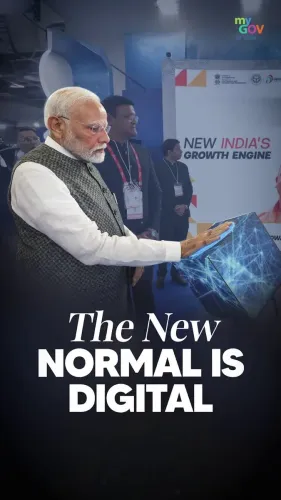
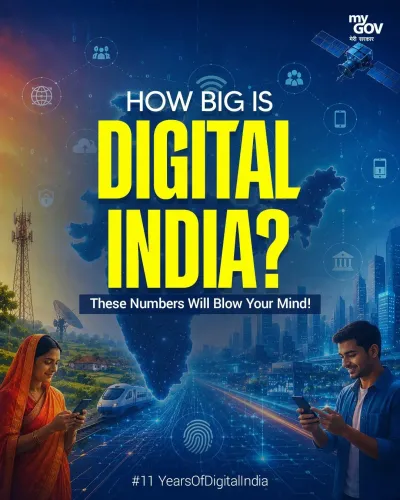
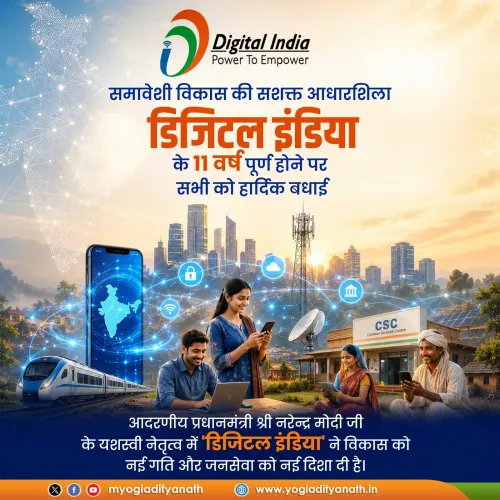
Union Commerce and Industry Minister Piyush Goyal on Wednesday, 1 July 2026, marked the 11th anniversary of the Digital India programme, calling it a new chapter in good governance, service delivery, and innovation for every Indian citizen.
Posting on X in Hindi, Goyal wrote: 'बीते 11 वर्षों में डिजिटल इंडिया ने सुशासन, सेवा और नवाचार का नया अध्याय लिखा है' ('In the past 11 years, Digital India has written a new chapter of good governance, service, and innovation'). He added that technology — from digital payments to e-governance — has made the life of every citizen 'simpler, more transparent, and more empowered.'
Context
The Digital India programme was formally launched by Prime Minister Narendra Modi on 1 July 2015, with the stated goal of transforming India into a digitally empowered society and knowledge economy. The initiative was conceived to bridge the gap between government services and citizens through electronic delivery, reducing dependence on physical paperwork and middlemen.
The anniversary falls as India's digital public infrastructure stack — built on pillars of identity, payments, and e-services — is widely regarded as one of the most extensive such systems in the world. Senior ministers across the government have consistently used the occasion to reaffirm the administration's commitment to technology-led governance.
Policy Backdrop
A central pillar of the programme's decade-long run has been the Unified Payments Interface (UPI), rolled out in 2016, which became the backbone of India's digital payments ecosystem. UPI enabled real-time, interoperable bank transfers accessible even on basic smartphones, driving a sharp shift away from cash transactions across urban and rural India alike.
The programme also encompasses Aadhaar-linked identity verification, the DigiLocker platform for digital document storage, and the Common Service Centres network that extends e-government access to remote areas. Together, these components form India's digital public infrastructure, which has been cited in successive Union Budgets as a tool for reducing leakages in welfare delivery and formalising the economy.
Digital India sits alongside parallel initiatives — Make in India and Startup India — as part of a broader technology-led growth strategy that the BJP-led National Democratic Alliance government has pursued since 2014.
Stakeholders and Impact
The programme's primary beneficiaries are Indian citizens who interact with government services, welfare schemes, and the financial system. E-governance portals have reduced the need for in-person visits to government offices, while digital payment rails have expanded financial inclusion to previously unbanked populations.
Small businesses and self-employed individuals have also been significant stakeholders, using UPI and digital invoicing to participate in formal commerce. Civil society groups and technology policy researchers have, over the years, raised questions about data privacy, digital literacy gaps, and uneven rural connectivity — issues that the government has sought to address through successive phases of the programme.
What's Next
With the programme entering its twelfth year, attention in policy circles is turning to the next phase of digital infrastructure — including artificial intelligence governance, a proposed data protection framework, and expanded broadband connectivity under the BharatNet initiative. Budget allocations for Digital India Phase-II components and any new legislation on data or AI that may be tabled in Parliament are being closely tracked by industry and civil society alike.
The anniversary message from a senior Cabinet minister signals that digital governance will remain a centrepiece of the government's public communication and policy agenda in the months ahead, particularly as India positions its digital public infrastructure model for global audiences.
Point of View
Reinforcing the BJP's decade-long narrative that technology-led governance is a defining achievement of the Modi era. By framing Digital India as a story of 'good governance, service, and innovation,' the message ties the programme's legacy directly to the party's broader pitch on administrative reform and ease of living. The timing — exactly eleven years to the day of the launch — underscores how anniversaries of flagship schemes function as recurring moments for the ruling coalition to consolidate its governance identity. As India's digital infrastructure model attracts international attention, such messaging also serves a soft-power dimension, positioning the country as a global exemplar of scalable public technology.
NationPress
29 Sept 2026
Frequently Asked Questions
When was Digital India launched and by whom?
The Digital India programme was launched on 1 July 2015 by Prime Minister Narendra Modi with the aim of transforming India into a digitally empowered society and knowledge economy.
What did Piyush Goyal say about Digital India on its 11th anniversary?
Piyush Goyal posted on X on 1 July 2026 saying that in the past 11 years, Digital India has written a new chapter of good governance, service, and innovation, and that technology has made every citizen's life simpler, more transparent, and more empowered.
What is UPI and how is it related to Digital India?
The Unified Payments Interface (UPI) is a real-time interoperable digital payments system launched in 2016 that became the backbone of India's digital payments ecosystem, and is one of the flagship achievements cited under the Digital India programme.
What are the main components of the Digital India programme?
Key components include Aadhaar -linked identity verification, the UPI payments platform, DigiLocker for digital document storage, Common Service Centres for rural e-services access, and a wide range of e-governance portals for citizen services.
What comes next for Digital India after 11 years?
Policy focus is shifting toward AI governance legislation , a comprehensive data protection framework, and expanded rural broadband under BharatNet , with the next Union Budget expected to outline allocations for Digital India Phase-II components.