Piyush Goyal marks 11 years of Digital India

Synopsis
Commerce Minister Piyush Goyal marked the eleventh anniversary of the Digital India programme on 1 July 2026 with a post declaring 'The future is Bharat!', reinforcing the government's decade-long push to extend digital infrastructure to rural and semi-urban India.
Key Takeaways
1 July 2026 marks the eleventh anniversary of the Digital India programme, first launched by PM Narendra Modi on 1 July 2015 .
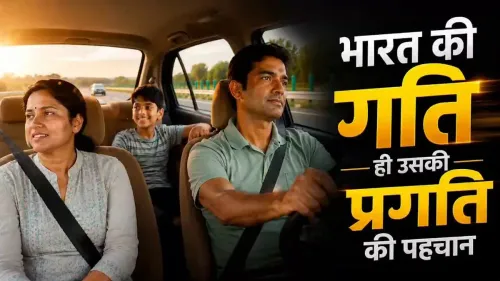
Commerce Minister Piyush Goyal marked the occasion with a post on X declaring 'The future is Bharat!' alongside a video.
Digital India was built on nine pillars covering broadband, e-governance, digital literacy, electronics manufacturing, and more.
Key platforms layered onto Digital India include Aadhaar , UPI , DigiLocker , and the Account Aggregator framework.
Primary beneficiaries include Indian citizens , MSMEs , and the broader technology startup ecosystem .
Attention is now turning to potential Digital India Phase 2 targets, including AI integration and data-protection frameworks in the 2026-27 budget cycle .
Union Commerce and Industry Minister Piyush Goyal on Wednesday, 1 July 2026 marked the eleventh anniversary of the Digital India programme, declaring 'The future is Bharat!' in a post on X that included a video, underscoring the ruling dispensation's continued emphasis on digital-first governance and rural connectivity.
Context
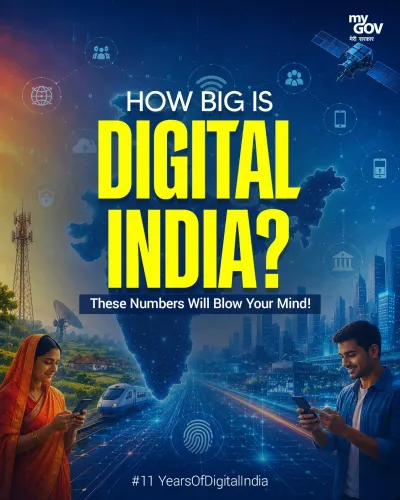
The Digital India programme was formally launched on 1 July 2015 by Prime Minister Narendra Modi, making 1 July 2026 its eleventh anniversary. The initiative was conceived around nine pillars — spanning broadband highways, universal access to mobile connectivity, a public internet access programme, e-governance, e-Kranti, information for all, electronics manufacturing, IT for jobs, and early harvest programmes. Goyal's post, carrying the hashtag #11YearsOfDigitalIndia, is part of a coordinated government messaging effort to mark the milestone.
The deliberate invocation of 'Bharat' rather than 'India' signals the programme's stated priority: reaching citizens in rural and semi-urban areas who were historically underserved by physical and digital infrastructure alike.
Policy Backdrop
Over the past decade, successive policy layers have been added to the original Digital India architecture. Platforms such as Aadhaar, the Unified Payments Interface (UPI), DigiLocker, and the Account Aggregator framework have collectively expanded the state's capacity to deliver services at population scale — a model that has drawn international attention as a replicable public-digital infrastructure stack.
The 2026-27 budget cycle is expected to bring fresh targets for what observers describe as a potential Digital India Phase 2, with emerging questions around integration with artificial intelligence frameworks and the operationalisation of India's data-protection architecture. Goyal, as a senior cabinet minister who has previously held portfolios in railways and finance, carries institutional weight when amplifying such milestones.
Stakeholders and Impact
The programme's direct beneficiaries span Indian citizens at large, with particular relevance for micro, small and medium enterprises (MSMEs) that have used government digital platforms for compliance, credit access, and market linkages. The country's technology startup ecosystem has also grown in parallel with Digital India's infrastructure buildout, benefiting from a digitally connected consumer base and government-backed identity and payments rails.
For the BJP-led government, the anniversary serves as a political and policy landmark — an opportunity to draw a direct line between the 2015 vision and measurable outcomes in internet penetration, digital payments volume, and e-governance service delivery over eleven years.
What's Next
With the anniversary falling mid-year in the 2026-27 fiscal cycle, ministry-level announcements on expanded Digital India targets — particularly around AI integration, rural broadband last-mile coverage, and data governance — are likely to follow in the coming weeks. Parliamentary updates and potential scheme revisions will be closely watched by the technology sector, civil society groups focused on digital rights, and India's MSME constituency.
Point of View
The minister aligns with a consistent BJP communication strategy that frames digital policy as a tool of rural and semi-urban inclusion rather than urban-elite modernisation. The timing, at the midpoint of the 2026-27 fiscal year, positions the anniversary as a springboard for fresh Digital India Phase 2 announcements. Eleven years in, the government is increasingly under pressure to demonstrate that the programme's next chapter addresses AI readiness and data governance, not just connectivity metrics.
NationPress
29 Sept 2026
Frequently Asked Questions
When was Digital India launched?
Digital India was formally launched on 1 July 2015 by Prime Minister Narendra Modi , making 1 July 2026 its eleventh anniversary.
What did Piyush Goyal post about Digital India?
On 1 July 2026 , Minister Piyush Goyal posted 'The future is Bharat! #11YearsOfDigitalIndia' on X, accompanied by a video, to mark the programme's eleventh anniversary.
What are the nine pillars of Digital India?
The nine pillars cover broadband highways, universal mobile connectivity, a public internet access programme, e-governance, e-Kranti (electronic delivery of services), information for all, electronics manufacturing, IT for jobs, and early harvest programmes.
What platforms are part of the Digital India ecosystem?
Key platforms include Aadhaar , the Unified Payments Interface (UPI) , DigiLocker , and the Account Aggregator framework, all of which expand digital service delivery at population scale.
What is next for Digital India after 11 years?
Observers and the technology sector are watching for Digital India Phase 2 targets, particularly around artificial intelligence integration, rural broadband last-mile coverage, and data-protection frameworks expected to be addressed in the 2026-27 budget cycle .