Pralhad Joshi pays tribute to Sangolli Rayanna on birth anniversary
Synopsis
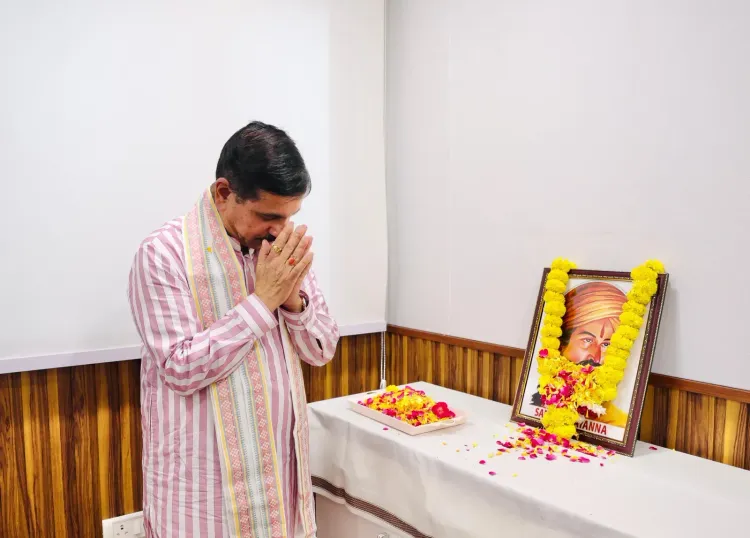
On Independence Day, Union Minister Pralhad Joshi offered floral tribute to Krantiveer Sangolli Rayanna at his New Delhi residence, honouring the 19th-century Karnataka chieftain who waged armed resistance against British rule and was executed in 1831 — decades before the 1857 revolt.
Key Takeaways
Union Minister Pralhad Joshi marked the birth anniversary of Krantiveer Sangolli Rayanna at his New Delhi residence on Independence Day, 15 August 2026 .
Sangolli Rayanna was a chieftain from Belagavi district, Karnataka , who led armed resistance against British rule under Rani Chennamma of Kittur .
Rayanna was captured and executed by the British in 1831 , making him one of India's earliest anti-colonial armed resisters.
Joshi described Rayanna's sacrifice and patriotism as 'an eternal inspiration for today's youth.' The tribute is part of a broader BJP effort to document and publicise pre-1857 regional resistance movements across India.
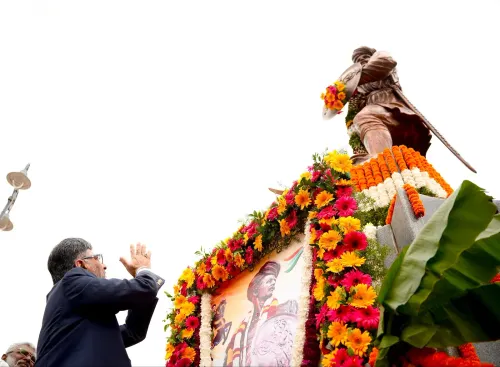
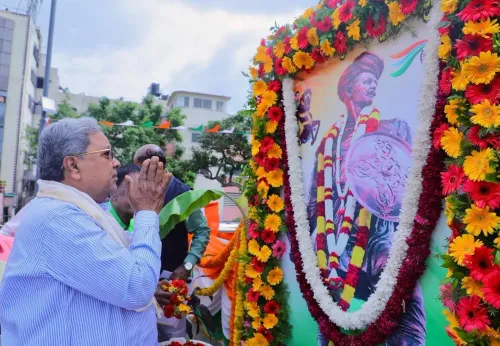
On India's Independence Day, a freedom fighter who never lived to see it was remembered in the heart of the capital. Union Consumer Affairs Minister Pralhad Joshi marked the birth anniversary of Krantiveer Sangolli Rayanna at his New Delhi residence, offering flowers before the warrior's portrait in a quiet act of homage that carried weight far beyond the ceremonial.
Posting in Kannada, Joshi wrote: 'Krantiveer Shri Sangolli Rayanna avara janmadinava acharisi avara bhava chitrakke pushparchane sallisi nanna namana sallisida kshanagalu' — 'moments of offering floral tribute and paying my respects to the portrait of Krantiveer Sangolli Rayanna on his birth anniversary.' He called Rayanna an 'apratima veera' — an unmatched hero — whose sacrifice, selfless struggle, and pure patriotism remain 'an eternal inspiration for today's youth.'
Who was Sangolli Rayanna — and why does he still matter
Sangolli Rayanna was a 19th-century chieftain from Sangolli village in present-day Belagavi district, Karnataka, who served as a military commander under Rani Chennamma of Kittur. When the British East India Company annexed Kittur in 1824, Rayanna refused to accept the occupation. He waged a guerrilla campaign against colonial forces for years, becoming one of the earliest armed resisters to British rule in the subcontinent — decades before the better-known revolt of 1857. He was captured and executed by the British in 1831, aged around 40, hanged from a banyan tree at Nandagad. His story sits largely outside the dominant national narrative of the freedom struggle, which has historically centred figures from other regions. That gap is precisely what makes commemorations like today's politically and culturally resonant in Karnataka.Karnataka's anti-colonial legacy and the BJP's documentation push
Ministers from Karnataka in the Union cabinet have made a consistent practice of marking birth and death anniversaries of regional anti-colonial figures — Rayanna, Rani Chennamma, and others — on social media and at official events. This aligns with the BJP's broader effort to surface pre-1857 resistance movements that have been underrepresented in mainstream historical commemoration, framing them as proof that the freedom struggle was national in scope and rooted in every corner of India. Central and state governments have periodically organised formal birth anniversary programmes for Rayanna, and advocates have long pushed for greater inclusion of such figures in school curricula and official freedom-struggle memorials. On a day when the country marks Independence Day, the tribute lands with particular force — a reminder that the road to 1947 was paved by fighters who fell more than a century before the flag was raised.Point of View
And Karnataka's pre-1857 rebels offer a rich vein for that project. By marking Rayanna's anniversary in New Delhi rather than Karnataka, Joshi signals that these regional heroes belong to the national story, not just local memory. Watch whether this translates into concrete policy moves — curriculum inclusion, new memorials, or central government-funded commemorations — in the months ahead.
NationPress
29 Sept 2026
Frequently Asked Questions
Who was Sangolli Rayanna?
Sangolli Rayanna was a 19th-century chieftain and freedom fighter from Sangolli village in present-day Belagavi district, Karnataka. He served as a military commander under Rani Chennamma of Kittur and led armed guerrilla resistance against the British East India Company after the annexation of Kittur in 1824. He was captured and executed by hanging in 1831.
Why is Sangolli Rayanna called Krantiveer?
'Krantiveer' means 'revolutionary hero' in Kannada and Marathi. Rayanna earned the title for his fearless armed uprising against British colonial rule decades before the 1857 revolt, making him one of the earliest anti-colonial resisters in Indian history.
What did Pralhad Joshi do on Sangolli Rayanna's birth anniversary?
Union Minister Pralhad Joshi offered floral tribute before a portrait of Sangolli Rayanna at his New Delhi residence and posted about the occasion on X, calling Rayanna an unmatched hero whose patriotism is an eternal inspiration for India's youth.
When was Sangolli Rayanna born and executed?
Sangolli Rayanna's exact birth date is not precisely recorded in historical documents, but he is commemorated annually. He was executed by the British in 1831 at Nandagad, Karnataka, at approximately 40 years of age.
Why do BJP leaders commemorate Karnataka's regional freedom fighters?
The BJP has made a sustained effort to highlight pre-1857 anti-colonial resistance movements from across India that are underrepresented in mainstream national history. Commemorating figures like Sangolli Rayanna and Rani Chennamma is part of that broader push to frame the freedom struggle as a pan-India, multi-regional movement.