CM Siddaramaiah pays floral tribute to Sangolli Rayanna on birth anniversary
Synopsis
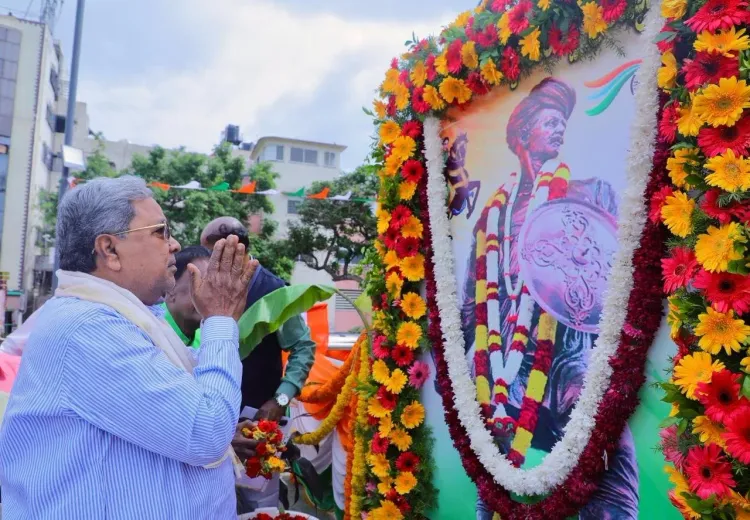
Karnataka CM Siddaramaiah marked Krantiveer Sangolli Rayanna's birth anniversary on Independence Day by offering a floral tribute at the freedom fighter's statue near Bengaluru's Majestic railway station, honouring his 1831 sacrifice against British rule.
Key Takeaways
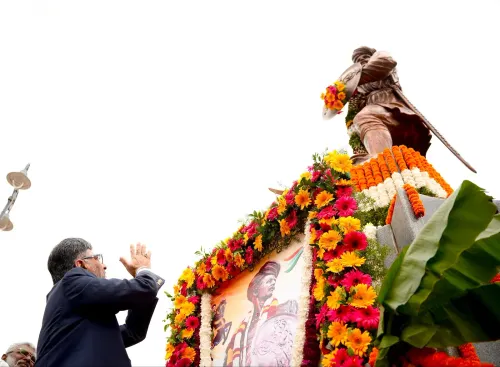
CM Siddaramaiah paid a floral tribute at the Sangolli Rayanna statue near Majestic railway station, Bengaluru on 15 August 2026 .
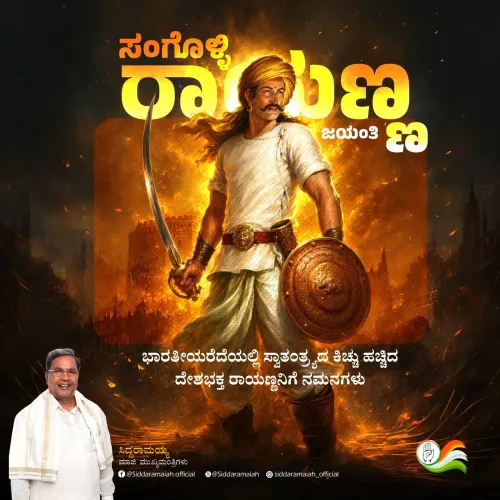
Krantiveer Sangolli Rayanna was a 19th-century Karnataka chieftain who led armed resistance against British rule in the Kittur region.
Rayanna was executed by the British in 1831 , making him one of India's earliest documented anti-colonial martyrs.
The tribute coincided with Independence Day , amplifying its symbolic weight at one of Bengaluru's most prominent public landmarks.
Karnataka governments have a consistent practice of honouring pre-1857 regional freedom fighters to reinforce local identity within the national narrative.
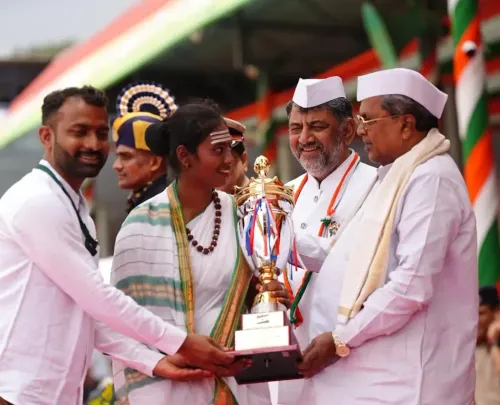
On Independence Day, 15 August 2026, Karnataka Chief Minister Siddaramaiah paused at the statue of Krantiveer Sangolli Rayanna near Majestic railway station in Bengaluru to lay flowers and honour the 19th-century freedom fighter's sacrifice — a moment that fused India's national day with Karnataka's own deep vein of anti-colonial memory.
Rayanna's defiance — and why Karnataka still remembers
Sangolli Rayanna was a chieftain and commander in the Kittur region who took up arms against the British East India Company following the fall of Kittur Rani Chennamma's kingdom. His guerrilla resistance made him one of Karnataka's most celebrated pre-1857 freedom fighters. The British captured and executed him in 1831 — more than two decades before the more widely remembered revolt of 1857. His statue near Bengaluru's KSR Bengaluru (Majestic) railway terminus stands as a permanent civic marker of that legacy.
The Majestic statue and Karnataka's freedom-fighter geography
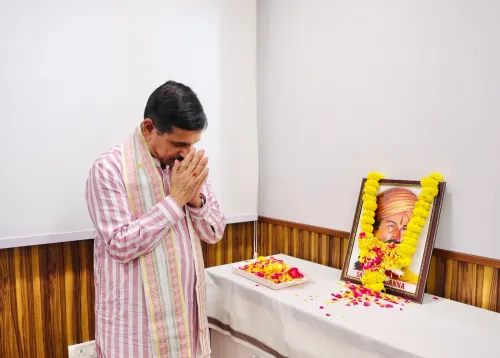
Siddaramaiah offered pushpa namana (floral tribute) at the statue and recalled Rayanna's tyaga-balidana — sacrifice and martyrdom. The Majestic station site, one of the busiest transit points in the state capital, gives the tribute a public visibility that goes beyond a ceremonial hall. Karnataka governments across parties have consistently spotlighted figures like Rayanna to anchor regional identity within the broader national independence narrative — a practice that carries particular resonance when observed on 15 August.
The Chief Minister's gesture underscores an enduring political and cultural impulse: to remind Kannadigas that the freedom struggle did not begin in 1857 or end with Gandhi, but was seeded in local soil, by local hands, long before.
Point of View
Championing figures like Rayanna also serves to broaden the party's cultural footprint in Karnataka beyond its urban base. The gesture fits a broader pattern of state leaders using freedom-fighter anniversaries to reinforce linguistic and regional pride, particularly in states with strong sub-nationalist currents like Karnataka.
NationPress
30 Sept 2026
Frequently Asked Questions
Who was Sangolli Rayanna?
Sangolli Rayanna was a 19th-century chieftain and freedom fighter from Karnataka's Kittur region who led armed resistance against British East India Company rule. He was captured and executed by the British in 1831, making him one of India's earliest anti-colonial martyrs.
Where is the Sangolli Rayanna statue in Bengaluru?
The statue of Krantiveer Sangolli Rayanna stands near the Majestic railway station in central Bengaluru, officially known as KSR Bengaluru City railway station.
Why did CM Siddaramaiah visit the Rayanna statue on 15 August 2026?
CM Siddaramaiah visited the statue to mark Sangolli Rayanna's birth anniversary, which coincided with Independence Day, offering a floral tribute and commemorating the freedom fighter's sacrifice and martyrdom.
What does 'Krantiveer' mean in Sangolli Rayanna's title?
'Krantiveer' is a Kannada and Hindi honorific meaning 'revolutionary hero' or 'brave revolutionary.' It is used to recognise individuals who fought courageously against oppression, and is a title formally associated with Sangolli Rayanna in Karnataka's historical memory.
Why is Sangolli Rayanna significant to Karnataka?
Rayanna is significant because his resistance against the British in the Kittur region predates the 1857 revolt by over two decades, establishing Karnataka's own early chapter in India's freedom struggle. He is a symbol of regional pride and anti-colonial defiance for Kannadigas.